Strength in Numbers #31
Injuries are a part of every sport. The goal is to prevent them with training and consistent monitoring, and then conservatively manage the injuries that occur with little time lost from competition.
Working in MLB, I always read the “Treatment Report” more intently and skimmed the “Injury Report” unless I was specifically working with an injured athlete.
There is a big difference between these two documents.
The Treatment Report is the yellow flag being waved, showing that the player needs close monitoring and attention to keep them on the field.
On the flip side, once the player is on the Injury Report, the approach is now reactive. The focus shifts from keeping the athlete on the field to rehabilitation, treatment of inflammation, and surgical approaches with more medical oversight at the beginning of the recovery process.
Watch, Warning, and Medical
As part of the ArmCare App, we have “Watch,” “Warning,” and “Medical” alerts that give you the same insights as to the injury and treatment reports that I had in pro ball.
“Watch” is our yellow flag. It means we need to adjust throwing intensity and training briefly, but the athlete will still compete. The yellow flag allows us to divert an athlete from injury early, reset them and re-establish strength and range of motion to offload sensitive areas of the body. Even a brief period of recovery of 48 hours can be effective.
When we miss the “Watch” stage, the athlete becomes less effective and absorbs more time from the medical staff to reduce pain, soreness, and stiffness. Here the player progresses into the “Warning” stage. At this point, the athlete may be removed from competition to rest the body and reprogram completely.
The focus at this stage is to pull back the reigns, as the athlete is on the verge of tipping over the edge from strain to tearing tissue. If programming adjustments are not drastic to return the athlete to performance, the warning stage is missed, and they head to the medical alert where the athlete is now at risk of significant time off and potential surgery.
In a nutshell, it’s best to attack a runny nose before it turns into full-blown pneumonia.

Return to Sport
If the athlete experiences surgery, we must consider their mental and emotional state.
An injured athlete will question him or herself.
Thoughts such as, “Will I ever be as good?” or “I am going to lose my role with the team,” and many other anxiety-ridden thoughts enter athletes’ minds. The player is disconnected from the team and stuck watching them from the sidelines, where they become a cheerleader rather than a competitive contributor.
The psychological component of injury can cause kinesiophobia—a psychophysiological block in movement. The athlete will maintain an injured motor pattern well after the injury has been rehabilitated for fear of re-injury. This is a strange paradox, as the athlete minimizes their movement variability and continues to load the tissues repeatedly without change which ultimately increases the risk of re-injury.
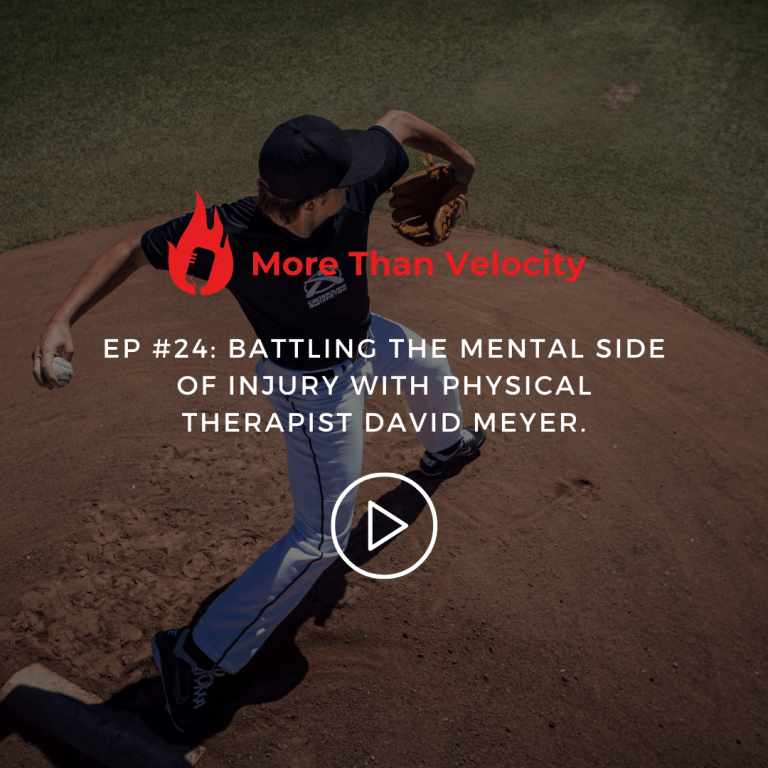
In this week’s podcast, we talk to David Meyer, a cutting-edge physical therapist and author focused on the mental side of injuries. David worked for the St. Louis Cardinals and was part of an evidence-based approach to rehabilitation when with the team.
He takes in data, analyzes, implements it, and evaluates outcomes. But most importantly, David is an active listener and a confidant for players. This week’s podcast will be highly effective if you coach injured athletes.
We have no crystal ball for when injuries arise, so the moral of the story is to pay attention to the signs, assess your athletes’ throwing arms often, and be prepared to pivot in competitive scheduling, workload, and training within the season.
Communicate with your athletes when you take them out of competition that you are building them up and not shutting them down. The old adage applies, “Pay now, or Pay Later” – beef up strength or prepare for the knife.
Related Content
-
Battling the Mental Side of Injury with Physical Therapist David Meyer (More Than Velocity #24)
In this week’s podcast, we meet with David Meyer who is a physical therapist and specifically covers the cognitive side of injury and how athletes face the mental struggle of physical challenges.