Strength in Numbers #98
I still recall sitting on a bench after the first game of a doubleheader with one of my cleats covered in red clay from sliding into a base during the first game.
One of my assistant coaches stood over me and said,
“When you look good, you feel good. When you feel good, you play good.”
I had no idea what he was talking about until he pointed at my cleat. I then realized I looked and felt grubby and grabbed a towel to wipe my shoes.
When it comes to presentation, this is something we take very seriously at ArmCare.com.
I have had many people compliment how “slick” the app looks.
We took months evaluating how we present data, symbols, colors, aspect ratios, highlights, wireframing functionality, and every other tiny detail you see.
RAW AND REEL
The presentation of our creation is a daily topic of debate, and it’s no different regarding our education.
As painful as it is for me, we are going through our third iteration of the Certified ArmCare Specialist Course to cover the changes in the year and a half since our first release. In addition, we also launched the Certified Pitching Biomechanics Course to incorporate new insights contingent on our app’s latest features and its relationship to strength and throwing arm coordination.
Although covering new content was just one need, we also wanted to hone the presentation to be more impactful and engaging.
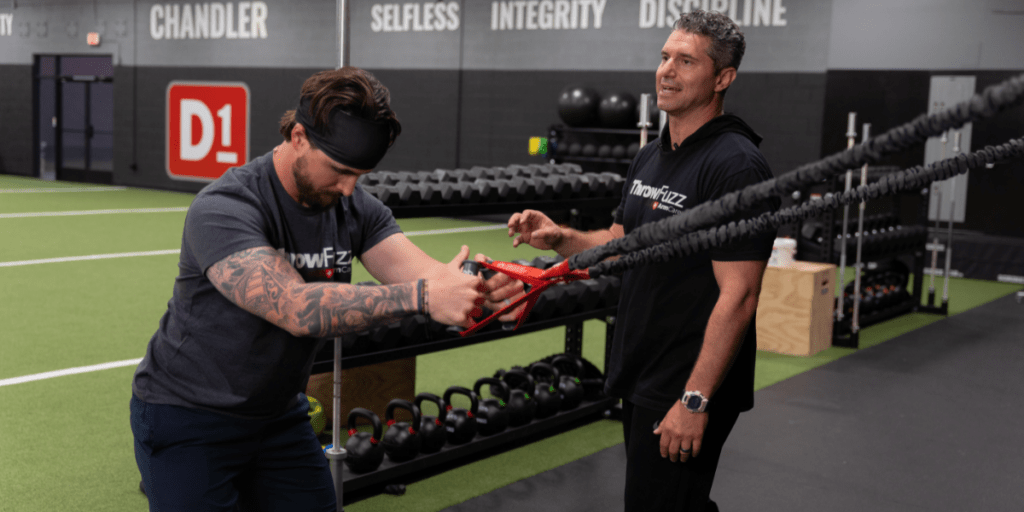
By filming the 6.5-hour course live at the D1 Training facility in Chandler, we had turf, an entire training facility, an incredible film and photography crew, and a former collegiate infielder and outstanding athlete to model our exercises, to record almost 14 hours of content that we will sift through to pull out the best stuff.
I’m excited about this update from the first iteration of the specialist course of me sitting alone in a room surrounded by white walls trying to say every word perfectly to the camera.
The excitement goes up for me, especially when I have a chance to educate people in an environment designed for performance, and the enthusiasm goes in different directions.
I am unsure if you ever experience this, but sometimes when I teach, the subconscious mind is thinking about new ideas and extensions of the information you present.
My mind lit up at one point when I went through the SPEAR Training algorithm and landed on the “P,” being power. I then realized the capability of education on the rate of torque development when capturing movement at over 500 frames per second.
When it comes to velocity, max strength is essential, but when you can indicate how quickly the athlete can get to maximum levels, there you have the power aspect of the equation.
You might have seen the below image before. It shows you how pitchers of different competitive abilities get their arms loaded for the baseball to explode out of their hand.
Notice the steeper rise in RTD among higher-level pitchers.
The slope of the torque-time curve increases with maximum strength focus instead of the traditional baseball training focus of muscular endurance.

When the updated course comes out, you may notice that I take some brief instances throughout the delivery rate of torque development in the SPEAR algorithm as my mind starts thinking creatively about the applications of the rate of torque development and the other new developments we have our eyes set on in the future.
For example, our upcoming advanced training will hone greater neuroplasticity through 26 blocks of graduated intensities using isometrics and eccentrics.
It will add more fuel to the fire without the arm overheating.
I can’t wait until this course is available to everyone.
Get ready to experience training on amplifying how athletes load and explode for greater throwing arm power with the premium app!
Let’s keep working to eradicate throwing arm injuries and dominate pitching and throwing performance this season.