Strength in Numbers #99
After filming the updated edition of the Certified ArmCare Specialist Course last week, I got to give my voice some rest and jumped on a plane to attend the NPA Conference by Dean Doxakis and Tom House in Houston, Texas.
And man, I am so grateful for getting the invite.
One of the things that blew me away was how they dial in a movement process that makes sense to their audience. In the crowd were coaches, parents, and players as young as ten.
The NPA coaching model has been built on many years (not going to reveal Tom House’s age) of movement visualization and optically tracked 3D biomechanics.
A highlight for me was the comparative overlay of the kinematic skeleton (stick figures observed through optical tracking of segments) to find that it was Nolan Ryan and Greg Maddux, two pitchers that threw well into their 40s with minimal injury time.
In this 3-part newsletter, I will peel back the onion on what I learned about the mechanical viewpoint of the delivery through the game’s ultimate master.
I even said amongst the crowd…..
“When you think you have a new, ground-breaking idea, Tom House has already done it.”
GFF
The apex biomechanical quality is GFF, which stands for…
Go – Your choice of F-word – Fast.
The GFF principle is to develop speed into foot strike but minimize errors and energy wasting by eliminating movements taking the pitcher offline.
It should be intuitive, but you would be surprised how many pitchers demonstrate wasted movement. As they say, “Timing is Everything,” and if you do not get into foot strike fast enough, you have energy leakage all over the place.
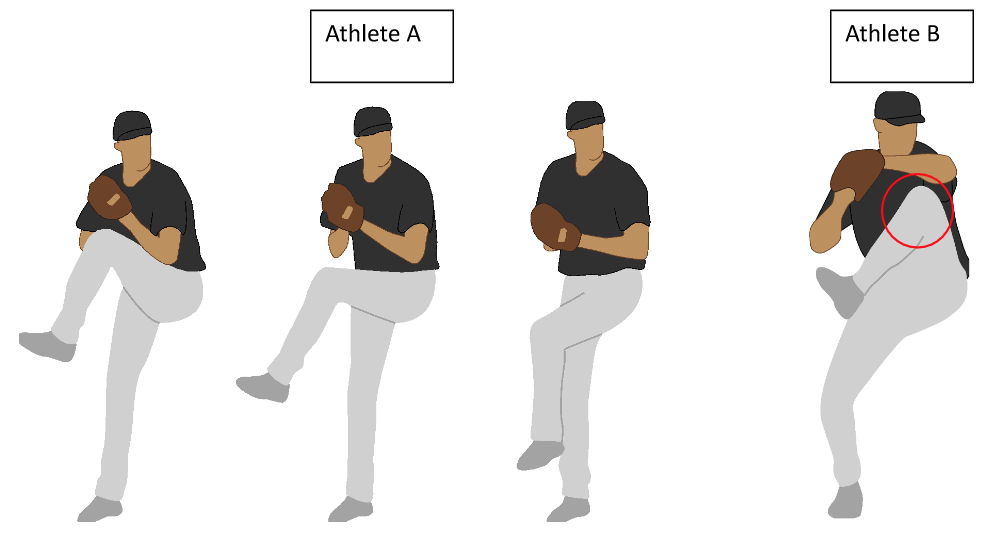
The other thing I like about GFF is moving into peak knee height, not moving after it.
If you look at the pictures below, you will see the movement that is very vertical (up and down) and then out. In contrast, the NPA model is the center of mass movement upward as it moves outward. As I recall, the time from lifting the lead foot to when it hits the ground should be under 1 second, meaning the pitcher has to move fast!
A few days later, I got to sit beside Tom House in the van ride back to the hotel.
He mentioned how many problems occur when you move slowly and how critical body speed is for arm position, and everything clicked—if you give the arm a ton of time to get into position, they may never be on time.
ARM SLOT
Another thing I appreciated is that one of the slides showed pitchers delivering the ball with multiple arm slots. It resonated with me as I have one athlete with an arm slot problem.
Given I work primarily with injured athletes, I have access to a lot of anatomical information that no one would have access to if they came in for an assessment off the street.
Understanding your athlete’s anatomy is helpful, as you may ask them to do something they structurally should not or do not want to do.
For this one athlete, his X-ray indicated that he has a partially hooked acromion. This means that the acromion is not fully hooked but angled down from what his report states.
One of the issues throwing athletes have when their acromion is hooked or pointing down is a lack of space under the subacromial arch, meaning they experience shoulder impingement (pinching of rotator cuff tendons between the humeral head and the undersurface of the acromion).
In my athlete’s case, he did not know he had this bony orientation for the acromial region of the shoulder blade.
So it all made sense why he had to increase significant glove slide lean in elevating the throwing arm, which increased the risk of forearm flexor strain, eventually sidelining him.

When I texted the slide above to my athlete and asked him which arm slot would make his arm most comfortable, he’s lefty, so he naturally gravitated to Randy Johnson.
However, I believe the most effective mechanics for his delivery are closer to Pedro Martinez’s.
Many may not consider him a sidearmer, but check out the delivery in this slide. Even better is his trunk control to move toward the plate with a lowered arm slot, which will work well for my player, given his acromial bony block.
THE ARM FARM
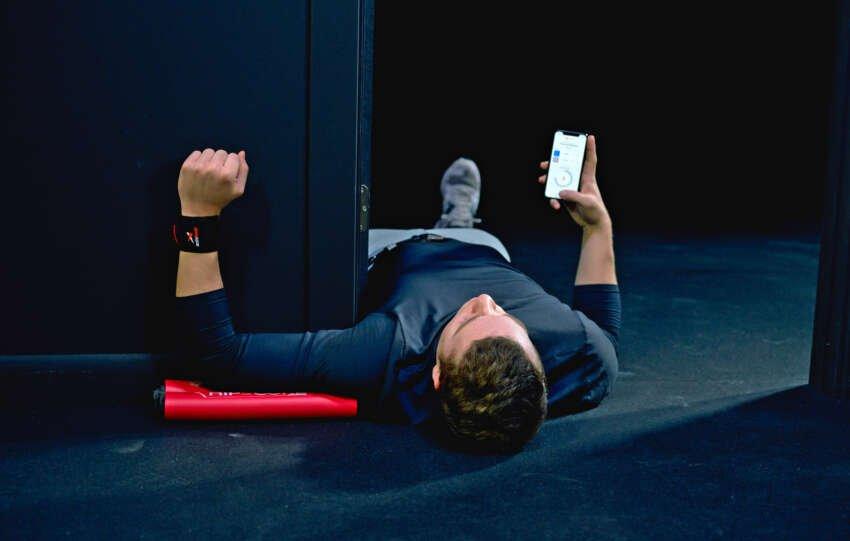
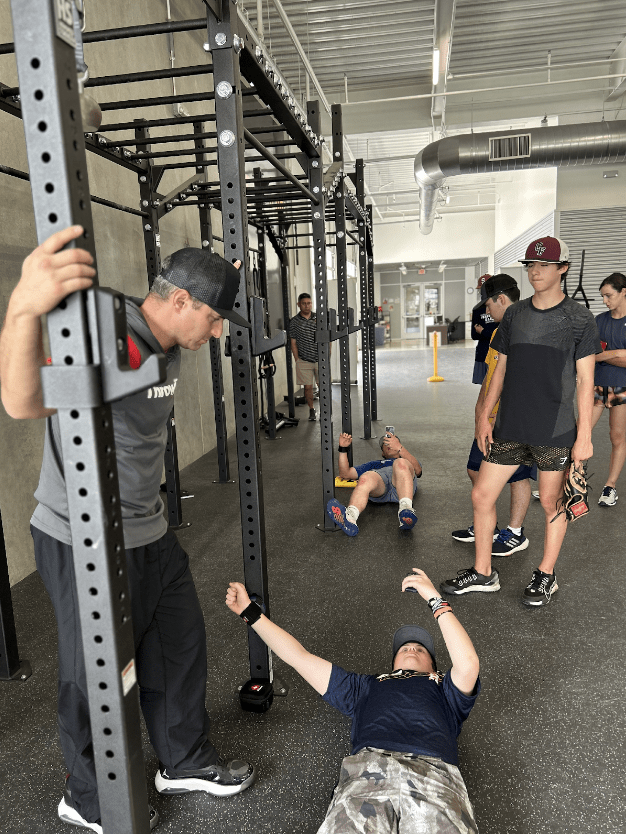
Not only was I a speaker and listener, Dean and Tom had me run the ArmCare station, which is built into their clinics.
Over an hour, I tested roughly 40 pitchers, and they were incredibly strong, something that I did not think would be the case given the workload they put in prior to the day. However, later that day, I learned the NPA’s training workload formula involving throwing velocity and volume, and further understood that the added workload is actually putting strength back into the arm in foot-pounds where most clinics take strength out of the arm without building capacity back up on a scientific level.
I cannot wait to share more about the NPA block training process. How much capacity these young athletes have in their throwing arms will blow your mind.
I thought I would see very poor ArmScores, but to my surprise, low scores were few and far between. These athletes will be even better as they understand where to adjust their training and how to modify their workloads according to their key metrics on the app.
I also promise that athletes in the NPA’s program are able to execute more throwing reps per unit time than athletes in other programs nationwide because they actually help athletes recover and gain strength throughout the 3-day event. It sounds like a magic trick, but when you see it in action, it makes perfect sense in building capacity in the throwing arm. In my opinion, the NPA is a place to be to build a starter, in my opinion.
Stay tuned for more next week, where I will speak about the NPA dynamic warm-up process, which is training in itself in building high workload capacity for these athletes who are diligent and dedicated to their arm health and performance.