There is no shortage of opinions about the rise in arm injuries at all levels of baseball.
Yet, despite the multitude of proposed remedies, injury rates persist, underscoring the inadequacy of these commonly touted ‘solutions.’
Let’s dive into the most commonly suggested solutions to prevent shoulder and elbow injuries in baseball and dissect why they fail to address the root cause of the issue.
It’s NOT Mechanics
Conventional wisdom suggests that changing pitching mechanics can prevent injuries. However, it’s becoming increasingly clear that analyzing a pitcher’s delivery is not the panacea for arm injuries that many pitching specialists profess it is.
Every pitcher has a unique style; even those with textbook form get hurt.
Still, every coach will profess that they know the path to throwing that leads to more outs and fewer injuries.
Ultimately, there are a few major issues that the mechanical specialists fail to address:
1. Opinions of Good vs. Bad Mechanics are Flawed.
We asked our following on Linkedin and at the recent American Baseball Coaches Association conference to compare the mechanics of some notable pitchers.
You can read the full article about the specific pitchers and what we learned here.
The gist is that some of the most revered deliveries in the sport were riddled with a career of arm injuries, while some pitchers known to have “funky” or “stressful” deliveries pitched for long and healthy careers.
2. Mechanical Changes are Fleeting
Even if you knew the magic sauce to pitching, had the most elaborate tech to measure it, and had the highest level of coaching acumen to drill and effectively change a player’s delivery, it’s all fleeting anyway.
The athlete you attempt to carefully craft will ultimately work with many other coaches in their career and have hundreds of different influences, including teammates, player idols, and what feels right to them.
Those things will come together to form a unique delivery for that player.
You can attempt to change it, but it’s like drawing on a whiteboard that will be added to, erased, or wholly written over a hundred times.
It’s NOT Velocity
It’s popular to say that kids throw too hard and link velocity as part of the problem.
The first counter to this solution is a philosophical argument on the purpose of sport.
Its purpose embodies various values, including physical fitness, teamwork, social interaction, and entertainment. Yet, winning is undeniably a central element that motivates competitors and promotes personal growth characteristics in young athletes, like discipline, perseverance, and resilience. And at the higher levels, it’s the competition and elite performance that drives our interests.
The message that one shouldn’t aim to be their best because it’s dangerous is akin to asking football players to tackle less hard, sprinters to run a bit easier, and basketball players to cut to the basket slower. It removes much of the value of sport, which you should understand if you’re an athlete.
Additionally, the relationship between velocity and injuries isn’t so straightforward.
Velocity is not a new part of the game. Many players have thrown over 100mph throughout the game’s history. Additionally, players at the MLB level today are actually throwing fewer fastballs, yet injury rates are higher.

This evidence shows that velocity is not the sole driver of injuries, yet it is a factor because, based on simple physics, we know that increasing acceleration adds more force to the arm.
However, more force doesn’t necessarily mean more stress. With training, tissue can adapt to and withstand greater loads.
Yes, that’s right! Ligaments, tendons, and bones increase in size and density in response to effective training that will decrease the “stress” of throwing.
To help you understand this, imagine swinging a bowling ball with a tiny string vs. a metal chain. The forces of that action will obviously be more stressful on the string.
Therefore, we shouldn’t put a governor on velocity when it’s possible to develop it safely, and it’s a necessary part of being successful at the game.
It’s NOT Pitch Counts
Managing the number of pitches thrown in games and practices has become a standard approach to protecting pitchers’ arms. While limiting pitches can help reduce fatigue, it’s proven ineffective because injuries are still occurring at alarming rates.
Pitch counts, like speed limits and traffic lights, only decrease risk when people follow them. That’s another topic of conversation, but even among teams and players who adhere to strict pitch count guidelines, there’s nothing magical about those numbers.
They serve as general guidelines to protect the masses. Some players can certainly throw more, and others need to throw less.
Pitch counts do not adapt to the individualized needs of the player, such as time spent playing other sports or positions, recovery and sleep quality, nutrition habits, or their current period of growth and development.
Ultimately, it’s a good idea, and they should be followed better, but it’s pretty well proven that limiting how much a player throws will not ultimately resolve the issue.
4. It’s NOT The Pitch Clock (or sticky stuff)
The MLB Player’s Association now argues that the recent changes to the game are negatively impacting players’ health, which does appear to be true. Forcing quicker pitches results in greater fatigue, and cracking down on substances to improve grip requires more from the forearm muscles.
The situation is confusing, to say the least. If the pitch clock or a lack of friction from the sticky stuff is the key cause of injuries, then all pitchers would be heading off to undergo surgery as a result. But that’s not the case, which suggests that, like velocity, the body can adapt to those things, making them less stressful.
Besides, these changes have improved the entertainment value at the professional level, which is the overall purpose, so they’re likely to stay. It’s time to turn to a solution around the rule change rather than regretting it, as going back in time is not an option.
Regardless, merely changing the rhythm of the game doesn’t altogether remove the torque and stress. It’s like reducing one’s speed on the highway from 105 to 100; overall, it’s only marginally less risky, and players cannot underhand the ball to the plate.
5. It’s NOT Pitch Selection: Sliders, Cutters, or Curve Balls
Since the dawn of baseball, players have been forced to heed warnings about throwing curve balls too young. Then, lately, an emphasis on inducing horizontal breaks for sliders and cutters has caught the attention of fear mongers.
Just like focusing on limiting velocity, restricting pitch types waters down the game and inhibits development. It would be worthwhile if it were a slamdunk to stop injuries, but at this point, the data shows that breaking pitches is no more dangerous than fastballs.
If anything, limiting a pitcher’s pitch selection would result in a greater reliance on the fastball, which likely delivers a greater force on the arm.
We Believe The Answer IS Strength
There is clearly an arm injury problem, and the failed attempts have all been aimed at lessening the force placed on the arm.
But why are we not talking about improving the throwing arm itself?
This brings us to a new solution on the horizon that’s showing promise for injury relief.
It all relates to strength.
This often raises eyebrows from those wondering how one’s bench press or deadlift will protect their elbow. However, the explanation requires a deeper understanding of strength than what typically occurs in the gym.
The body does use its muscles to generate force, but muscles are also used to decelerate and stop limbs from moving when forces are applied.
For example, studies show that the forces of pitching would snap the typical UCL with only one pitch over 80mph.
Under ideal conditions, the muscular connections slow and dissipate the load on the elbow and protect the UCL from exploding. Yet, in the game, there are two primary mechanisms that cause this stabilizing system to fail, leading to injury.
1. Fatigue
Muscles lose their ability to contract as they become fatigued. If this is new information to you, drop down for a set of 100 pushups for a better understanding.
Fatigue during pitching reduces the muscle’s ability to provide stabilizing forces around the elbow and shoulder, which causes greater stress on the ligaments and tendons that hold the joints together.
2. Under Development
It was argued earlier that reducing velocity is not part of the solution, but that doesn’t mean it’s not part of the problem.
An athlete’s ability to increase strength and power can occur very rapidly, outpacing the capacity of their connective tissue and bone.
That’s especially true for young players who hit massive growth spurts.
The emphasis on throwing as hard as possible as soon as possible without a top end of what’s satisfactory leads to players blowing past the body’s current capacity for their bones and ligaments.
As discussed earlier, these tissues will adapt, but it occurs at a much slower rate.
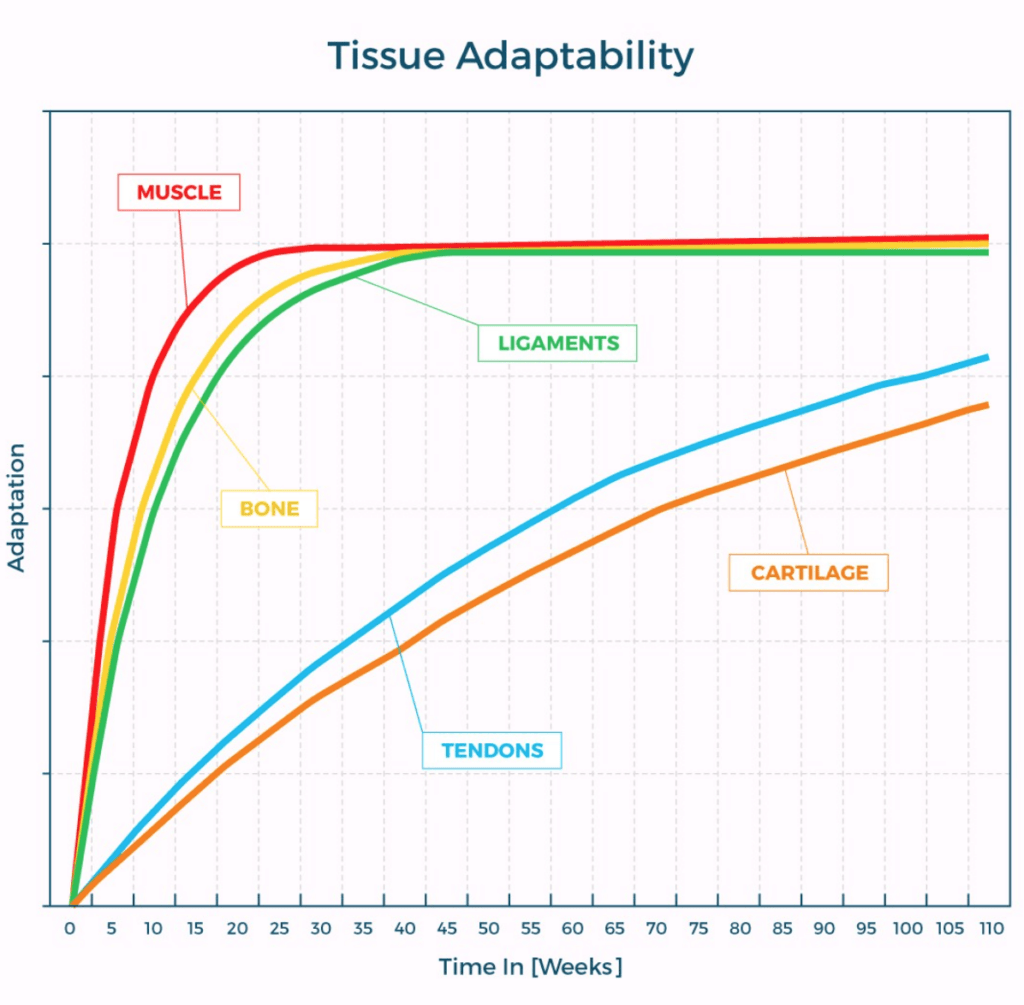
Consequently, velocity needs time to develop to match the body’s full physical capability at the moment. Otherwise, something is bound to get overloaded.
It’s time we start viewing velocity enhancement as a strength-driven process of improving the entire system to withstand the forces needed to throw hard rather than relying on pulling the catapult back further and hoping the joints hold.
The ArmCare Solution
The solution we’ve found is a handheld force gauge called a dynamometer, or what we’ve dubbed a strength sensor, that pairs with a mobile app for measuring arm strength.
Using this sensor, a player examines the stabilizing capabilities of the muscles surrounding the shoulder and elbow.
The initial scan looks for:
- Strength compared to their body weight,
- Strength compared to their throwing velocity.
That’s because we know a player’s weight and velocity add to greater forces on the arm, which requires greater strength to support.
Secondly, the strength assessment looks for imbalances or asymmetries that reveal weak links in the system.
Then, the player repeats that assessment weekly to look for a loss in strength, which reveals if the player is fatigued or under-recovered. The data provided by the ArmCare App is an early warning system for the player. Even a fatigued arm may feel great, but it is still compromised.
This is when the player must make adjustments to promote recovery in the short term. Things like reducing pitch counts, skipping a start, investigating recovery habits, etc., are all areas that would help the arm reset and provide maximal resistance to injuries.

Although, this is only part of the solution.
Each day, the player opens their app and reports their perceived fatigue and throwing intensity.
Using these data and their most recent strength assessment, the ArmCare App provides a custom training program to follow.
Some days, the focus is on recovery or rest; other days, it’s on improving strength and capacity.
Not only do these physical capabilities help a player develop without pain or injury, but they’re often the underlying links to improving performance as well.
And we’re proud to say that the science checks out.
In five years, with over 35,000 players using the ArmCare App, we’ve only had a single reported surgery for those actively using the app.
That’s a scant number compared to the current injury projections in the sport.