

Strength in Numbers #163
If you are a pitcher, you may have had a strange pain in the back of the shoulder at some point. You get it when you scap load and internally rotate, and it lingers and sometimes comes and goes, a transient pain problem.
Welcome to the world of internal impingement, and it sucks.
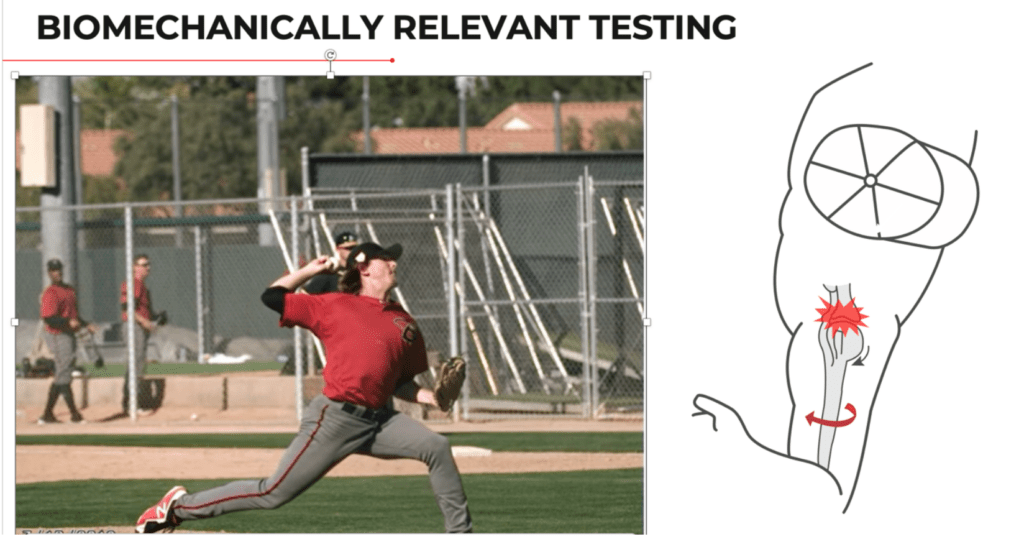
What is Internal Shoulder Impingement?
Internal shoulder impingement, often referred to as “posterior superior glenoid impingement,” occurs when the rotator cuff tendons (specifically the supraspinatus and infraspinatus) become pinched between the greater tuberosity of the humerus and the posterosuperior aspect of the glenoid (the socket part of the shoulder joint). This is a mouthful for what I mentioned in the caption of the picture above.
Basically, your upper arm is crushing rotator cuff muscle fibers against the backside of the scapula. This pinching usually happens during the late cocking and early acceleration phases of the throwing motion when the arm is in an extreme position of abduction and external rotation.
Check out this video to see the internal impingement zone, where the arm goes behind the body and into maximum layback.
More on causes of Internal Shoulder Impingement
- Hyperangulation of the Shoulder – Hyperangulation refers to the excessive horizontal abduction of the shoulder during the cocking phase of throwing. This means the arm is pulled back beyond the plane of the body more than what is considered normal or safe. While a certain degree of hyperangulation is common in pitchers to generate power, excessive hyperangulation can increase the risk of internal impingement. This hyperangulation places the rotator cuff tendons in a vulnerable position, where they are more likely to get pinched against the bony structures of the shoulder. The repetitive nature of pitching exacerbates this issue, leading to irritation, inflammation, and, eventually, damage to the tendons.
REMEMBER THIS – WHEN YOU HAVE MORE SOFT-TISSUE LENGTH AND NOT ENOUGH STRENGTH, YOU ARE EXPOSING YOURSELF TO HYPERANGULATION RISKS.
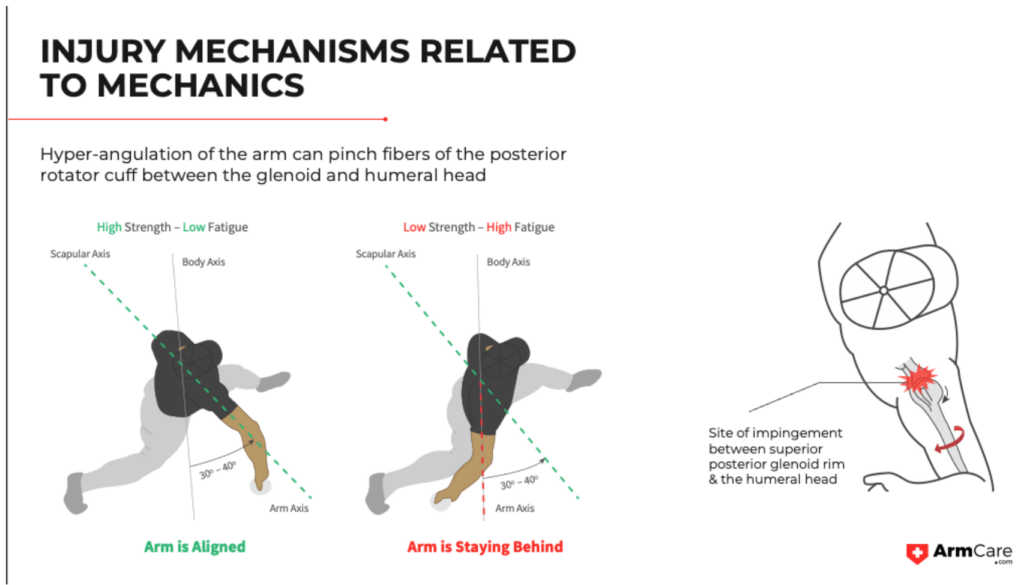
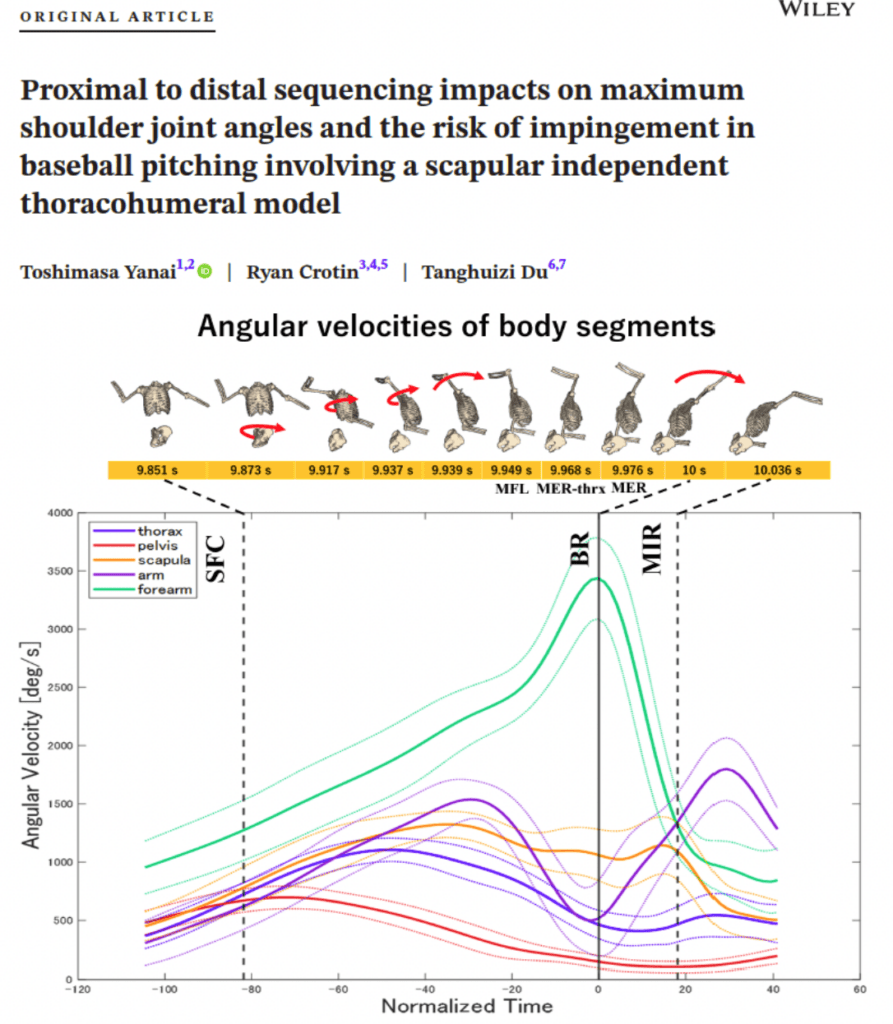
- Scapular Dyskinesis – Another significant contributor is scapular dyskinesis or the abnormal movement of the shoulder blade. The scapula plays a crucial role in shoulder stability and movement. If the scapula does not move correctly during the throwing motion, it can alter the position of the glenoid, increasing the likelihood of impingement. Poor scapular control can be due to muscle imbalances, weakness, or fatigue, all of which are common in pitchers due to the repetitive stress placed on their shoulders.
- Glenohumeral Internal Rotation Deficit (GIRD) -GIRD is a condition where there is a loss of internal rotation in the shoulder, often seen in pitchers due to the repetitive external rotation during throwing. This imbalance in shoulder rotation can lead to compensatory movements that exacerbate hyperangulation and increase the risk of internal impingement. Weighted balls without data-led intervention based on strength data will further GIRD, especially when you do not understand when to use a heavy ball and when you need to substitute a light one.
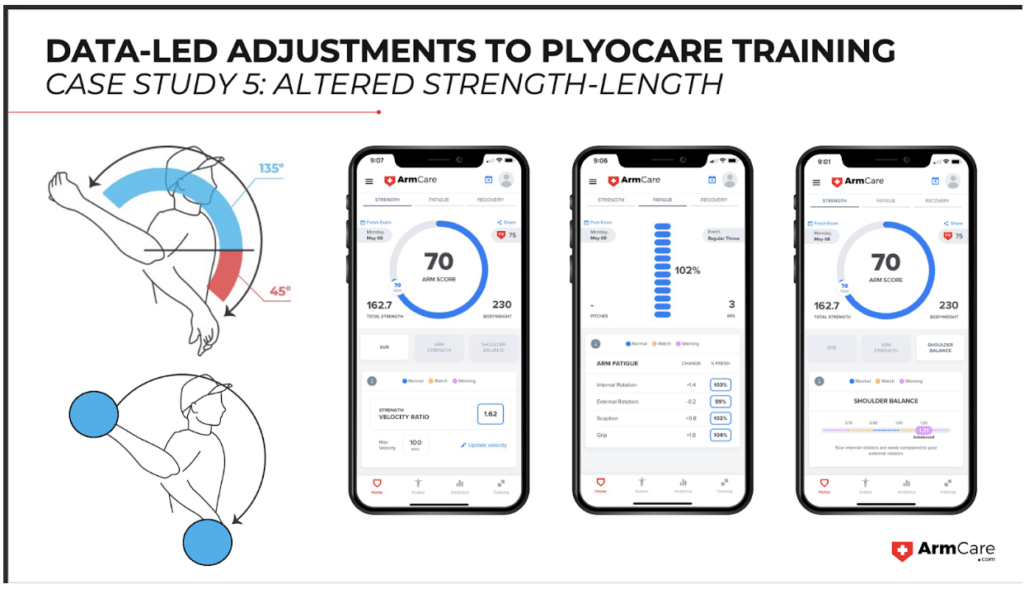
The intersection of arm strength data, joint mobility, and ball weight approaches to global work and velocity enhancement training is heavily discussed in our Velocity Program and Monitoring Adjustments Course. If your athletes are doing weighted ball training of any kind, understanding the strength, length, load, and force-velocity relationships is essential.
Closing Remarks
Internal shoulder impingement is a complex condition with multiple contributing factors, particularly hyperangulation of the shoulder and scapular dyskinesis. Understanding these factors and implementing targeted prevention strategies can help pitchers maintain shoulder health and optimize performance.
Focusing on proper mechanics, strength, and mobility can significantly reduce the risk of internal impingement, allowing pitchers to continue performing at their best without the burden of shoulder pain and injury.
Most importantly, objective data should be used to determine what muscles are out of balance and where range of motion is, using the ArmCare app, and stick to correction before throwing intensification. You will be glad you did, as once your athletes feel the “pinch,” you will be pinching yourself for paying attention to this article.
Problems with ineffective scap load are a crap load.
Low Strength + Tissue Length = Hyperangulation
Hyperangulation + Overuse = Pain
Pain+Continued Throwing = Serious Injury
See what I mean when I say STRENGTH MATTERS MOST?
Timing is everything.
Ryan
Ryan@armcare.com
