Strength in Numbers #164
We have started offering a unique college offering called the ArmCare Accelerator. It’s a fully integrated and custom educational offering that includes technology, training equipment, on-site and remote support, and more.
It’s no joke that pitching injuries are high when guys come back from breaks, and right now, we are helping schools prevent their pitchers from breaking, building strength in catchers and two-way players, and creating a new dimension defensively for teams with rocket arms.
I have witnessed and worked far too often; frontline starters with arm trouble in the summer come in the Fall and have the pain and dysfunction linger until the Spring. Then we get into trouble when the stakes are high, and the will to win is greater than the throbbing pain of their throwing arms.
Coming back from the winter holidays and the summer, guys are in one of 4 scenarios:
- The athlete has not thrown enough, the arm is fatigued, recovers poorly, imbalanced, or all the above
- The athlete has not thrown enough, the arm is fatigue-resistant, recovers poorly, is not imbalanced, or all the above.
- The athlete has thrown enough, the arm is fatigued, recovers well, imbalanced, or all of the above.
- The athlete has thrown enough, the arm is fatigue-resistant, recovers well, is not imbalanced, or all the above.
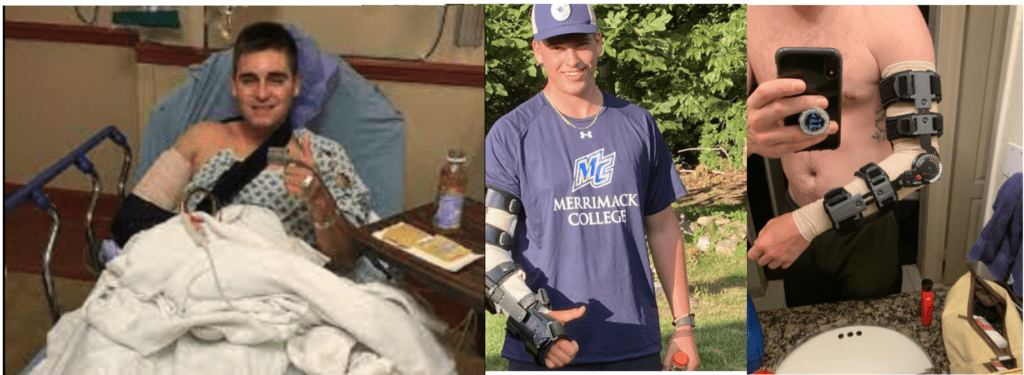
COLLEGE GUYS ARE NOT BIOMECHANICALLY EFFICIENT
If you don’t test, you guess, and if you guess wrong, that could significantly reduce your chances of the College World Series title.
In my opinion, the first week coming back from breaks would involve an extensive screening process to shape an individualized performance path.
The biggest reason is that college pitchers are far less biomechanically efficient (they throw slower per unit of relative elbow torque) than pros. Essentially, they get way more bang for much less buck.
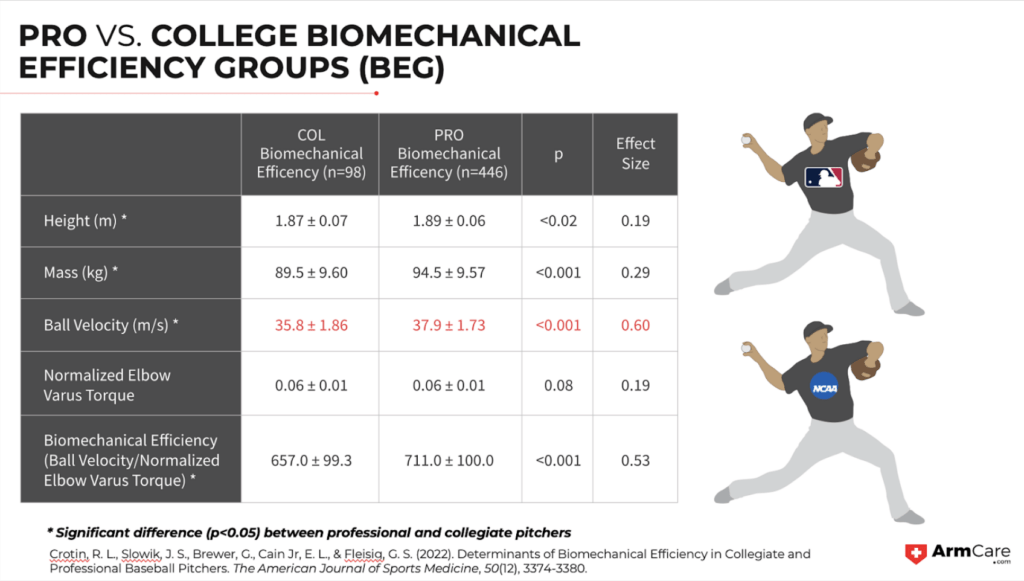
If you are not biomechanically efficient, there’s a good chance you have a LOAD, HOLD, EXPLODE, or BRACE issue from your lower body that affects arm positioning and trunk function.
In this video below, we go through examples to improve the propulsion and bracing strategies for players from the ground, and we share even more applied insights on a deeper level through our Accelerators. Biomechanical Efficiency, Pitch Efficiency, Strength-Velocity, and Stress-Shielding Ratios are critical key performance indicators that need serious attention at any age, but most importantly, the college pitcher (Low Velo – High Relative Elbow Torque).
Working up from the floor is better for athletes who are deficient in bracing and athletes who have rapid knee extension and more pole vault-like deliveries.
PITCH COUNTS IN COLLEGE ARE NOT PROVEN EFFECTIVE IN PREVENTING INJURY, BUT THEY DO WEAKEN THE THROWING ARM
It’s becoming increasingly clear that traditional methods like pitch counts are less effective at preventing injuries than once thought. Better yet, there is a science to show that strong arms have much less strength loss versus weaker ones when it comes to pitch accumulation.
For a long time, we have seen that stronger arms are harder to kill, and weaker ones have a strong negative correlation with strength loss and pitch accumulation.
Essentially, the weaker the arm is throwing, the closer it comes to blowing.
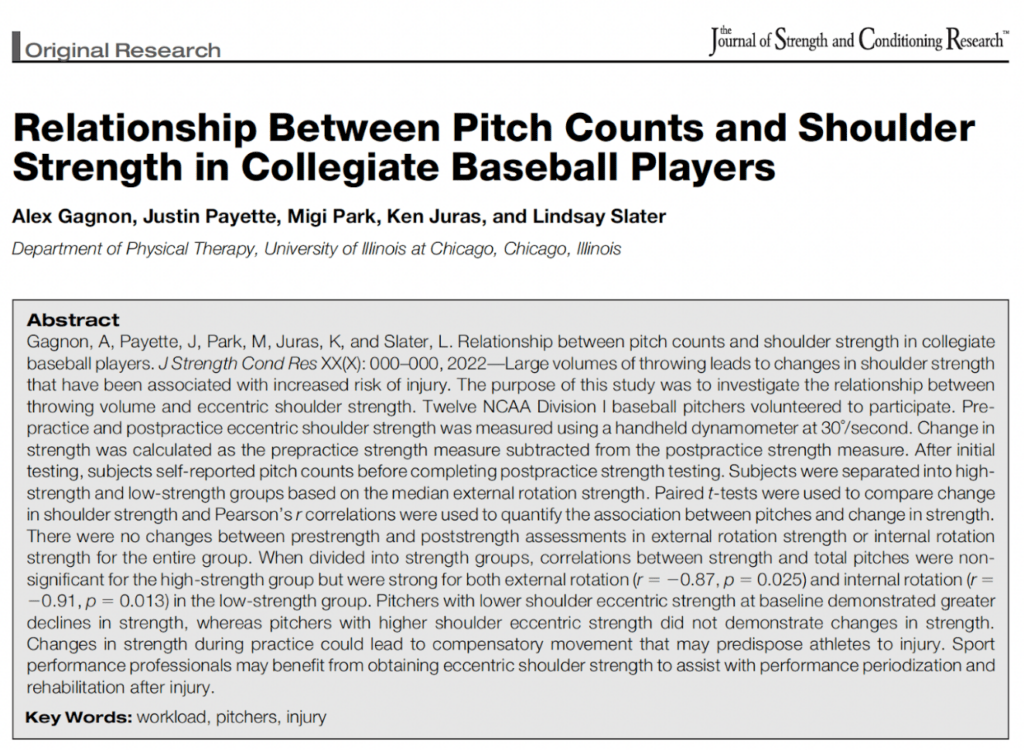
Larger studies need to be performed but note that high-strength athletes showed no correlation between strength change and pitch counts. However, there was a big effect on declines with pitch counts in the weaker throwing arm group.
The bottom line is to test the throwing arm and allow our individualized pitch count technology to assist you with the right pitching workload, given your players’ throwing arm function.
The research on pitch counts in college baseball to prevent injuries is also problematic. One of the reasons is the inability to quantify throwing arm strength until now. If we know that weaker arms cannot accept the same demands, does it make sense to give them more work?
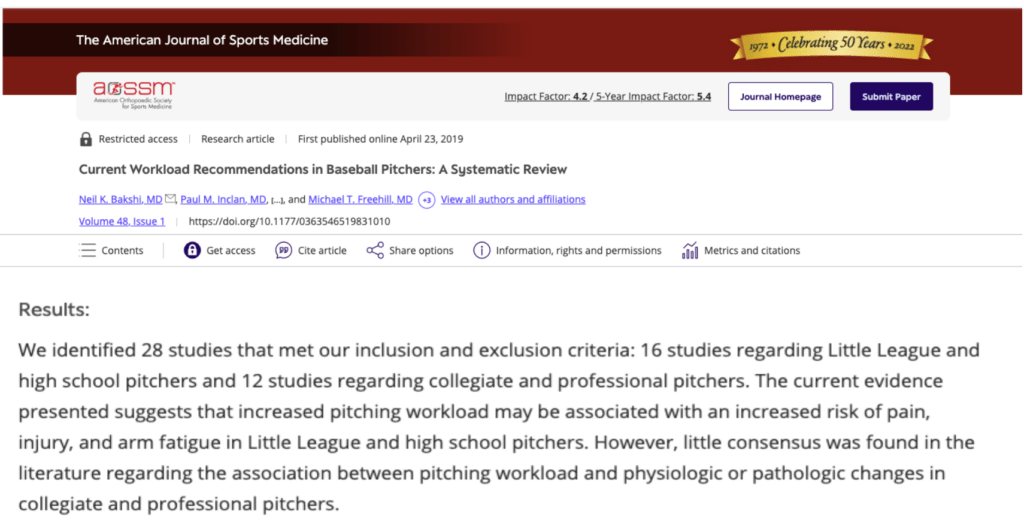
KEY FACTORS ASSOCIATED WITH INEFFECTIVENESS OF PITCH COUNTS FOR COLLEGE PITCHERS
- Lack of Individualization: Pitch counts apply a one-size-fits-all approach without considering each pitcher’s unique needs and conditions. Factors such as the pitcher’s age, mechanics, history of injuries, and physical condition are not accounted for, making pitch counts a blunt tool rather than a precise measure. Strength Matters Most, guys!
- Ignoring Cumulative Fatigue: While pitch counts are intended to manage fatigue, they often fail to account for the cumulative effects of pitching over time. A pitcher may throw a “safe” number of pitches in a game, but if they are already fatigued from previous outings or inadequate recovery, they are still at high risk for injury. You will only understand fatigue levels and recovery if you test strength.
- No Consideration of Pitch Type: Not all pitches are created equal. Breaking balls, such as sliders and curveballs, place more strain on the elbow and shoulder than fastballs. A pitcher who throws a high percentage of breaking balls may be at greater risk, even with a low pitch count. Pitch counts do not differentiate between pitch types, leading to a potentially false sense of security. It has been shown that the change-up has the lowest torques on the shoulder and elbow, but many pitchers do not throw it enough.
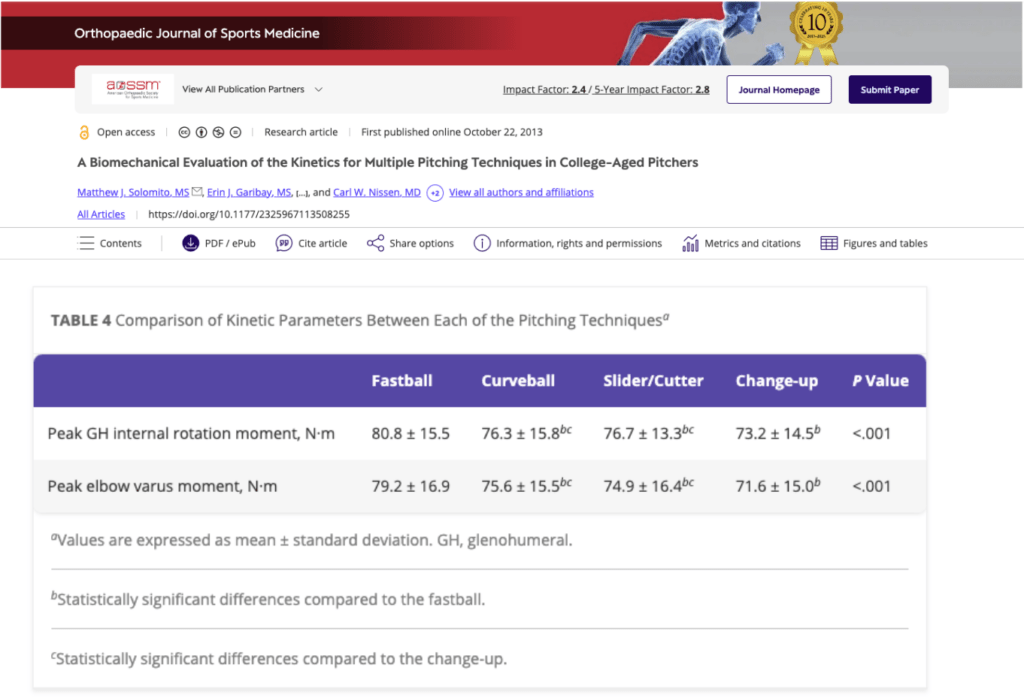
CONNECTING DOTS FOR A MORE EFFECTIVE APPROACH
Given the limitations of pitch counts, a more comprehensive and individualized approach to injury prevention is needed.
This involves:
- Strength and Coordination Assessments: Combined throwing arm strength and biomechanical assessments can help identify pitchers at risk of injury due to biomechanical compensations or adopting motor strategies not aligned with motor preferences that may weaken the throwing arm. By addressing these issues early, coaches can help athletes adjust their techniques and reduce stress on their pitchers’ joints.
- Monitoring Fatigue: Combined ArmCare.com technology with other advanced tools, such as wearable technology and software that tracks player workload and recovery, can provide a more accurate measure of fatigue. This allows coaches to make informed decisions about when pitchers should rest or be removed from the game, especially during the Fall and early Spring seasons.
- Workload Management Plans: Developing individualized workload management plans that consider not just pitch counts but also the type of pitches thrown, the recovery time needed, and the athlete’s overall health and fitness can significantly reduce the risk of injury. When you prioritize strength testing, you can be dynamic in adjusting throwing programming to fit the needs of your athletes and build them up more progressively.
- Education and Training: It is crucial to educate coaches, trainers, baseball operations personnel, and athletes about the complexities of pitching injuries and the limitations of pitch counts. Understanding the broader context of injury risk can lead to better decision-making and more effective prevention strategies.
THIS IS WHY WE LAUNCHED OUR ACCELERATOR EDUCATION – IT TIES EVERYONE TOGETHER TO CREATE THE ULTIMATE PLAYER DEVELOPMENT AND INJURY PREVENTION SYSTEM FOR COLLEGE TEAMS.
While pitch counts have been a staple of injury prevention in baseball, they are insufficient to protect pitchers, especially at the college level, where the demands are high, and the stakes are even higher.
A more holistic approach that includes biomechanical analysis, fatigue monitoring, individualized workload management, and ongoing education is essential for reducing the risk of injury and ensuring the long-term health and success of pitchers….
And as I always say….
STRENGTH MATTERS MOST.
Ryan
Ryan@armcare.com