Strength in Numbers #206
On Tuesday, we made history.
Amidst injuries rising across all levels of play, we have stayed true to our word that we will be the company to significantly reduce risk, maximize performance, and inspire coaches and players to individualize their approach to throwing programming and training.
I remember the early days of 2021 and how we envisioned this moment in time, which made history in the sport. We started with 500 players and now have 60,000 who are using our product, testing their throwing arms, and making decisions to either increase, decrease, or maintain their workloads.
But there’s still more to improve upon.
There are more benefits for athletes in using our product and approach to the fullest.
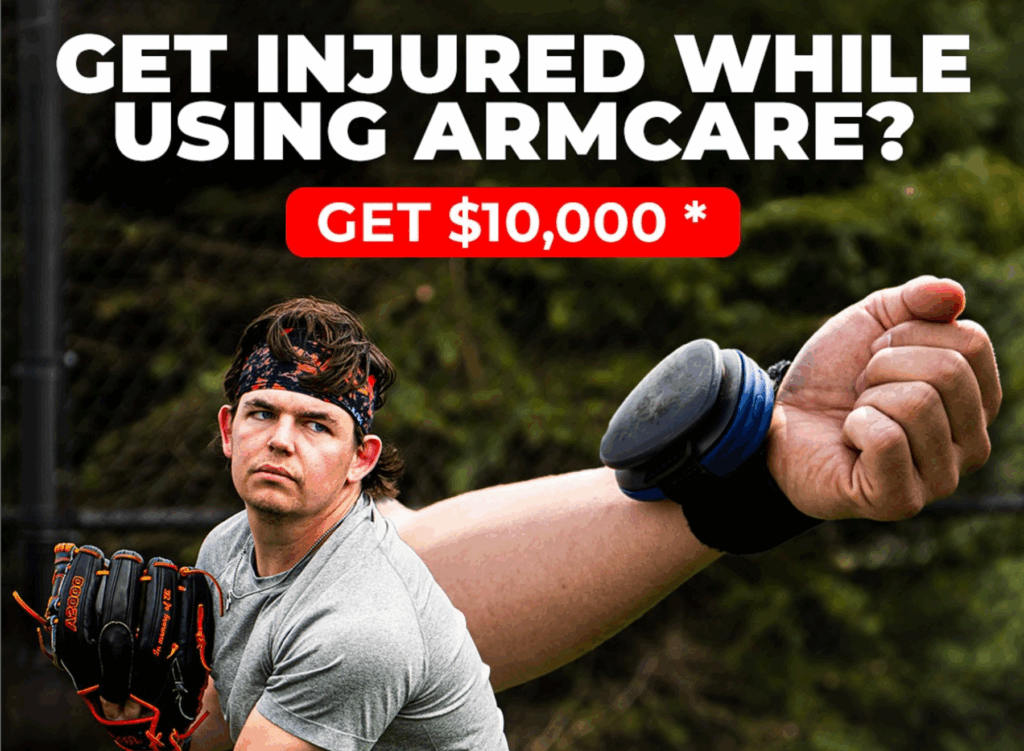
We are going to enhance the utility of our platform by supporting athletes in the event of surgery – the first offering on the market that will pay $10,000 to athletes who follow the ArmCare process and experience a surgical injury.
In this newsletter, we will review the highlights of our company, highlighting the year-over-year growth in research and development, and where we stand today, as the industry leader in health and performance, offering both velocity enhancement and a health guarantee.
We’re backing the ArmCare system with something no one else offers.
The ArmShield Program
Our new health guarantee is called the Arm Shield – the first program of its kind in baseball history.
Over the past four years, we have been charting athletes’ data, speaking with customers, and identifying risks. We have had seven reported injuries, three of which required surgery, and that equates to a 0.0001% risk of injury.
When athletes present with an injury, we review the data, conduct a thorough autopsy, and find that what is missing is the frequency of testing and the non-use of our post-exam protocols.
In this video, you can see that this athlete stacked up 3 high-intensity throwing days in a row. It is far too much load on the throwing arm at a young age. We will support athletes who stay consistent and continuously test, avoid multiple high-intensity days in a row, and consider our velocity enhancement guidelines, especially for adolescent athletes. If an athlete follows our guidelines and undergoes surgery, we offer them a $10,000 guarantee that can be applied toward co-pays to help alleviate their pain, disappointment, frustration, and financial burden.
When athletes stay consistent and follow the plan, we are behind them. If they undergo surgery and we offer them a $10,000 guarantee, that would be applied toward their co-pays.
To qualify for Arm Shield, the ArmCare App needs to track how your arm fatigues and recovers after high-intensity throwing, and below are the main terms and conditions to fulfill:
- 10 straight weeks of full compliance—no skips, no shortcuts.
- Complete your testing, strength training, and follow the adjustments to your throwing workload.
- Pitchers complete at least 2 Fresh Exams and 1 Post Exam per week.
- Position Players complete at least 1 Fresh Exam per week.
Testing and Training Considerations
ArmCare Exams take only a few minutes but are critical for tracking recovery, making safe throwing adjustments, and personalizing your ArmCare training.
- Fresh Exams must be done before any high-intent throwing session—like a game, bullpen, or Velo Day. A Fresh Exam shows whether your arm is fully recovered and ready. If not, the app will recommend throwing adjustments to reduce injury risk.
- Post-exams must be completed after high-intent throwing to evaluate how your arm handled the session, and which muscles fatigued most.
- Complete at least 3 ArmCare strength sessions per week. Each workout is customized to your test data, targeting the weak links in your arm.


This athlete possesses high relative strength. The ArmScore indicates the throwing arm strength-to-body weight ratio, and you can see that this athlete has 142% strength. This is the destination for reducing injury risk – push the arm above 100, but test frequently both before and after throwing bouts.
It is important to note that only doing Fresh Exams indicates only half of the story. We will know the throwing arm’s strength levels, if it’s imbalanced, and how it recovers. However, we will have no information on how it fatigues, and that sets the tone for throwing programs and individualized training. We cannot miss post-exams!
The Costs are Rising
Common surgeries for the throwing arm are expensive, and rehabilitation often does not include the athlete’s entire throwing program. As a result, this leaves athletes in a vulnerable position to maintain their long-term health.
We need to be strong in our prevention and reduce the risk of surgery in the first place. If we follow through and the athlete still experiences one of the injuries below, we are here to help.
Think about the cost of the first surgery and the expensive risk of having revision surgery in the event your insurance runs out before you can be monitored and corrected by a physical therapist throughout the time you engage in a throwing program.
Total Costs of Surgery Before Co-Pays
- Tommy John Surgery (UCL Reconstruction):
- Time lost: 12–18 months of playing time.
- Rehabilitation duration: Minimum of 12 months, with many athletes requiring 14–16 months to return to competitive form.
- Surgery cost: $15,000–$30,000.
- Rehab cost: $8,000–$15,000 (based on 9–12 months of supervised physical therapy, strength, and return-to-throwing programs).
- Total estimated cost: $23,000–$45,000.
- SLAP Tear (Superior Labrum Anterior to Posterior Repair):
- Time lost: 6–12 months of playing time, depending on severity and return-to-sport needs.
- Rehabilitation duration: 6–9 months for general recovery; up to 12 months for high-level throwers/hitters.
- Surgery cost: $12,000–$25,000.
- Rehab cost: $6,000–$12,000 (due to shoulder stabilization, mobility work, and throwing/hitting re-integration).
- Total estimated cost: $18,000–$37,000.
- Rotator Cuff Repair (Tendon Repair for Partial or Full-Thickness Tears):
- Time lost: 6–12 months of playing time, often longer for pitchers or overhead athletes.
- Rehabilitation duration: 9–12 months, requiring progressive loading and shoulder reconditioning.
- Surgery cost: $15,000–$35,000.
- Rehab cost: $8,000–$14,000.
- Total estimated cost: $23,000–$49,000.
Minimal attention is paid to the athlete during the return-to-throwing program by physical therapists in recovery. In cases where athletes have an athletic trainer or a throwing program coach well-versed in return-to-throwing programs, outcomes are better, and setbacks are fewer. That said, this is not the norm, and athletes are at a greater risk of revision surgery, which has lower rates of returning to the sport. Therefore, prevention is key, and fine-tuning the testing and training process is essential.
Final Important Considerations
There are several other important considerations to incorporate with our ArmShield offering to ensure the benefit, safety, and performance are maximized to the fullest.
- Don’t throw through pain. This one’s huge. If you feel pain, stop throwing.
- Stay consistent. Once you’re qualified, it’s essential to continue testing, training, and using the app each week. If you miss a week, you can get back on track.
- Doing a Velo program. With velocity enhancement, there’s great responsibility—just make sure to download and pass the Velocity checklist, test before and after each session, and follow your throwing adjustments.
- Eligibility: You must have an active Premium subscription, be 22 or younger, be an amateur athlete, and have no arm surgeries or medical treatment in the past 24 months.
The Bottom Line
In working with the Angels, I saw the power of a strong process, making dynamic changes for athletes, working collaboratively with people to lower workloads when the throwing arm indicated to do so, raising them when the arm was strong, and personalizing training as much as possible to correct strength deficits, imbalances, poor recovery and fatiguability.
We tried range of motion. We tried biomechanics. Nothing worked except for force testing the throwing arm to ensure it receives what it needs, not what we assumed it needed.
The entire ArmCare system was built to prevent injuries. But if you’re doing everything right and still suffer a serious arm injury, we’ve got your back.
The ArmShield Program is the first of its kind – no doubt, Strength Matters Most.
Ryan
Ryan@armcare.com