Strength in Numbers #236
Across multiple studies, a consistent pattern keeps showing up.
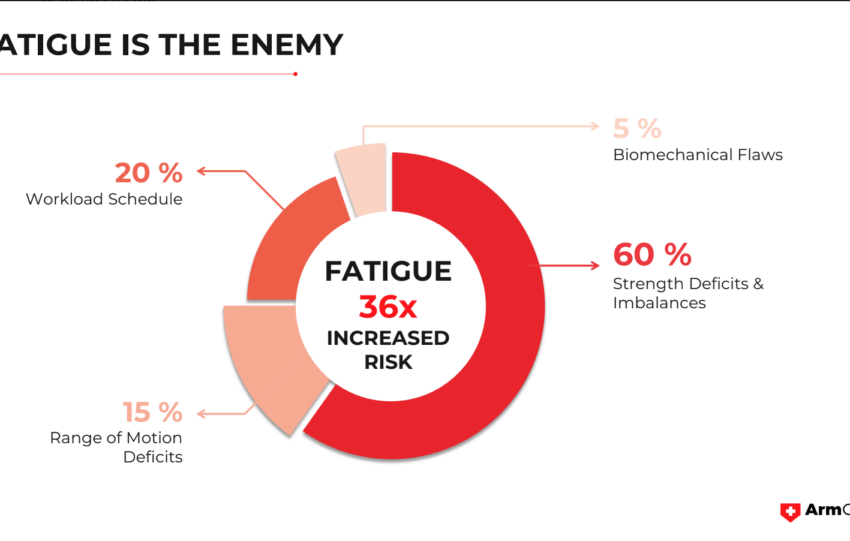
The muscles that protect the elbow fatigue before velocity drops – The small forearm and finger flexor muscles that help stabilize the elbow get tired early in games—even when the pitcher still looks fine and velocity hasn’t changed.
As pitchers throw more, the elbow physically opens up – Ultrasound studies show measurable gapping on the inside of the elbow after roughly 60 pitches.
Weaker shoulders mean more stress on the elbow – Pitchers with UCL injuries consistently show lower rotator cuff strength than healthy pitchers. When the shoulder can’t do its job, the elbow takes on more load.
Forearm fatigue hurts control before it hurts velocity – As the forearm fatigues, pitchers lose command and consistency—even when radar gun readings stay the same.
If you skipped over all that research, just know this…
- Fatigue shows up before pain
- Command drops before velocity
- Injury risk rises before pitch counts are exceeded
Fatigue shows up before pain
Command drops before velocity
Injury risk rises before pitch counts are exceeded
The common thread is that when strength (the ability to produce force) declines, stress on the arm increases, and performance starts to fall apart.
The Problem with Pitch Counts
Pitch counts answer one question: How many throws were made?
They don’t answer the more important one: “Could this arm safely and effectively handle those throws today?”
That’s because two pitchers can throw the same number of pitches, but one can easily tolerate the load, while the other can’t.
Or, even within the same pitcher, that capacity changes day to day.
Strength is the Buffer
Think of strength as shock absorption.
- Strong forearms help protect the UCL
- Strong rotator cuffs reduce shoulder and elbow stress
- Better endurance delays fatigue and loss of command
Strong forearms help protect the UCL
Strong rotator cuffs reduce shoulder and elbow stress
Better endurance delays fatigue and loss of command
The ArmCare App provides an understanding of where your arm is at on any given day, and factors a collection of metrics from fatigue, recovery, shoulder imbalance, and strength-velocity ratios to derive your very own personalized daily pitch count.

Remember…
Strength Matters Most!