Strength in Numbers #33
I remember the game that clinched my first scholarship offer. I was playing in downtown Toronto against a pitcher who was committed to the University of Pittsburgh and was also drafted.
At the time, I was not drafted out of high school, so I was focused on playing college baseball and earning a degree first. I had responded to about 50 school questionnaires, and a few small colleges came out to see me play, but I had not committed, so all options were open.
In this game against two college commits (both got drafted that summer,) I went 5 for 5 with 5 doubles. Honestly, I could hit, but that was one of the best performances I have ever had in my playing career, and I am so grateful for its timing.
After the game, I came out of the locker room, and a man was standing there waiting for me. He approached and introduced himself.
His name was Greg Hamilton, who now happens to be the Director of Baseball for Canada’s National Teams and the most prominent baseball coaching figure in the country. But, at the time, he was the University of Maine’s pitching coach and recruiting coordinator.
He mentioned that he was in town for a few days and wanted to meet with my mother and me and discuss what UMaine had to offer. After 20 minutes of talking with him, I was sold and verbally committed to the college. Of course, it helped that he was Canadian, and a few other Canadians I knew would be in my freshman class.
Taking College Baseball to a Whole New Level
When I look back on this experience, I remember nothing more thrilling for a high school baseball player than being scouted and landing on college recruiting radars.
I remember the excitement of getting invites to draft camps and receiving letters from colleges. It was a great feeling being valued as a player and dreaming about the future. Especially for me, growing up in Canada, hockey was everyone’s first love, but I couldn’t skate, and thank the Lord I couldn’t because I would have missed out on an incredible journey that I’m thankful I can now support other young players in the same position.
Important Considerations for College Summer League Play
For athletes who play baseball in college, it’s a tough grind where there is never an offseason. You essentially play a Fall season made of intersquad games, take a little time off around the holidays, and then when you return in January, you are playing in 6 weeks. Then, after an entire college season, there is collegiate summer ball.
The cycle can be vicious, especially for pitchers who essentially go 2-3 years playing almost year-round before the draft.
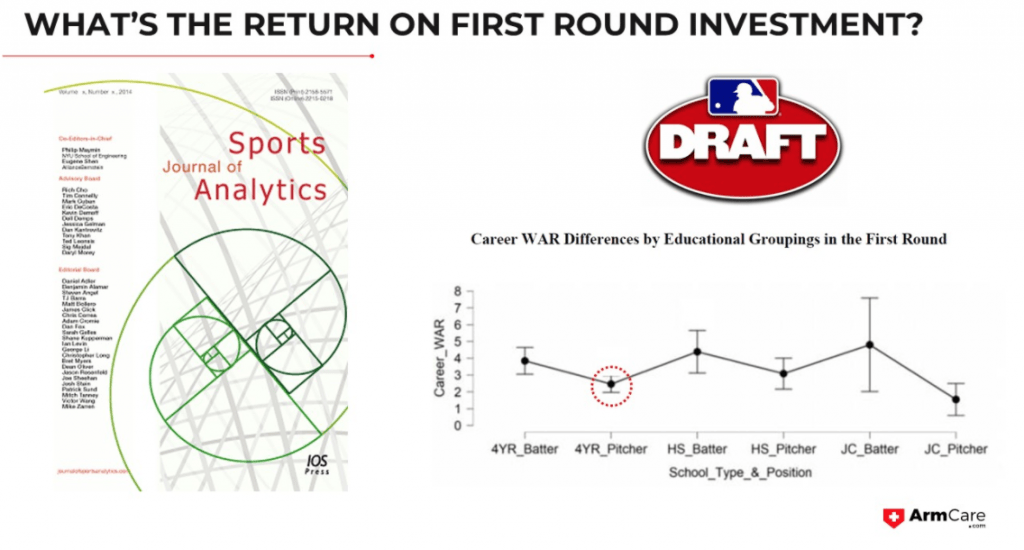
Interestingly, the 4-year collegiate first-round pitcher has lower WAR (Wins Above Replacement Player) ratings versus high school pitchers. This data suggests that high school pitchers are more valuable to teams in the present era. I suspect that collegiate pitchers are more susceptible to injury and may shorten their careers as professionals due to throwing at high velocities paired with year-round wear and tear between the college season and collegiate summer leagues (ref).
Finding the right collegiate summer league for players can be challenging for college coaches. Then for the collegiate summer league team, managing pitchers’ playing time is critical as athletes with high inning counts cannot pitch as often to help the team, and they need to maintain their workload between appearances to reduce the threat of overloading the throwing arm.
Greg Morrison – One of Canada’s Finest
In this week’s podcast, we had Greg Morrison, GM and Owner of the Medicine Hat Mavericks Baseball Club, on the show. Greg is just a great person. He’s very positive, intellectually curious, and a former professional baseball player for the Toronto Blue Jays and the Los Angeles Dodgers.
What makes Greg unique is that outside of his playing experiences and management of the Mavericks, he is a soft tissue therapist and understands the importance of tissue quality, movement, assessment, and training. Greg dives into the intricacies of running the Medicine Hat Mavericks and his experiences as a player and coach in enhancing performance.
Bringing on ArmCare.com will help Greg and other summer collegiate league teams in their communication with collegiate coaches. Between the collegiate summer league team and college coaching staff, they can share how players’ arms are functioning and if program adjustments are needed.
This is important as they both are involved in managing players’ playing time. Part of the problem related to college injuries is communication between multiple stakeholders, and the ArmCare.com technology can bridge the gap to communicate readiness, fatigue, and training needs.
Many of the colleges who use our product send their units with their pitchers when they leave campus to monitor them all season long. With the widespread focus on monitoring throwing arms all year long in 4-Year collegiate pitchers, I expect that their future WAR will increase, as the likelihood of a career being cut short due to injury will diminish.
If you are a high school athlete reading this piece, take it from me, you want to be ready and show your stuff all the time because you never know who’s watching.
Then for collegiate players or coaches, increase your success by monitoring your throwing arm(s) year-round.
Related Content
-
The Roll of College Summer League in Player Development (More Than Velocity #26)
Having retired from 12 seasons as a professional player, Greg Morrison now applies his education and experience to keep his athletes performing at their best through his clinic, Morrison Health in Medicine Hat, AB, CAN.