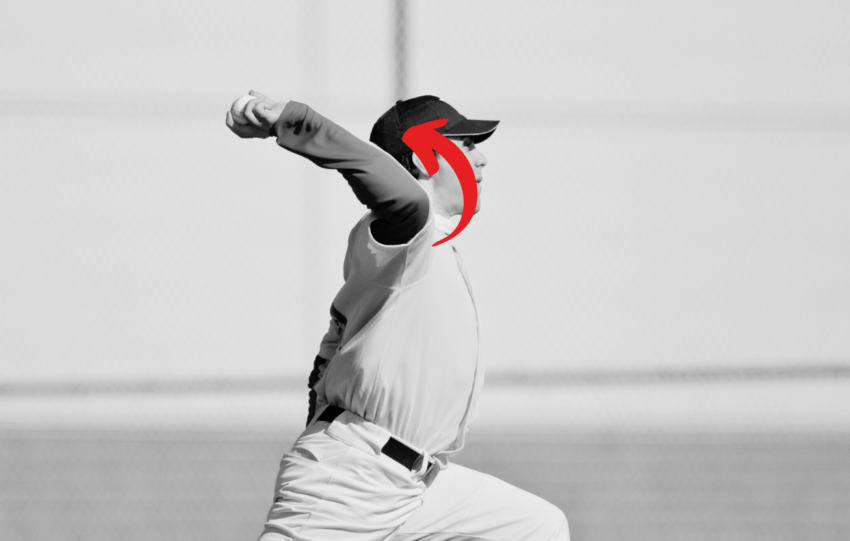
You may have heard that “Eccentric exercise makes you sore, causes tightness post-training, and should be avoided during the competitive season.” But this is poor advice that may be leaving athletes undertrained. In this article, we’ll cover some unique information about eccentric exercises for baseball training that’s not well-known in the baseball performance community.
What’s an Eccentric Contraction?
For those who may not be familiar with the term, eccentric contractions refer to lengthening contractions. Eccentric contractions can vary in time under tension, either held under long periods of time or under rapid conditions. Eccentric contractions are rapid in baseball, especially for the rotator cuff and flexor-pronator mass of the forearm. These muscles must stabilize the shoulder and elbow joint for decelerating high-speed joint actions in throwing.
We discussed this with Professor Luis Penailillo at the Exercise Science Laboratory in the School of Kinesiology, Faculty of Medicine at the Universidad Finis Terrae in Santiago, Chile, and his former graduate student Omar Valdes, who both make a living studying eccentric.
We started out the conversation talking about parallels between soccer and baseball. They are both the same. Athletes start out at the beginning of the season stronger and become weaker in-season. An adage in the sport of baseball is the mindset to “maintain” strength during the season. In reality, if you are maintaining strength, you are detraining. Strength maintenance involves lowered stimulus to grow, resist tension and impart high rates of force. Training can become monotonous with the same routine due to fear of becoming sore or expending too much energy in the weight room.
So what’s the catch?
Part of why athletes decrease strength in season is that eccentric training does not become a priority. Soreness is a real fear for athletes of all levels. Soreness fears actually increase as the athlete ages, and that is for a good reason. When athletes reach 30 years old, their biological capacity to heal reduces, and delayed onset muscle soreness lasts longer post-training bouts. FEAR is an acronym for False Evidence Appearing Real.
Here’s what we learned from our conversation to ease the minds of those who fear eccentric training.
Why do Athletes Need Eccentrics in Season?
For one, training is both muscular and neurological. To stress the neurological system, training has to involve eccentrics to create a more responsive athlete. Take the cheetah, for instance. If a cheetah decided that running involves too many high-speed insults from eccentric contractions, would a cheetah still be a cheetah? Athletes need to train their neurological systems in ways similar to their competition.
Eccentrics at varying tempos are helpful to the cause. Dr. Penailillo said that the cognitive effects are not even close compared to eccentric training. He mentioned that the cerebral cortex (part of the brain that coordinates movement) is 300% more active during eccentric exercise compared to other forms of contraction. Think of how much more brain involvement occurs due to eccentric training.
Athletes experiencing tendon pain are often prescribed heavy-load eccentrics by physical therapists to heal the tendon and reduce pain. Somehow healthy athletes, even those who have undergone aggressive rehabilitation, continue to avoid eccentric training. Dr. Penailillo also baffled us when he referenced an article indicating that eccentric training does not have to cause soreness (ref).
Here’s another important benefit to eccentric exercise…it increases fascicle length. Fascicles are bundles of muscle fibers wrapped by connective tissue. Fascicle length is critical for increasing the speed of contraction.
You may have heard, “a strong muscle is a long muscle,” yet the truth is that a long muscle is a fast muscle. When it comes to the throwing musculature, your horizontal adductors, abductors, shoulder rotators, elbow flexors and extensors, forearm flexors, pronators, and wrist extensors have to contract quickly, making eccentric exercise a perfect choice for training. Fascicles begin to lengthen after one bout of eccentric training.
Conversely, when halting eccentric training, fascicles shorten. Power is a critical physical feature for athletes in baseball. Most athletes are forceful but not fast, and it is not unusual to see a large human being throwing the ball slower than a smaller lanky individual. Force and speed of contraction have to be optimized to increase power. Thus, eccentric training is a perfect choice.
How to Start Implementing Eccentrics
Dr. Penailillo also mentioned that eccentric time under tension is muscle mass-specific. For the throwing arm musculature, he recommended staying under 4 seconds per eccentric contraction. Athletes should also begin with low volume to reduce soreness and condition increased fascicle length. He also suggested performing eccentric exercises over the full range of motion. This means you should still provide contractile effort toward the end ranges of joint motion and not give up and relax.
Learn more about eccentric training in our ArmCare Courses.
Key Take-Home Messages About Eccentric Training:
- It does not have to make you sore to experience adaptation.
- Eccentric training promotes fascicle length, which increases contractile speed to increase power
- The ideal tempo for eccentric exercises is muscle-specific. To add eccentric training for throwing muscles like the rotator cuff and elbow flexors, begin with a 2-4 second eccentric contraction.