As athletes, we understand the importance of a thorough warm-up before engaging in any physical activity, especially in a high-demand sport like baseball.
However, the quality of your warm-up routine goes beyond simply going through the motions—it requires careful analysis and strategic planning to ensure optimal performance and reduce the risk of injury.
Analyzing Your Warm-Up Routine:
Every athlete is unique, and what works for one may not work for another. Analyzing your throwing warm-up routine involves assessing its effectiveness in preparing your body for the demands of competition.
Are you adequately activating the necessary muscle groups? Are you inadvertently pre-fatiguing muscles? These are critical questions to consider.
To evaluate your remote responses, you need to utilize the ArmCare platform’s post-exam function to identify which muscles may be pre-fatigued or lack activation.
Just note the days you do your post-exam evaluations following your warm-up process.
My pro tip is that an average of three warm-up sessions is good for getting a clear perspective on how well your arm is activated.
If you only check it once, you may be a one-hit wonder and catch data points where you had a lack of sleep or drank three cups of coffee and feel like your body is circulating jet fuel.
Activating Muscles vs. Pre-Fatiguing Them:
The interplay between activating muscles and pre-fatiguing them during warm-up is delicate yet essential.
While activation primes your muscles for action, excessive pre-fatigue can compromise performance and increase the risk of injury. Striking the right balance is critical to maximizing your performance on the field.
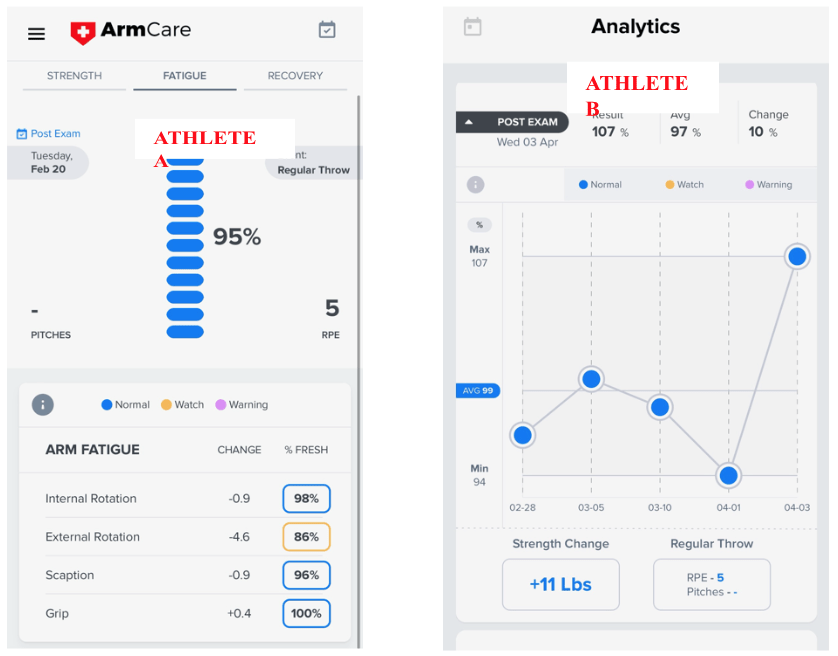
Take these side-by-side examples.
Two athletes with very similar warm-up routines have very different warm-up responses.
This is what I mean by GENERALIZATION = HOSPITALIZATION.
One athlete gets activated, and the other loses strength, causing imbalances for the competitive phase of the day.
Dangers of Following Static Programs:
As you have seen above, many athletes fall into the trap of following generic warm-up programs without considering their individual needs.
A piece of paper program, or following a whiteboard, is time effective for the coach, but with player-led portable technology, this makes no sense.
Templates are meant to be broken down and modified for everyone with important substitutions, volume reductions, intensity changes, pattern changes, tempo changes, you name it.
We ought to focus on adjusting to our athletes’ needs rather than having them adjust to our own. What is considered the “appetizer,” the warm-up routine, is really the main meal.
Maximizing Shoulder Health and Performance:
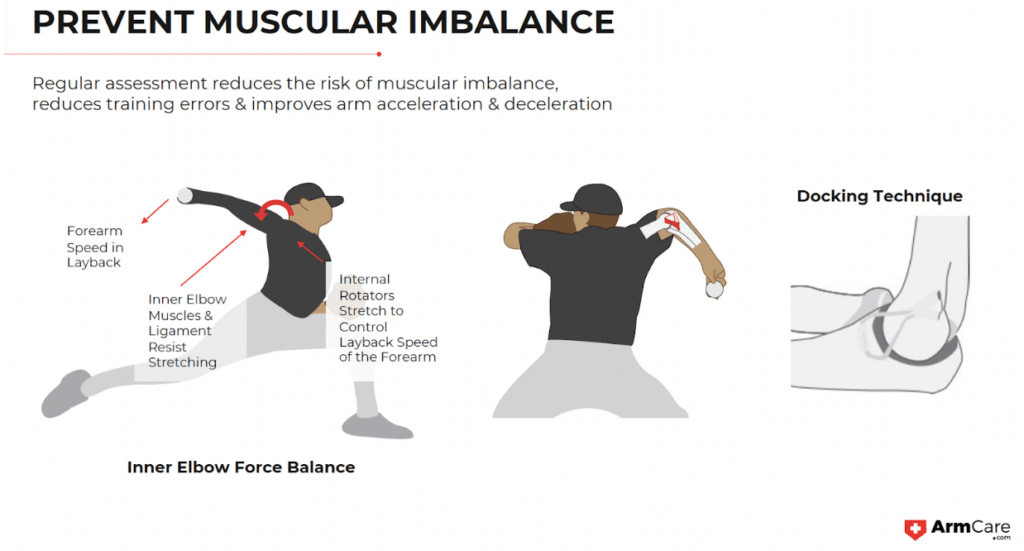
Proper shoulder positioning during maximal layback is critical for optimal throwing mechanics and injury prevention.
Failing to set up the arm optimally through the turn can lead to muscle and ligament strains, as the shoulder muscles co-contract to slow down and position the arm for firing. Paying attention to these nuances can significantly affect your performance and long-term shoulder health.
In conclusion, analyzing and fine-tuning your throwing warm-up routine is paramount for peak performance and injury prevention in baseball.
By understanding the interplay between muscle activation and pre-fatigue, avoiding static programs, and personalizing your warm-up routine, you can optimize your performance on the field while minimizing the risk of injury.
Your shoulder health and overall performance will thank you for the extra attention and care.
We also have a nice little nugget from our ArmCare Scrum 4 that discusses how layback speeds can be regulated by connecting the app data and our two-factor SPEAR Training algorithm.
Spring is in the air – protect yours by strengthening your catapult!