Strength in Numbers #243
As throwing ramps up this time of year, some of you may be using tools like the Pulse Sleeve to track the force on your elbow — commonly called elbow torque.
Even if you’re not directly measuring force on the elbow, you’ve probably heard someone say a pitcher’s delivery “looks stressful on the elbow.”
This is where the misunderstanding begins.
Stress = Force ÷ Tissue Cross-Sectional Area
That means the same force can be safe for one athlete but dangerous for another, because tissue size and strength determine how well the elbow can tolerate that force.
This explains why some pitchers with unconventional mechanics stay healthy for years, while others with clean, textbook deliveries get hurt.
The difference isn’t mechanics, it’s tissue capacity.
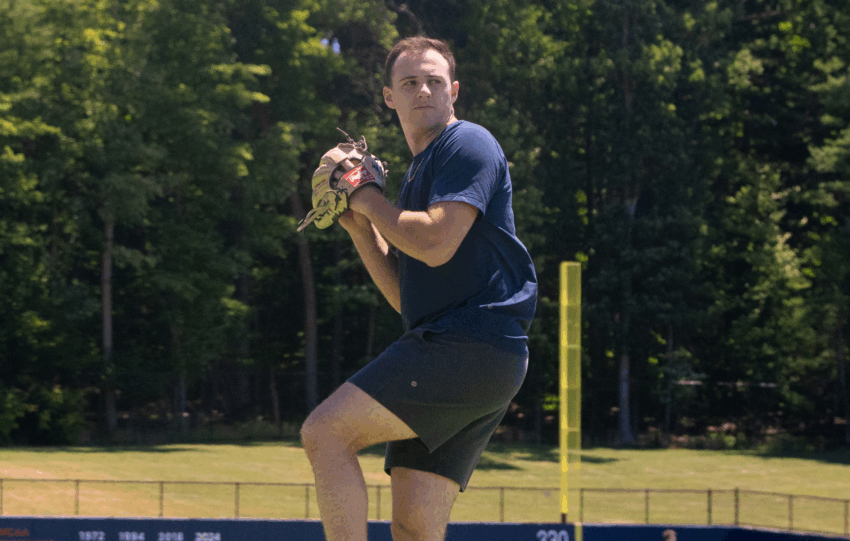
I actually had the opportunity to coach this pitcher. Pretty gross delivery, right?
Despite that, he has been one of the most dependable and durable relievers I’ve worked with — with no Tommy John surgeries.
This is a great reminder: Don’t trust your eyes. Trust the data.
Strength Changes the Stress Equation
When pitchers build arm strength, several important adaptations occur:
- Muscles grow thicker
- Tendons adapt and stiffen
- Ligaments improve their resistance to tension
These changes lower mechanical stress even in the face of the high forces that inevitably come with high-velocity pitching.
But when the arm becomes weak or fatigued, the opposite happens, and tissue capacity drops, stress rises, and injury risk increases
This is why forearm strains and UCL injuries often appear when strength declines, not simply when torque increases.
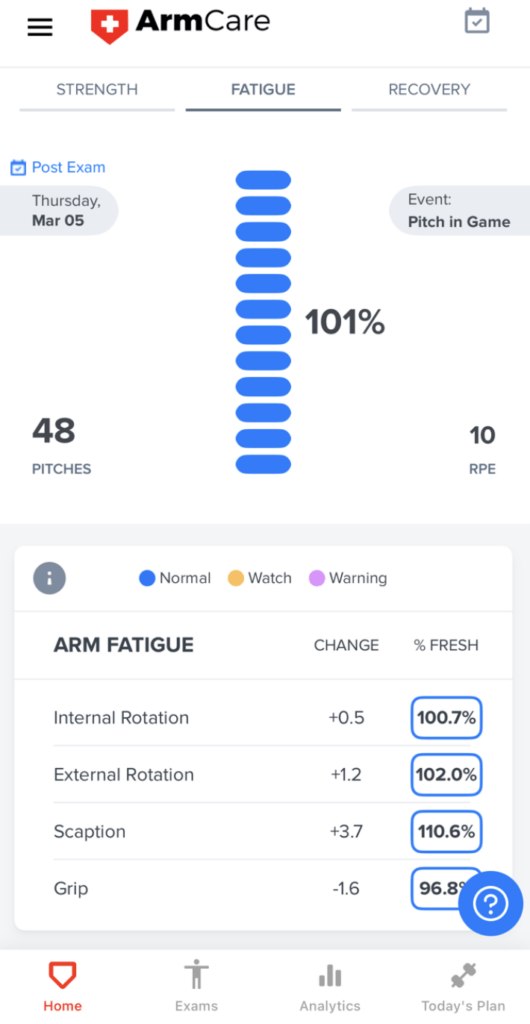
This is a great example of an athlete with a tremendous ability to shield stress.
Notice how they’re showing ZERO FATIGUE (no loss in strength) after almost 50 pitches at a max effort.
This is what you want to see, folks! Efficiency and sustained muscular activation in the face of heavy workloads.
The Takeaway: Build Capacity
Reducing injury risk is more about increasing the body’s ability to tolerate stress than obsessing over force on the elbow.
That’s the principle behind data-driven arm strength monitoring.
By tracking strength and fatigue, athletes can:
- Maintain tissue capacity
- Recover faster after throwing
- Reduce stress on the elbow
Just make sure to perform a fresh ArmCare exam before heavy-throwing days, and the post-exam afterward.
That way, you understand how the arm is functioning before the workload and how it responds after high-intensity throwing—a truer measurement of stress.