Strength in Numbers #241
Right now, I’m working with a college pitcher and his coach, and our biggest challenge is consistent testing after games. Time is short, players are mentally drained, and everyone just moves on.
That means we miss an important data point about efficiency.
We throw the word efficient around constantly, but what does it actually mean?
One of the most accessible indicators, in my opinion, is post-game strength retention.
A pitcher who transfers energy well and repeats mechanics efficiently doesn’t just throw well during the game — he holds onto his strength afterward.
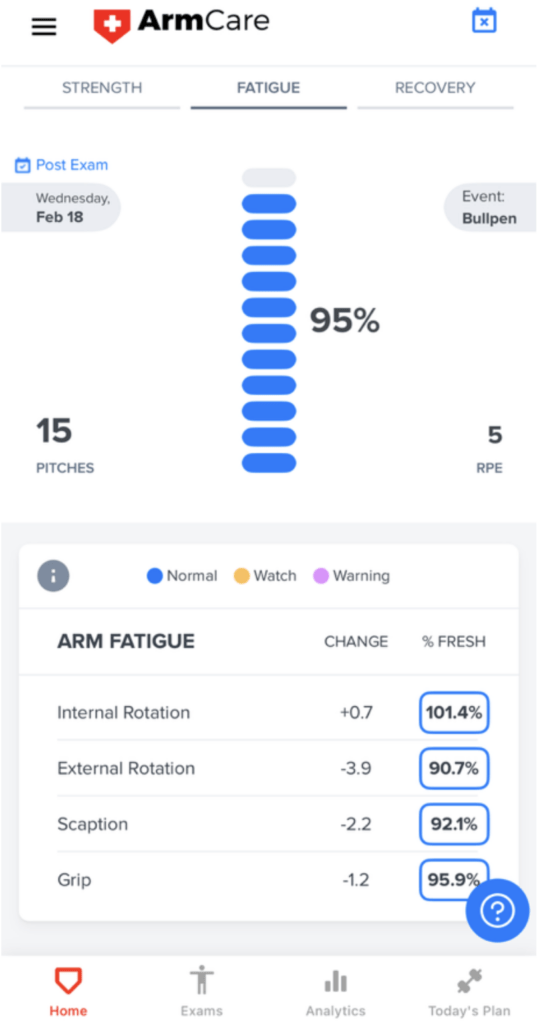
Looking only at workload and RPE, this outing appears easy. It was 15 pitches with a reported effort of 5/10.
But with ArmCare, we can look deeper.
Blue in the app is a good sign. It means everything stayed within normal range with no watches or warnings. Still, despite those “normal” indicators, this session appears more taxing than the pitch count, and RPE suggests based on the strength loss.
We can also see which muscle groups handled the stress well and which ones need more targeted training. While this session indicates it’s well within the athlete’s capacity, their efficiency can be improved.
If we want healthier arms and more consistent performance, we have to measure what happens after the game, not just during it.
The next time someone describes a pitcher as efficient, it’s worth asking what their strength looked like after the outing. That tells you a lot more than mechanics and radar gun readings alone.