Strength in Numbers #76
It’s been almost 10 years since I graduated with a multidisciplinary doctoral degree in biomechanics and exercise physiology.
I remember the sleepless nights, sometimes sleeping in my lab to get through all my data and to get ahead of the curve. If you are going to pursue something that has never been done before, mine in looking at fatigued-induced injuries, you must buckle up because it’s going to be a bumpy road.
I was fortunate enough to maintain my skills and enter an Independent League in Israel to pay for my subjects. Unfortunately, labs typically do not fund sports science research because, oddly, baseball injuries are not a growing concern compared to diabetes, cardiovascular disease, or osteoarthritis.
In my world, and after reading over 1500 articles, I have determined that throwing arm injuries are a critical issue to thwart. Most people reading this who play or have played baseball have been sidelined by an arm injury, and about 10% of the people reading this newsletter have had surgery.
Now when you think about 16 million baseball players, there’s a potential of having over 1.6 million surgical injuries per year from joint cleaning, labral stapling, and the ever-so-present ulnar collateral ligament reconstruction.
Strangely, biomechanics has yet to help identify dangerous mechanics.
Most often, pitching biomechanics research does not.
The primary problem is that we have missing pieces. For example, we model the body differently in 3D space, implement different technologies with no consistency, and biomechanics research usually evaluates the delivery when the lead foot strikes after the wind-up rather than the entire sequence beginning when the lead foot comes off the ground.
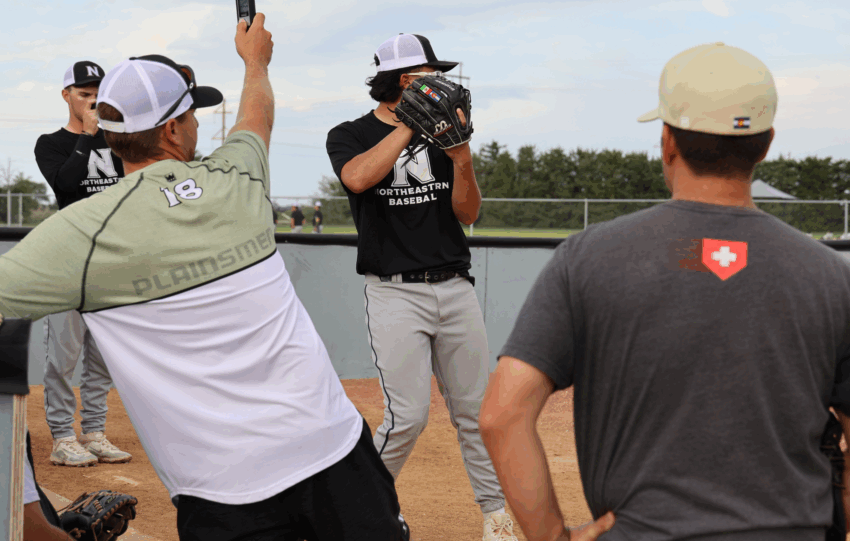
But the Certified Pitching Biomechanist course we hosted last weekend at EXOS in Phoenix, Arizona, moved us closer to connecting the dots.
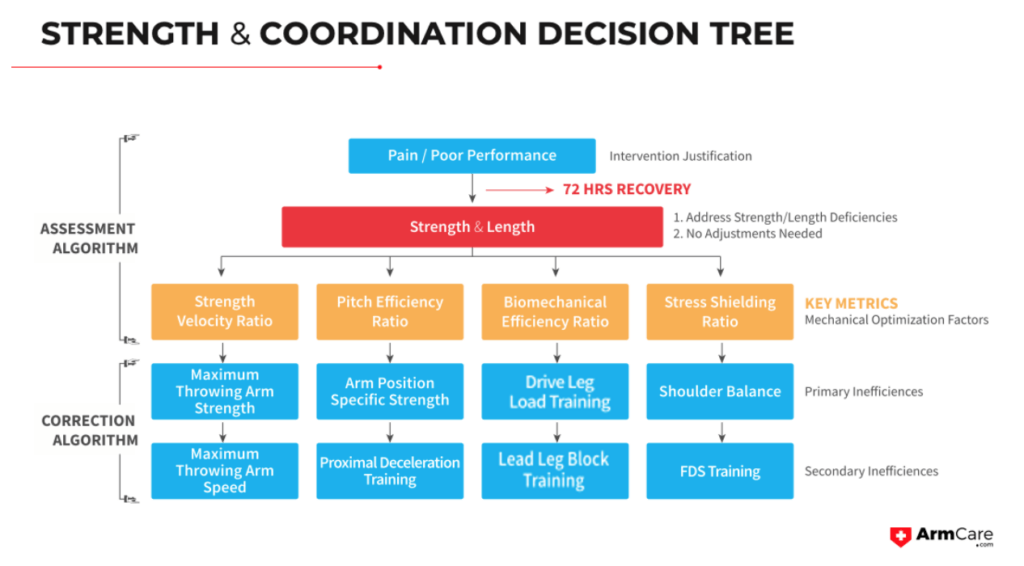
You must understand the flow chart below to get ahead of the curve. Unfortunately, I cannot easily communicate the specifics in a newsletter, but this roadmap will lead to performance and health.
But as you see, strength and length come first, optimization factors come second, and strength and coordination training come last.
Basically, two things are first needed when adopting a new movement strategy: stability/motor control and tissue extensibility. In other words, athletes first need strength to adopt new movement patterns and may require an increase—or potentially a decrease—in range of motion.
The Biomechanics Course addresses this in deep detail, but even better, it shows you what to do and when to change the delivery to succeed from the get-go.
I am confident that you will understand 3D motion capture data, pair it with strength testing and formulate an appropriate strength and coordination training approach to have the greatest transfer of training on the field.
This is an excellent addition to the best data-rich education we already have on the market with our Certified ArmCare Specialist Course, that’s now approved for all major governing bodies for strength coaches, athletic therapists, and physical therapists.
Go here to get the Biomechanics Course. And remember, quality reps cash checks is what I always say, and strength and coordination training will pay the bills!