

Strength in Numbers #144
It’s Sunday afternoon at 1:07 pm. I receive a text from Tejay that reads, “My elbow popped today.”
I am with my kids at the park, teaching them how to hit. My kids understand me emotionally and can see I am visibly upset. I’m saying, “No.no.no” on the phone, and I couldn’t put it into words for them, as I didn’t want them to fear baseball, and I certainly don’t want them to fear pitching.
Our ArmCare Ambassador, Tejay Antone, is facing surgery for a third time, and he is the first athlete I have personally worked for to have surgery under my watch.
Teams have many variables. Treatment approaches and modalities are utilized to protect the health of their athletes. Yet, private consultants like me are responsible for dedicated monitoring and daily communication, and I feel that I missed an important observation window for Tejay.
We have written 144 weeks of these Strength in Numbers pieces, numerous articles, 40 hours of video content on YouTube, and another 33 hours of online education, but not one features an athlete who had surgery that I have personally worked for in supporting their careers and making them more durable.
Writing this newsletter sickens me, and I want to tell you where things went wrong.
That said, over the following three newsletters, I will discuss how my approach with Tejay could have been improved, and we will educate you on our wins along the way in getting him back to the mound after two Tommy John Surgeries and a forearm flexor strain.
Those odds were stacked against us, and fortunately, the Reds staff and their collective process are among the best in baseball. They are heavily fortified with sports medicine, strength and conditioning, sports science, and pitching personnel, many of whom I know and who are egoless in doing right by the player.
WHY YOU SHOULD CHOOSE DEVICES AND DRILLS WISELY IN YOUR APPROACH
The ArmCare.com platform is the apex tool for monitoring throwing arm health and performance. For me, it’s also the ultimate R&D platform for evaluating the effectiveness of other tools and drills used in the baseball industry.
I do a lot of research into the latest technologies and drills with my athletes. We are hypercritical of those who do not serve the purpose of improving strength, maintaining strength, reducing fatiguability, improving recovery, and stabilizing shoulder balance scores recorded by the app.
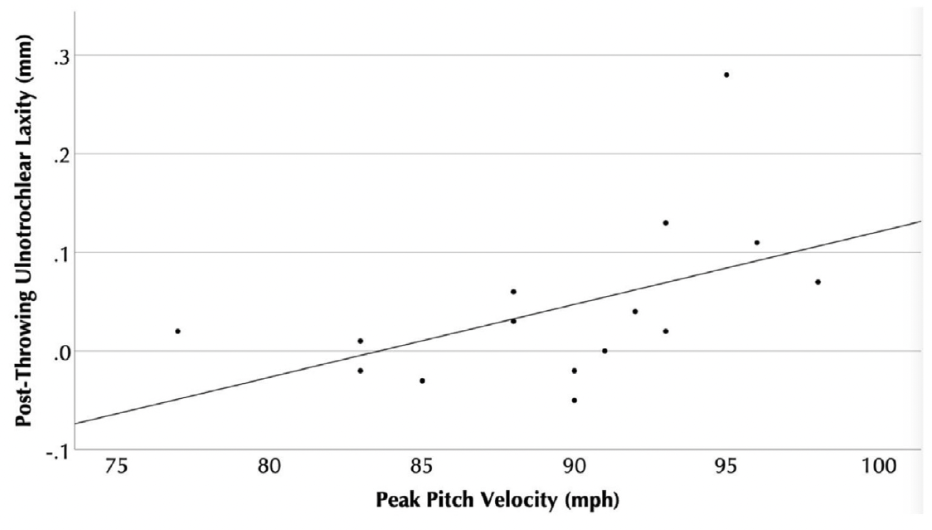
Tejay and I carefully selected the best options available for building back velocity that corrected imbalances and boosted his Strength-Velocity Ratio (SVR), a critical measurement as he throws 100 mph, and that increases joint gapping for the elbow.
WHERE SHOULD YOU BEGIN WORKING WITH AN ATHLETE WHO HAS HAD TJ SURGERY?
It is a monumental feat when you can guide elite-level athletes to break free of their favorite methods and tools. This process can be alarming for athletes, especially when the habits are hardwired in, and the athlete is physically, emotionally, and habitually dependent.
Therefore, the place to start and my number one interest is the warm-up process after an athlete starts working with my firm. I seek to identify if a particular warm-up strategy increases or decreases fatigue? Does a specific warm-up strategy alter shoulder balance before throwing the first pitch?
These are important questions to tackle, and the ArmCare platform allows you to be scientific and individualize the best practices for the athlete, reshape the warm-up for improving throwing arm function and activation, and manage volume and intensity that hinges on objective data to make informed decisions.
So, what significant changes are to be made?
Well, first off, when working with athletes with Tommy John in their history, they must be especially careful with the rapid action of throwing the weighted ball backward. It significantly challenges the inner elbow, as the catapult is being cranked backward faster than when thrown forward.
Next, look at the strength test to see if you can parse out the story of why the athlete had Tommy John in the first place.
Typically, athletes with medial elbow issues often have significantly skewed shoulder balance scores in favor of external rotation, while grip strength is less than 15% of their body weight.
It’s important to fix those imbalances and deficits to prevent future injury and remove reverse throws from the return to performance program.
TRICKS OF THE TRADE
Getting back to Tejay, we spent a while refining his warm-up routine until we saw a positive arm strength response afterward.
A player in the return-to-performance program has some advantages, such as the opportunity to test things and learn more about their bodies, injuries, and outlook.
You will generally have a solid grasp of your players’ preparation processes in about three days of testing. The athlete needs to be consistent, maintain the same routine, and use the fresh exam before and after the test.
In the beginning, try to keep preparation routines the same on mound days until the athlete is fully aware of what needs to be changed in their process.
Too many adjustments made too soon can make the athlete not feel like himself or herself, so it’s important to make incremental changes, reevaluate those changes, and communicate further refinements.
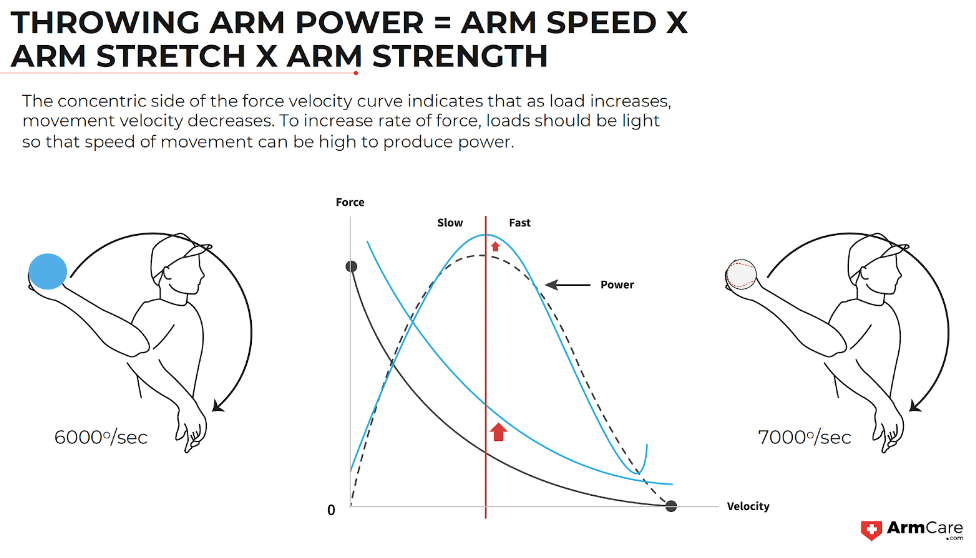
If plyoballs are integrated into the training, evaluate how they respond to light and heavier balls in their plyocare routine to determine whether they are more force-driven or speed-driven in activating their muscles.
This is definitely a more detailed discussion that is had in our Data-Led Velocity Enhancement Course and our new edition of the ArmCare Specialist Certification, for which you can see an important slide here:
As sad as I am about this situation, I see the light peeking through the darkness. Tejay is about to return to Major League Baseball after overcoming three Tommy John Surgeries.
That makes him one of a few nearly 30,000 athletes trusting the ArmCare.com platform who will become even more educated.
He is leading the charge and allowing our company to learn about injury mechanisms and their prevention using the ArmCare platform in all facets of player development and return to performance plan.
Next week, we’ll follow up with more about his return to performance program.