Strength in Numbers #239
The real question isn’t whether an athlete can throw harder—it’s whether they can tolerate the added force safely.
Our data-led approach to velocity enhancement is built around two priorities:
Improving the strength–velocity ratio
Rebalancing the throwing shoulder before adding acceleration
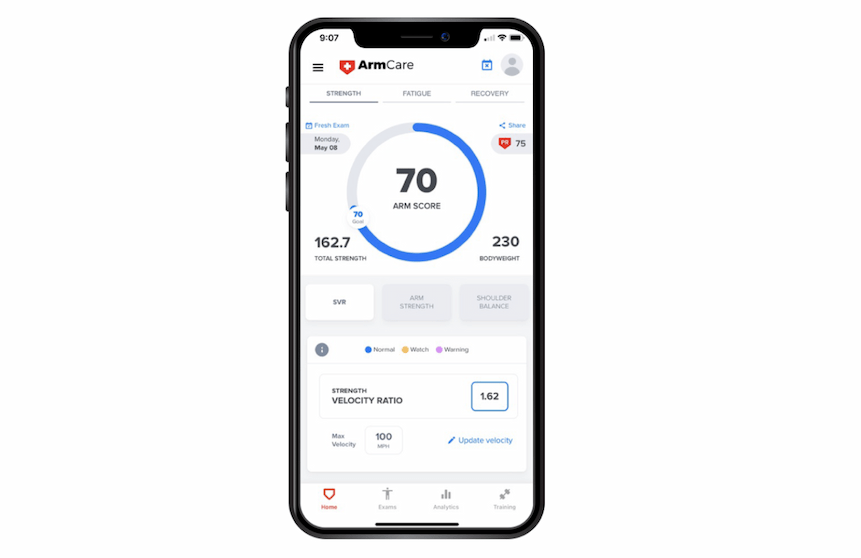
The athlete data shown below is just clearing the minimums:
70 ArmScore
1.62 lb/mph Strength–Velocity Ratio.
That indicates enough strength to sustain the current demands—but not enough margin for aggressive training without increasing risk.
Regardless of how you go about attacking velocity enhancement, you must nail these three things:
- Clear the Velocity Enhancement Checklist
- Test throwing arm strength before each and after every velo day
- Take your recovery work very, very seriously
A key takeaway from our Velocity Enhancement Course:
“If you’re not seeing blue across the app, your arm isn’t ready to go all in.”
High-speed drills like run-and-gun throws can boost velocity quickly—but they also expose the arm to speeds and forces beyond normal mound pitching.
Without proper preparation, risk escalates fast.
This is where monitoring matters. And where strength matters most.