Strength in Numbers #196
No doubt – my career and aim in the game couldn’t have happened without my elbow being touched by fire and as big as a softball at 11 years old. Extreme Little Leaguer’s Elbow is an understatement. The pediatric orthopedic surgeon looked me dead in the face and said, “I am sorry, but I am advising you never to pitch again. It is far too risky for your elbow.”
I couldn’t cry, I did not feel like vomiting, I was not outraged. I felt like a part of me died, and my time on the mound did that day. I had extreme apophysitis that they caught just before I fractured my “funny bone” (medial epicondyle) and would have required screws that could have led to extreme problems down the line. The injury was anything but funny, but it started my journey through physical therapy, dealing with pain, having a plan, understanding critical habits, and became a pathway to something bigger in my playing and professional career.
Every injury has two sides – there’s the breakdown, but there’s also the BREAKTHROUGH. In all the cases I have been involved in working with injured players, they experience gratitude, not from the work and attention they receive, but from the things they learn to lower their risk in the future.
Youth baseball participation has grown significantly over the past several decades. With this population growth, an alarming rise in throwing-related arm injuries has occurred among youth and adolescent athletes.
There have been some extreme cases when I have consulted for families, some involving athletes under the age of 12, who face their child being put under, having grafts and braces fixated to their bones and biologics injected – all for the hope that these procedures last the test of time.
Opportunities significantly diminish with early-stage surgical interventions in a high-speed sport that requires your throwing arm to move at 7000 degrees per second. One of the sports psychologists who works with me and my athletes says simply,” It is much better to stay well than to get well.”, and I am hoping you will take a moment to read this Strength in Numbers to avoid future risks.
If we can create change at the lowest levels, especially now at the beginning of the season, when injury risk is high, the future of MLB will never be brighter. If we don’t lead our early-season decisions with a data-led approach, the bigger the arm, the harder it will fall.
Read on.
I remember my first day in physical therapy after waking up 4 days earlier with a white, hot, and intensely swollen elbow. I was greeted by a physical therapist who had an arm injury as a young athlete, and I was suddenly not alone. I would go to the PT clinic 3x per week to work on strength and mobility, and gradually, the pain was controlled, the inflammation resolved, and at the end, functionality was restored. Little did I know that my Strength Matters Most journey had begun.
This injury led to my first taste of throwing arm-specific training. Upon completing physical therapy, I received a printout of the first formal guide on throwing arm strength and range of motion exercises designed by Dr. Frank Jobe. Dr. Jobe was the legendary doctor who invented Tommy John Surgery. Even more unbelievable, Dr. Jobe is credited with having the longest career following Tommy John Surgery, where Tommy John, the player to receive the first ever UCL reconstruction, played for nearly 15 seasons after surgery and retired at 46 years old!

A page out of Dr. Frank Jobe’s book. Arm care training has since evolved, but this guide is the progeny of programming habits to minimize fatigue, maximize recovery, restore mobility, and increase throwing arm strength.
We know taking care of your throwing arm is essential, and a lot goes into making it more durable. Workload adjustment on a regular basis with the ability to pivot daily is critical.
But something is not right in the baseball world. If we know that prioritizing arm health is important, why are we seeing so many injuries?
Perhaps most notable are injuries to the elbow and shoulder in our youth, such as Little Leaguer’s Elbow and Little Leaguer’s Shoulder, which are driving the growing number of Ulnar Collateral Ligament (UCL) injuries and the catastrophic outcomes related to SLAP tears as adults.
The reality is that we are starting velocity enhancement training unsafely in a developing body, one with open growth plates. I typically see athletes who have paid for general velocity enhancement programs that are unmonitored and ones that prioritize throwing arm speed and range of motion with little to no attention to global and throwing-arm specific strength.
Mechanisms of Injury in Adolescent Throwers
The bones, ligaments, and tendons are still developing in adolescent athletes. The growth plates (physes) are areas of cartilage near the ends of long bones where bone growth occurs. These plates are particularly vulnerable to repetitive stress, especially in overhead throwing motions. There have been reports that the throwing arm is not fully developed and bones are completely unionized for the shoulder and elbow until age 23.
Very interesting that the greatest injury bracket right now for Tommy John is the ages of 17-22 years old, a time in our lives where the arm is not bionic, but somewhat biologically challenged.
We also want to be especially important in the first year when an underdeveloped throwing arm starts playing on the big field.
Little Leaguer’s Elbow
Little Leaguer’s Elbow is a traction apophysitis of the medial elbow, occurring when repetitive throwing stresses the medial epicondyle growth plate. This condition is generally caused by:
- Repetitive valgus stress on the elbow during pitching – a rotational force that occurs near maximum layback that puts tension on the forearm muscles and UCL
- Insufficient recovery time between outings – this is primarily a problem when there are 3 high school games per week and a coach wants to go with the best pitcher each game to win.
- Inadequate muscular strength and conditioning in the arm and trunk – this one is entirely fixable with a data-led approach to examining strength metric,s which is integral to the ArmCare.com platform
As I mentioned in my situation, the continued stress can cause fragmentation, widening, or even separation of the growth plate over time. If not addressed early, this injury can evolve into more serious conditions, including UCL instability and a lifetime of pain and disappointment from chronic injuries.
Athletes are throwing much harder at a younger age. From our Data-Led Velocity Enhancement course, in order to protect them from injury, we need to evaluate throwing arm strength routinely and focus on training approaches that condition the brakes so they do not break.
The Risk of Future UCL Tears and Tommy John Surgery
The UCL is a critical stabilizer of the elbow, especially during the high-velocity demands of pitching. While UCL injuries were once seen predominantly in professional and collegiate athletes, Tommy John Surgery (UCL reconstruction) is now increasingly common among adolescents. The issue occurs when physically immature athletes are in velocity enhancement programs, especially those not adjusted with ArmCare data. They are essentially throwing themselves into danger as the muscles that protect the UCL, the dynamic stabilizers of the forearm, biceps, triceps, and a balanced rotator cuff, could all be fatigued and unable to shield tension away from the UCL, causing it to rupture.
A 2015 study published in The American Journal of Sports Medicine found that 57% of Tommy John surgeries in the U.S. were being performed on athletes between 15 and 19 years old—a staggering statistic that highlights the long-term implications of overuse injuries during youth sports, but even more, entering velocity enhancement programs when unprepared and without a data-led approach to monitoring throwing arm responses.
The Need to Individualize Pitch Counts and Monitor Strength
Traditional pitch count guidelines (such as those from Little League Baseball or USA Baseball) are helpful, but they do not consider individual differences in arm strength, fatigue tolerance, or recovery needs. Some players may tolerate 60 pitches well; others may show signs of mechanical breakdown at 30–40 pitches due to underlying weakness or fatigue.
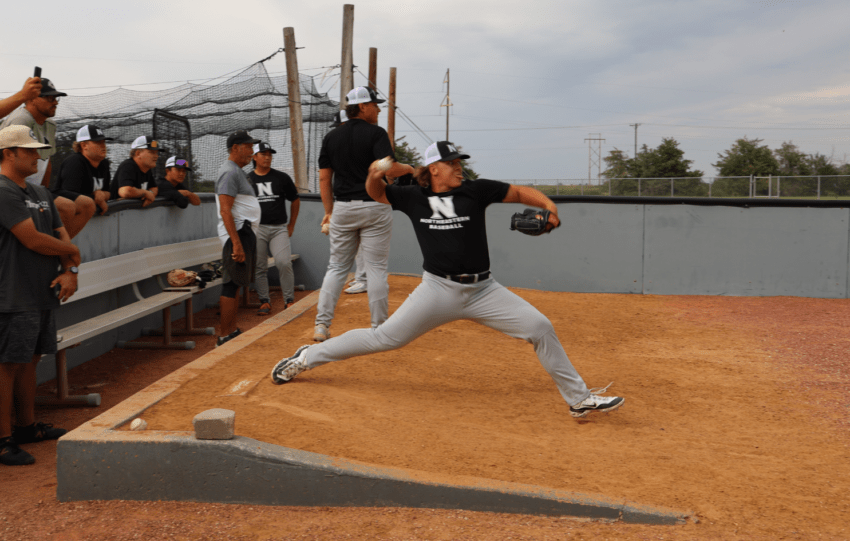
Early in the season, coaches must have a game plan to be effective with low pitch counts and share the wealth.


This player has an ArmScore of 140 at 210 lbs. Due to this athlete having a super strong arm, the pitch count designation at his age bracket has been raised to 140 total pitches,allowingw weaker arms on the team to catch up. Early in the season, the player should not exceed 70% of the maximum pitch total and build up to 100% over 3 starts. Later in the season, athletes with advanced arm strength, minimal fatigue, and an arm that recovers well and is well balanced can have increased workloads because the arm is objectively showing high function.
Cold Weather Risks
A lot of the athletes we work with compete in cold climates. For that reason, early season needs a graduated pitch count to build up and minimize strains and sprains progressively. In cold weather, muscle tissues are less elastic, joint structures may be less lubricated, and freezing may alter throwing mechanics, as athletes do not have pockets to put their hands inside to warm up before gripping a ball.
I coached at the University at Buffalo years ago and threw batting practice in sub-40-degree weather and sometimes a dusting of snow on the ground. It was hard to hang on to the ball at times, and I had to wear multiple layers of clothes to stay warm.
No doubt that impacted my natural throwing delivery. Athletes in cold-weather regions may be at increased risk due to inadequate warm-ups and limited throwing exposure during the winter. We have to exercise caution and stick to the ArmCare metrics to make sound decisions.
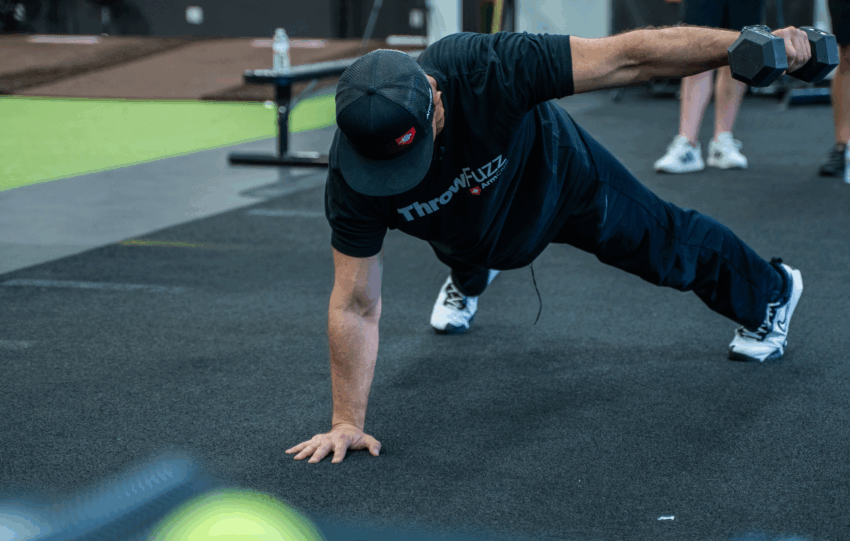
This training video is from our new Certified ArmCare Specialist Course. In colder weather, continuous rhythmic stabilization exercise may be a good option after activation and testing to ensure more blood flow is occurring at the shoulder and elbow and that temperature of the tissues, as well as heart rate should be elevated to increase heat to the joint and release more joint fluid for high speed motion.
Take Home Messages
Adolescent throwing injuries are largely preventable. By acknowledging that their physical body is not yet biologically mature, understanding the mechanisms of injuries like Little Leaguer’s Elbow, recognizing the early warning signs, and individualizing pitch counts using strength and recovery data, we can protect young arms and reduce the need for surgical interventions like Tommy John.
Combining environmental awareness, point and time in the season, technology-based strength monitoring, and informed coaching is key to preserving arm health, allowing adolescent pitchers to develop safely over time, and reducing the injury rates we see in the Major Leagues today.
Strength Matters Most,
Ryan