Strength in Numbers #113
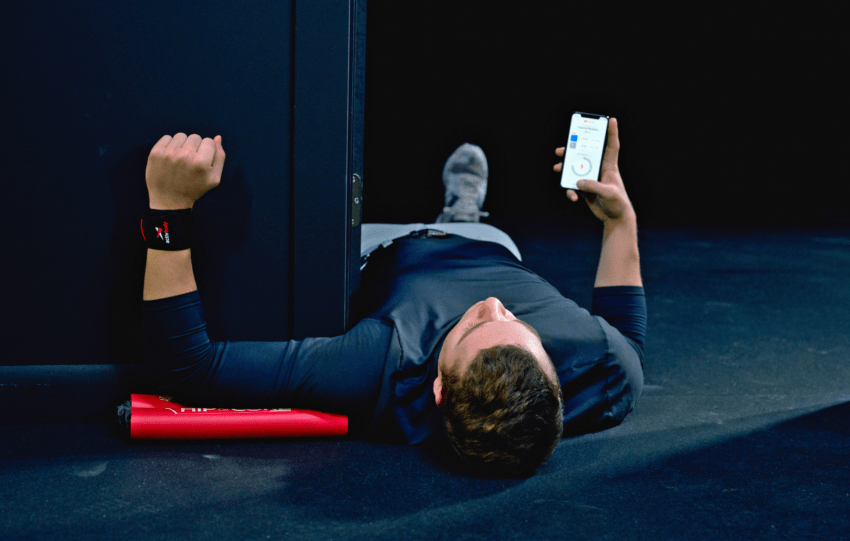
You never want something altered in what the Lord Himself gave you. We have perfectly designed elbows but imperfect ways of monitoring and training—at least until a player has their own portable device, monitoring, and individualized training platform (ahem, see: ArmCare.com).
When you keep revising surgery, more material is lost, regrafting techniques are required, and potentially more hardware is needed to reinforce the torn ligament.
In a recent study I co-authored, which I began while doing my Postdoctoral Fellowship at Penn Medicine, we scoured the research for data on TJ surgeries, as my research focus and specialty is on elbow injuries in throwing athletes.
The article can be accessed here, but if you have issues downloading the full article, please email me, and I’ll send it to you.
The big key with revision surgery is that the outcomes are worse both in return to play and return to performance. Return to play means you can compete, but return to performance means that you are as good or potentially better than before.
The research is chaotic on this one as the surgeon can truly impact the outcomes, and in most cases, you have a little over a 50-50 chance of ever being as good again.
In fact, if you look at this article featured in the Athletic, you’ll find that many pitchers get revisions with some breakthroughs, but most will evaporate into the darkness.
Simply put, prevent the first one so you never experience a second one.
My gut tells me that we will see teams not wanting to pay for an asset with a lower chance of performance, and in the case of Shohei, he could be facing an ultimate pay penalty, costing him more than 100M on this injury case.
And many want to know who’s responsible for such a blunder.
Do I Blame Angels?
I recently posted an article featuring the potential revision surgery emerging for Shohei on Linkedin.
Shohei had come out of games in proximity for hand cramps, fatigue, dehydration, and finally, the secondary tear. Along the way, the GM reported that an MRI scan was offered to Shohei, but it was declined because his issues seemed too disconnected to warrant the procedure.
I don’t blame him or his agent for declining, as I am claustrophobic and had my elbow region scanned, which was disastrous. My hand fell asleep, and I couldn’t move for 20 minutes. Imagine waking up with your hand asleep, but you can’t shake it out for 20 minutes while remaining wide awake.
Needless to say, it sucks.
Besides, regardless of whether the MRI was offered, the approach was wrong, but you cannot blame the GM and Angels medical staff for trying to catch something early.
The verdict is that I do not blame the Angels.
Do I Blame Ohtani?
In every injury case, and I mean every single one of them that I worked with, despite the information provided to the player, they avoided doing things that could have improved their health or held onto approaches that did not serve them to their greatest good.
Sometimes, the athlete sticks with something and throws through pain, which should be a hard no. By the way, we have a course on the topic of arm pain available for you.
When mental models are built in a superstar, potentially the greatest all-around baseball player that has ever walked the earth, the tables turn in the athlete’s favor, and the staff can be unmoved or even anxious about making any changes to him.
Of all the athletes I have ever been around and had the pleasure to work with, Shohei Ohtani is dogmatic, has a high pain threshold, and has a huge training capacity. Those three characteristics are frightening because they increase the opportunity for overuse.
For example, you can see that he takes a ball and throws it off a wall for every single start. It’s sub-max intensity, but it’s a good amount of throws at varying weights, even before he picks up a ball.
No one is messing with that process unless it’s Ohtani himself.
These habits make a great athlete, but they can also break them. Regardless, it is almost impossible to change someone’s routine that they’ve done since the age of 10. It is their comfort and meditation.
Ultimately, professional players, especially foreign ones, don’t leave their past behind. Regarding Japanese baseball, the conditions and injuries are different, which we have found in current research comparing MLB to NPB injuries.
The verdict is that I do not blame the Ohtani.
I Take Some Responsibility
In every injury situation, it’s not a season or a fluke. There is a reason.
When I was hired to come to the Angels, I had other interviews, and the situation arose where the Angels had the most throwing arm injuries in the league for two years running, which was exciting for me.
I interviewed the Yankees earlier, and they were building a major biomechanical process, bigger than anything in baseball or academia. They were searching for technical and computational biomechanists.
However, I’m an applied scientist who likes to coach from the data rather than spending a ton of time calculating, aggregating, or reporting without showing what to do with the metrics. I’m also a strength coach by practice, and I cannot do anything without strength and coordination in the mix.
Needless to say, I did not get the job, but I am so grateful that John Kremer of the Yankees, who was the Director of Sports Science at the time, took my name and included me in a few openings the Angels had in hybridized roles.
They reached out, and I jumped at the chance when I got offered the contract.
I was promoted to Director of Performance Integration during my journey with the Angels. This role put me in the middle of everything, and it was more about connecting the dots than truly working closely with players.
At times, I helped coach, but I administrated more. I probably had the most meetings in the game’s history, primarily communicating about at-risk players and where we should be making pivots.
In this position, I had an inside view of the medical world and began understanding the need for individualized arm care programming.
Getting back to Sho, it was an intricate case.
Whenever I get the chance to coach a new player, the first thing I do is I don’t coach. With Ohtaini, I wanted him to lead me in his training for a few days, so I got to be his training partner along with an interpreter.
I promise you that it would be hard for most people to hang with Ohtani.
He came from a bodybuilder lens of the more work, the better. He enjoyed the feeling he got from the pain, the sweat, and the discomfort of hanging on when most people would drop the weight.
In Spring Training, he and I would train for an hour after pitching. He then came over to the minor league side to hit during minor league camp just for the opportunity to swing the bat.
I believe he could be an elite CrossFit athlete after his career. He can do everything athletically, with off-the-charts body control, and anatomically cut from granite with long limbs and a shorter torso, which is highly flexible and explosive.
Alas, the training, the workload, the pressure, the change in environment and food, communication barriers in trying to connect with teammates on a personnel level, and potential isolation, all factors that could impact his throwing arm health, I am sure, took a toll on him.
I believe he was only able to confide in his interpreter.
This one-man army was working his arm to exhaustion and potentially the central nervous system as well. His arm hurt, and he did not want to be sidetracked.
Even I was too scared to say something to derail this monster, a mythological being with a glove and bat that jumped 36 inches with minimal hip and knee bend and ran a sub 1.6s 10-yard time.
In my position, I was paid to create conflict, get people talking, steer the process based on objective findings, and handle complaints. I have thick skin but a big heart, and I did not have the guts to disrupt what he was doing.
Because of this, I feel some of the responsibility.
The Wrong Process Is At Fault
Sho initially declined testing arm strength, which is an option per MLBPA regulations, and I now understand it’s because he was hurting. And to him, the process of measuring strength would only go against him.
In reality, it’s the exact opposite. Testing throwing arm strength and range of motion multiple times weekly optimizes training to improve a player. It’s not like an MRI to see what’s “going on.”
Shohei is competitive about everything, but he’s also ultra-intelligent. He would have been better able to monitor himself with the right data and know what it meant for his training.
Unfortunately, ArmCare.com was only in its infancy, and it came to me too late while I was with the Angels.
Fast-forward, the first surgery happened, and we became very reactive.
I wanted to kick myself in the face after the surgery. He was open to testing his glove arm, which was the window to diagnosing central nervous system fatigue. We could see his strength was very low in the glove arm, and it didn’t match up when I saw him press 85 lbs of dumbbells for sets of 10-12.
I have often wondered if I forced him to at least test his non-dominant arm and did that each week, could this have been avoided? Or, if we traveled with our large, sophisticated dynamometer that took three people to pack, could this have changed things?
It’s impossible to say, but I do know that the process that was in play did not work.
Looking for signs of injury is incredibly reactionary when we could have fed Ohtani the data needed to help him make a change well before offering an MRI.
Therefore, I largely blame the plan to let players pitch until they’re hurt and hope to catch it in time before things get serious.
Changing the Game
I left the organization without fighting for the very message that I believed strongly at the time, and I am convinced of even more now.
FATIGUE IS THE ENEMY, and you need to quantify it.
I am motivated with an incredible fire to assist ArmCare.com in creating a movement around Strength Matters Most. And that’s not just for Shohei Ohtani, but every single arm out there.
I can never change the past, but we can change the future for the entire industry.
Every player should know where his throwing arm stands, and whatever team is out there looking to cut Ohtani some money—give him every penny because he’ll work for it, but get our company onboard to keep him healthy.
I guarantee it will be worth it.
Now, I’ll leave you with a last question. If your son or daughter, starting pitcher, or client goes down with an arm surgery, who will you blame, knowing that ArmCare has a technology that could have prevented it?
Especially if you understand the principles that:
- FATIGUE IS THE ENEMY,
- STRENGTH MATTERS MOST.