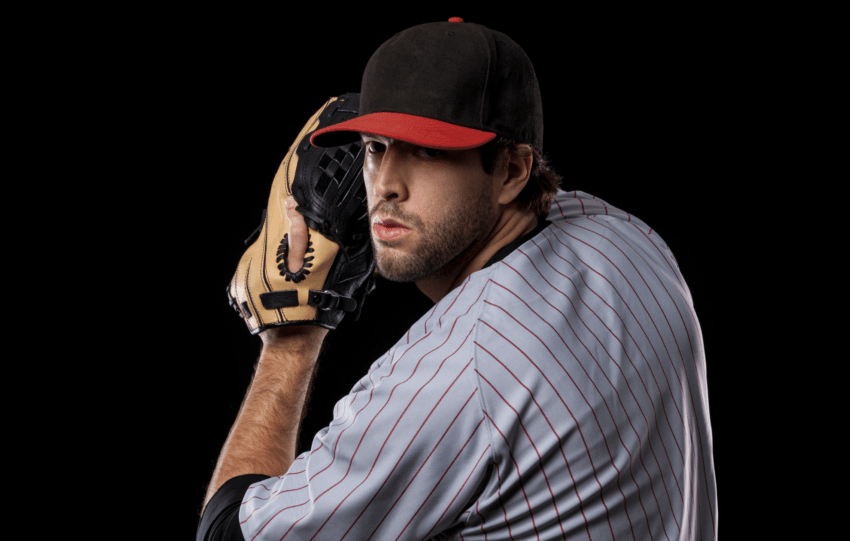
Strength in Numbers #3
There’s plenty of research to show that increased velocity adds torque to the throwing elbow. But is there a way for an athlete to light up a radar gun safely?
This week’s Strength in Numbers will cover a few of the more popular ways to maximize velo and also explore the risks involved. We’ll highlight our latest ArmCareIQ that discusses the controversial topic of weighted balls, and covers the options available for enhancing throwing arm strength, arm speed, and force transfer from the ground—but first, we need to touch on mechanics.
How Do You Train Mechanics?
Everyone’s body is different and provides an individualized way to achieve high velocity. Yet the research shows faster-throwing athletes all express the following throwing mechanics:

- Stride length is at least 85% of the body height.
- Greater anterior and posterior forces.
- Faster trunk rotation.
- Greater time between peak pelvis and trunk rotational speeds.
- Greater throwing arm layback.
- Greater arm speed in internal shoulder rotation to the point of ball release.
- Greater trunk flexion at ball release.
We tend to think of these attributes as coached skills, but they are trained even better in the weight room. For example, athletes can optimize their mechanics with plyometrics, single-leg strength, medballs, core stabilization for anti-flexion and anti-extension, and of course, arm-specific training for the scapular stabilizers, rotator cuff, and forearm flexor-pronator mass.
Our resident pitching expert, Jordan Oseguera, talks a bit more about the need for strength when optimizing pitch mechanics in this video:
In summary, the collaboration between strength coaches, sports medicine staff, biomechanists, and pitching coaches is the best way to get athletes up to speed quickly…no pun intended, and part of what we mean by Strength in Numbers.
The Weighted Ball Debate
The most specific form of throwing arm training involves the use of weighted balls. The evidence is growing that underweight and overweight throws lead to velocity grains—but at what risk?
In this edition of ArmCareIQ, we discuss the concept of the run and gun. It’s a weighted ball drill that can increase throwing velocity but presents some risk because the shoulder and elbow motion is much faster than what occurs during pitching from a mound (ref).
To ensure an athlete is ready for weighted ball training, particularly involving run and gun throwing, ArmCare has a velocity program checklist.
Using this assessment, a player can determine if they are physically ready, mature enough, and have the necessary recovery habits and psychology to succeed. Then to take things a step further, the ArmCare App provides an advanced assessment using strength and range of motion, along with our new metric the Strength-Velocity Ratio (described in this week’s ArmCareIQ video above.)
The bottom line is that velocity programs are effective, but they do expose an athlete to throwing arm injuries.
Before you enter a velocity program, check all the boxes on things that build velocity with less risk and also ensure you’ll make maximum gains with your weighted ball plan.
But don’t stop there! Use the ArmCare App alongside your program to monitor strength and range of motion changes throughout the program, as an increase in layback without an increase in shoulder strength will expose the elbow to greater risks (ref).
We want you to throw hard and be pain-free. Any training to advance performance should build an athlete up and not tear them down. Ensure you monitor yourself closely and communicate with your coach to adjust your throwing demands if your strength reduces more than 5 lbs while your layback range of motion increases by 10 degrees.
We will have more information on monitoring in future newsletters and get ready for our certificate courses later this year. If you have any questions or comments for us at ArmCare.com, please feel free to email us at support@armcare.com.