Strength in Numbers #100
Why the Word “Warm-Up” Sucks!
I have spent much of my professional career identifying ways to optimize performance for high speed, high power, acceleration, and deceleration.
As part of this journey, I have eliminated the words “Dynamic Warm-Up” from my vocabulary.
It’s the ultimate phrase to shut the brain off and watch a bunch of players who give a $%& about maximizing 15 minutes to get better each day.
I’M CRAZY ABOUT PREPARATION AND POTENTIATION
If you worked for me with the Los Angeles Angels, you would have spent a lot of time in the offseason observing high-performance specialists in other sports to help perfect our processes, including our preparation method.
We had weekly meetings about improving our pre-practice and pre-game routines and performed plenty of filming to get it right.
I hate to admit this, but I would secretly video our coaches leading our pre-practice and pre-game preparation routines during Spring Training to ensure engagement and coaching were going on, rather than just having a “follow the leader” type atmosphere or the potential of being disengaged with the athletes altogether as the risk-reward balance shifts dramatically.
It was important to maintain a balanced risk-reward approach.
To illustrate this, in the strength world, the risk-reward spectrum shifts to risk when you pull out a barbell for some heavy lifting. Paired with a greater risk, you will see how your coaches’ energy level goes up, their attention to detail increases, and their stress and anxiety about potential injuries when athletes work up to a 3-rep max or more.
(Interestingly, less than 1% of baseball injuries occur in the weight room, while many more happen early in the season or during games. Hopefully, this highlights the difference between our perceived risks and how athletes truly get hurt.)
Maintaining a positive attitude during a dynamic warm-up routine may seem challenging, but it’s worth it. And by heightening the intensity, you bring on perceived risks that encourage athletes to prioritize and focus on their pre-game routines, which can reduce these risks and reward their efforts.
ELITE PREPARATION
No spoiler alert here, but while I was with the Angels, we bagged the words “dynamic” and “warm-up” altogether.
Our complete process for performance activation was…
- Potentiation (maximum isometric contraction),
- followed by rhythmic contraction to groove elasticity,
- followed by explosive ground reaction force production,
- and finally, we briefly tapped back into the parasympathetic nervous system (rest and relax) so that the body is not revved too high for too long.
If you were an outsider watching our preparation approach with our MLB team, you could easily spot the new players as they would be out of breath, constantly complaining about how we have them do too much on the line, and in some cases, they would be getting extra treatment for muscle spasms at the end of the day.
But the way I see it, if you want to hang with the big boys and play under bright lights in big cities, you need to be resilient and focused during preparation.
With so much constant movement, we had to periodize our preparation strategy with intensification, moderation, and de-loading periods.
The only time you would have to sit around and BS would be on Sundays when players were on their own to do whatever they wanted to be ready for the game. Hence the Sunday circle-up, where players would lie down on the grass with purple bands doing very little other than looking busy while talking about the Saturday night adventures.
Funday Sunday was a good recovery day for everyone, but we all earned it by building capacity from the moment the shoes came on day 1 of Pitchers and Catchers Camp.
4S ACTIVATION
We won’t go into too much detail here, but we just finished filming a new course called Strength Training Secrets for Athletic Performance.
When you take the course, you will be with me for each phase of the 4S Activation, which stands for SQUEEZE – SKIP – SPRINT – STRETCH.
After about 10 minutes, I looked like I had jumped in a pool and felt like playing nine innings myself.
THROWING IN THE TOWEL
At last week’s NPA Conference in Houston, I finally felt at home as the NPA doesn’t use the word “warm-up” either. Instead, they use the approach of block training to prepare the body for the mound.
I have always been asked questions about Tom House’s coaching methods, much of which I have tested over my career, and his progeny of drills checks out.
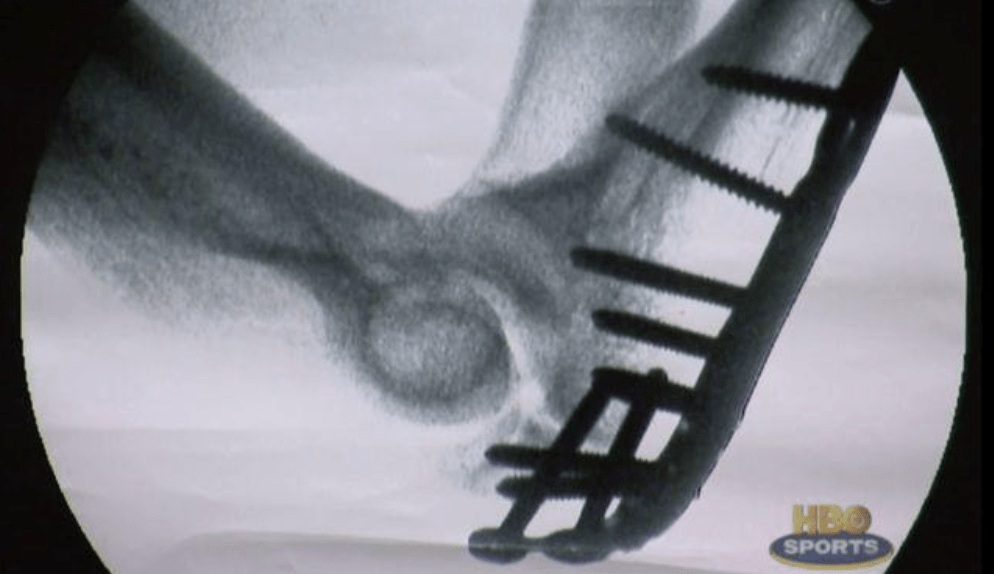
For instance, I watched a special on Steve Delabar doing weighted ball holds that helped him return from a catastrophic injury.
You should read about Steve Delabar, who experienced an explosive injury in his elbow. Through Tom House’s specialized training program that included holding weighted balls and increasing eccentric biceps and shoulder strength, he went from being sidelined to becoming an MLB All-Star in 2013.
When I was with the Orioles, I met Steve and congratulated him in 2013 after the ASG, and he and I spoke briefly about weighted ball holds and what they had done for him.
For me, I see my professional life as a series of locks in front of doors that need to be opened, for which I have been presented a key to deciding whether or not to pick the lock, open the door, and gain further understanding.
Fast forward to my time with the Angels, where I met Jordan Oseguera, who now works alongside me at ArmCare, and we did some heavy analysis on weighted ball holds with our athletes.
I knew I liked Jordan because we argued about how to blend art and science, and his response most often was, “Tom has already done this, man. Trust me.”
The academic in me always wants to do things for myself and eliminate confirmation bias, but more times than not, Jordan was correct.
Tom could have saved me time in drawing the same evidence-based conclusions.
Jordan mentioned that a strong athlete who checks all the boxes in our ThrowFuzz Checklist could use throwing arm strength, range of motion, and shoulder balance data and make corrections in 7 days.
I have now seen this work more often than not.
With a solid, data-led understanding of how to integrate weighted ball holds to improve braking force for both the internal and external rotator cuff, biceps, flexor-pronator mass, and wrist extensors, I have always been mystified by NPA’s use of the towel with their athletes.
I would always hear criticisms about how weighted ball holds did not look like throwing (i.e., pushy, guarded delivery descriptors), and when it came to towel drills, I’d hear the same things – but after seeing the towel drills in flesh-in-blood, it makes total sense from a capacity perspective.
The holds increase throwing arm eccentric force (high-level deceleration training), while the towel drills increase throwing arm concentric force (high-level acceleration training) to promote arm speed and faster coordination, not to mention anaerobic capacity.
I will leave you with this video and talk more about this drill next week, but if you raise eyebrows as I did, I cannot wait to dive deeper into what these drills can provide for your players if done correctly and systematically.
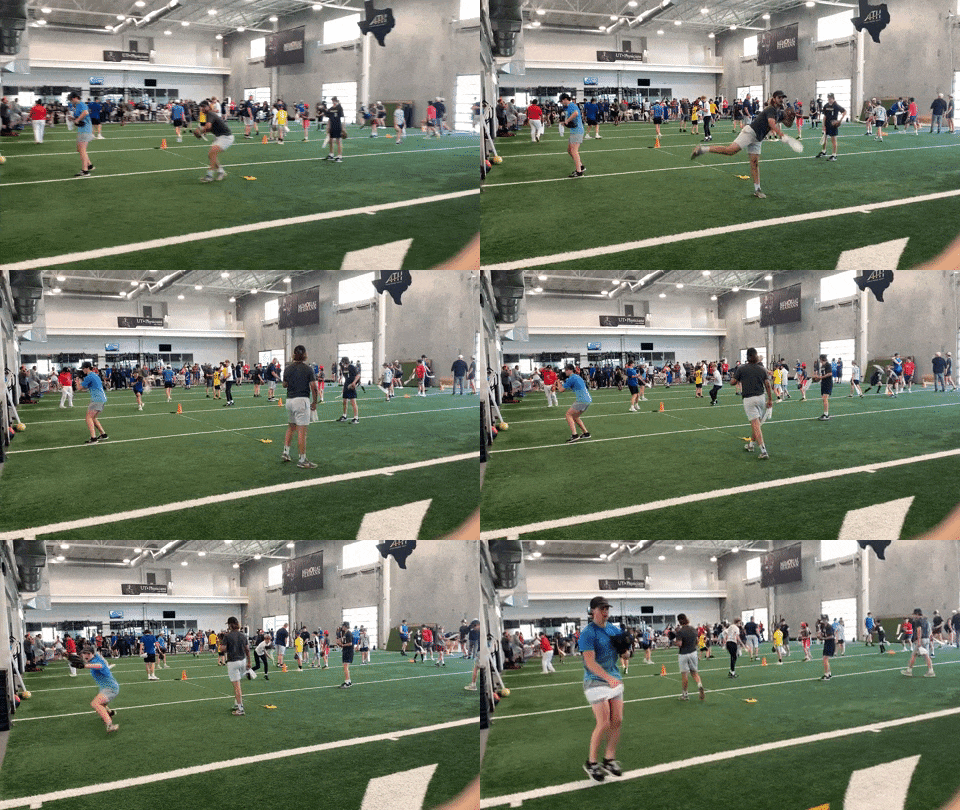
As I mentioned in our previous newsletter, the NPA Clinic in Houston was the best baseball clinic I ever attended.
That’s why I have to write three parts to this saga on all the things you were made to believe were wrong for the throwing arm that is right for the right player at the right time. God bless Tom and the NPA for going through the labor pains for us so that we can have the baby as it relates to performance approaches.
If you attend an NPA clinic and want to get deeper into the weeds on advanced training paradigms, get ready for our updated Certified ArmCare Specialist Course, as we, too, are going to make your life easier by taking the right approaches for your athletes by communicating about strategies that had not worked in the past as it relates to quantified arm strength and range of motion metrics.
We always must make our better best, don’t we?
What are you working on right now to get better at with your athletes in protecting them from injury while sustaining maximum velocity potential and high workload capacities?
Between the NPA and ArmCare.com, you will receive keys for your journey of picking the locks on closed doors.