Strength in Numbers #149
What you put in your mouth goes to your arm, or more simply, your arm is what you eat.
In this Strength in Numbers, I will touch on a critical ingredient to our MLB Recovery Habits Course: Dietary Nitrates (not nitrites, which are not healthy).
Dietary nitrates have emerged as a key component of sports nutrition, particularly in baseball pitching, where arm health and recovery are paramount.
These naturally occurring compounds, found abundantly in certain foods, play a critical role in promoting vasodilation and enhancing blood flow, ultimately aiding in the healing and recovery of the throwing arm.
CIRCULATION IS KING
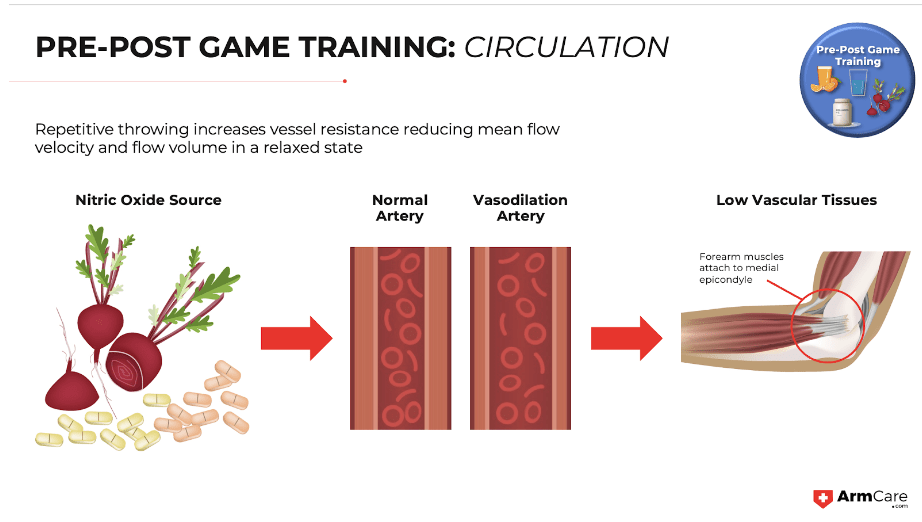
Truth be told, baseball players have low blood volume in their throwing arms at rest (ref), and when it comes to the Tommy John epidemic, deficient blood volume surrounds the distal part of the ulnar collateral ligament, which is the one that gets surgically repaired.
No wonder this ligament is snipped and ripped so often; it doesn’t get much nourishment to begin with, which is why I say, “Circulation is King.”
If you are a steak-eating freak after throwing a complete game, I encourage you to watch what you eat.
By increasing your blood fat content when your arm needs blood the most, you are essentially going to stop traffic in your veins and arteries due to an influx of creamy fat into your bloodstream.

One of the primary benefits of dietary nitrates lies in their ability to increase the production of nitric oxide (NO) within the body. Nitric oxide is a vasodilator that relaxes and widens blood vessels, thereby improving blood flow to tissues throughout the body.
For baseball pitchers, this enhanced blood flow is especially beneficial as it facilitates the delivery of oxygen and nutrients to microdamaged tissue in the throwing arm, accelerating the healing process.
Think of that pesky ulnar collateral ligament——it already lives in an environment with diminished blood flow.
TO BE A COMPETITOR, YOU MUST COMPETE IN EVERYTHING
The kids in today’s game must be more competitive off the field in their habits.
The first thing I do, other than review an extensive intake with my athletes, is have them go through a 20-page food inventory (YES, 20 pages!) so we can identify any potential micronutrient deficiencies and better understand the state of their internal bodies.
It’s pretty plain and simple. If the body isn’t fueled right, the arm will not fly right.
Key dietary sources of nitrates are not what our athletes crave.
Nitrate food sources are bitter and include green leafy vegetables such as spinach, arugula, kale, beets, and beetroot juice. These foods can be easily incorporated into a pitcher’s diet to support arm health and recovery.
Consuming nitrate-rich foods before and after pitching sessions can help optimize blood flow to the muscles and joints involved in throwing, promote faster repair of microtears, and reduce the risk of overuse injuries.
In addition to their vasodilatory effects, dietary nitrates offer other performance-enhancing benefits for baseball pitchers. Research suggests that nitrate supplementation may improve high-effort exercise tolerance, enhance muscle contractility, and increase mitochondrial efficiency (creating high-energy bonds for muscle contraction), all of which can contribute to better athletic performance and recovery.
Incorporating nitrate-rich foods into pre- and post-pitching meals and snacks is key for baseball pitchers looking to harness the benefits of dietary nitrates.
A pre-pitching snack of beetroot juice or a mixed green salad can help boost nitric oxide production and prepare the body for the demands of throwing.
Similarly, consuming nitrate-rich foods post-pitching can support the body’s recovery processes, aiding in the repair and regeneration of muscle tissue.
We go through this entire process with the GREAT EIGHT PERFORMANCE PROCESS—a systematic way for pitchers and two-way players to prepare for competition.
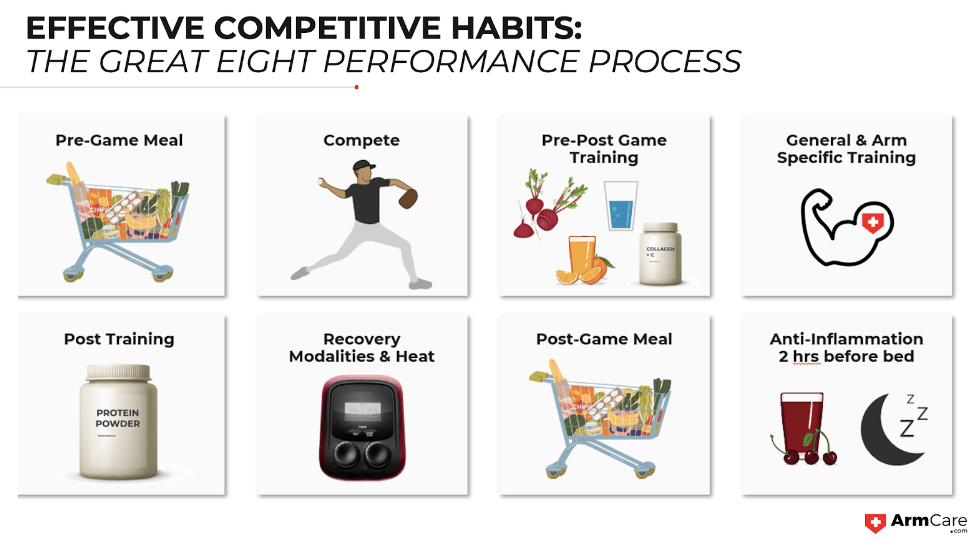
In conclusion, nutrient timing windows and regular consumption of dietary nitrates are crucial for baseball pitchers’ arm health and recovery.
By regularly including nitrate-rich foods in their diet, especially before and after pitching, athletes can optimize blood flow to the throwing arm, enhance nutrient delivery to damaged tissues, and promote faster healing and recovery.
As part of a comprehensive sports nutrition strategy, dietary nitrates offer pitchers a natural and effective way to support their performance and longevity on the mound.
Gain more insights from our live social media discussion on how to prepare for battle and become the King of the Hill.
Ryan