Strength in Numbers #161
I have been so blessed to participate in the USA 13/14U ADP event in Cary, North Carolina. Jim Koerner, the Director of Player Development, runs his camps better than what I have experienced in MLB.
Jim has always been a mentor to me, a true technician, and a coach who is always one step ahead and prepared. He constructed an incredible coaching cast with personalities that struck a perfect blend of intensity, energy, relentlessness, courage, and care.
In the title of this article, I referenced how the little things matter, as I learned so many small details that, when mastered, lead to significant advantages on the baseball field.
First, it starts with adaptability. There were more two-way players than I had seen in the past 35 years of the game. Although athletes were listed as position players and pitchers only, many of them told us that they could pitch and hit, so the adaptability and versatility were there.
We had an opportunity for a centerfielder to come in and pitch out of nowhere, and it was impressive to see, as he finished an inning with a runner on third, 2 outs, 3-2 count, and broke off a curveball to freeze the batter and then walked off the field scoreless.
The athletes were 12-14 years old, and on average, pitchers were in the low 80’s, with a good amount of electrifying stuff touching 90mph with 77 mph sliders. It was awesome and humbling to see what kind of talent is around. No doubt there were players with big-league talent.
The indoor facility was incredible. You can play sim games inside, drop the cages down, and perform tests and measurements to profile athletes’ physical abilities in how they jump, contract, and stretch.
I was amazed that we had all 50 players and staff inside during the rain, with plenty of space to get work done. I could actually get players out of their cleats and go through some specialized forearm training with a baseball bat, utilizing baseballs as trigger point tools with plenty of space to restore the body, mind, and spirit.
THE THINGS I TAUGHT
Jim is dedicated to player health. He wanted the athletes to be educated on how to care for their bodies, build a process, and recover better than the competition.
That’s where I truly fit in.
I have a deep understanding of how to prepare, how to restore, how to push the pedal to the floor, and how to get the athlete to wake up and come back for more.
I got my hands dirty and worked with athletes to create a sound performance process.
The games were exciting. We saw a walk-off that was a little crazy with a ton of runs, but the guys could be on the field for 3 hours easy in games and another 1-2 for technical coaching.
The biggest thing they did not realize was how the little things off the field mattered.
A few players with headaches, dehydration, and residual soreness learned valuable information at this camp that will set them apart for years to come.
I am going to recap a couple of important slides that were shared and that the young guys started to put into practice.
1. RUN, JUMP, THROW
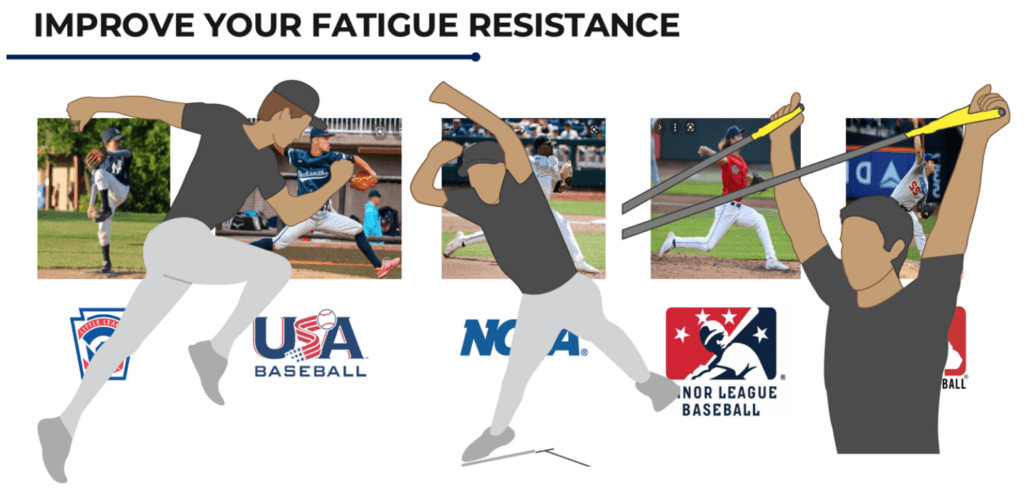
When you are training for baseball performance, the focus should be on sprinting, jumping, and throwing arm strength.
This is not to say that other forms of training do not matter.
Still, conditioning for fatigue resistance and high-octane performance is about efficient neural recruitment and explosiveness through optimized stretch-shortening of muscles and tendons and their interlimb coordination.
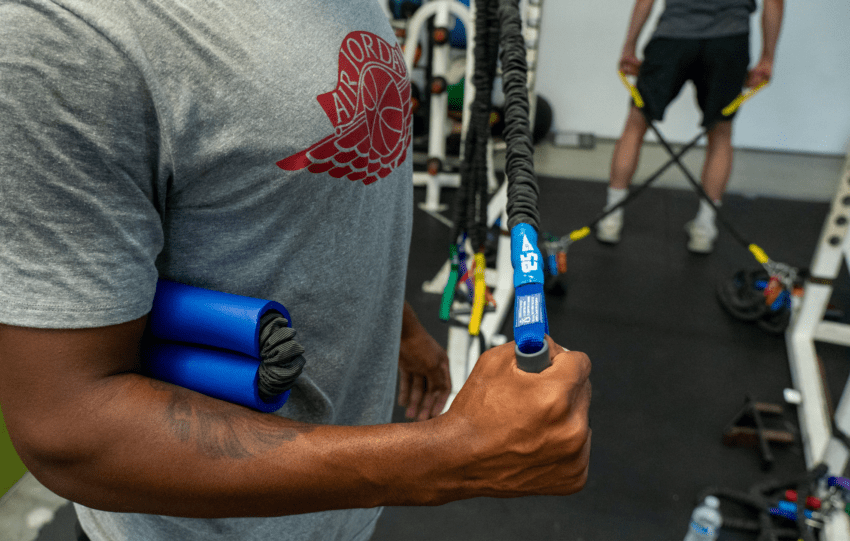
Many of the athletes did not have a speed-driven routine, lacked multidirectional power, and were training with bands and handles, which was all new.
They did a great job. Regardless of where players are in the competitive world, the training process is consistent: sprint faster, jump higher and further, squeeze the heck out of the handles, and boost maximum arm strength.
2. BURNING CLEANER FUEL
The guys were young, and many did not know how a grocery store was constructed.
I gave them a taste of our MLB Recovery Habits course and spoke about the design of a grocery store and how to shop. It’s hard to read labels, but again, the little things matter, as do the stickers shown below.
When you pick up food in the aisles, look for them; it’s a bonus if two are found on a package. This lowers inflammation and improves digestion, and this good old word is called bioavailability.

3. COLLATERAL DAMAGE CONTROL
I talked to them about a little ligament called the UCL to prove how the little things matter.
You know, the one that frequently gets torn in pitchers, the one that is repaired with Tommy John Surgery. I asked each player to put their hand up if they knew a player their age who required Tommy John Surgery. It was unanimous – every player had their hand up.
One big reason is that the ligament does not get a lot of blood, so we had the players spit test their nitric oxide levels—all but two were depleted and lacked an understanding of what foods to eat.
These little things can become big positive or negative things if attention is not paid to them.
Your arm is what it eats. Feed it sludge, and the motor slows. Provide it rocket fuel with foods that raise nitric oxide levels, and you are on the path to a much more responsive throwing arm and one that repairs well.
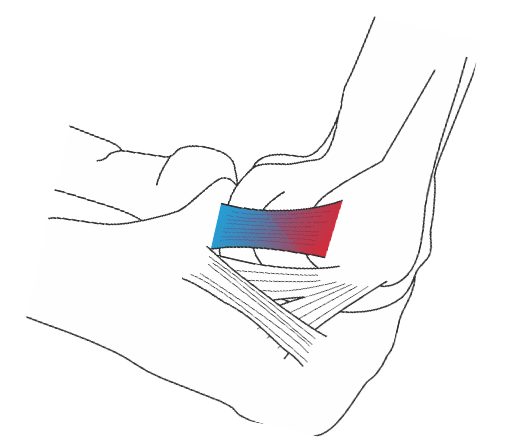
(The UCL has more blood flow at the proximal end, which is signified by the red color (part that originates on the upper arm), than the distal end, which is blue at the insertion point on the forearm. No wonder most tears that require surgery are at the blue end of the ligament.)
WHAT I LEARNED FROM THE INSTRUCTORS
Skill development and player development were two different things for this camp. These athletes had to understand all the intangibles to make a player the best in the country. I listened to what the coaches had to say daily and dug deeper into my mind about the actual relevance of every word spoken.
Keith Zuniga
Keith is an Associated Coach with a specialized understanding of pitching from the University of Hawaii. I liked how he spoke with an athlete in my presence. A young pitcher who was about to start a bullpen when he asked, “What do you want to accomplish? Will this bullpen be over the rubber or over the plate?” He further explained that distinction. Will this bullpen be movement-based or pitch development-driven and simplify the process for the young athlete, aligning his concentration to the emphasis of the bullpen rather than merely doing everything all at once. Ultimately, heightened focus led to a successful bullpen.
Brett Tomko
Brett was a highly respected and accomplished MLB pitcher. He had so much pitching knowledge to share with the players and our staff, as he was genuinely connected to the way of the MLB pitcher. He could easily spot the root causes when a player missed location – a trained eye, to say the least. He battled ups and downs, and Brett’s story before his signing day was unbelievable to me. What was interesting was that he was a walk-on, very ironic for someone with 14 years in MLB. He was not fazed by rejection and was a workhorse, not a show horse and got it done on the mound. His arm had an injury history, but he had one gear and that was to train the heck out of himself. He lives his message about being a good teammate, as I can see how well he connects with people, and it comes naturally.
Connor Gandossy
Connor has a widespread ability to coach multiple areas of the game. He was working with the catchers, integrating team defense, and has a passion for hitting. I was fortunate to listen to him speak to parents about the recruiting process, which was very interesting. I really loved how he implemented the rundown drill work, going from order to chaos with throws on the run-around runners. The guys looked amazing, and it challenged them. No pressure, no diamonds is what I took from it. Make it challenging for players to grow into for their future. He also had a sense of when to get the catchers out of the heat sent me players to work with on recovery. Little things like paying attention to how guys are feel and what they are saying are critical, even more, he acted on it and we were able to restore the guys after a pretty full week of games, drill work, team defense and testing.
Mike Kinkade
Mike is a seasoned coach and former MLB player himself. He’s also a USA National Team veteran and had some profound things to say to the players. When you break it down, the National Team is hard to play for, there’s only one team, opposed to MLB which has 30 of them. He elected to leave MLB for a short while to be with the National Team and represent the country. I loved his views on a two-strike approach, how defensive it really is, and how it can stunt a player’s performance.
Carlos Varela
Carlos is an accomplished high school coach and coaches in the Appalachian League. His energy is infectious and when I watched his team defense sessions, I saw different approaches to throwing the ball around the diamond, back pick sets from catchers, and changes in tempo. The variance in drill work kept players in the moment and that brings me to Marty Lees.
Marty Lees
Marty has tremendous coaching experience in the state of Oklahoma and throughout NCAA D1 baseball. His passion is on the infield and his approach to coaching is inviting, treats it with calmness and had a very profound expression when we had the collegiate recruiting talk with the parents and players. He said, “Be where your feet are.” What he meant by that is today’s young athletes are thinking too far into the future. These players are pumped full of college coaches interested in them, the things they think they need to do earn scholarships, or be drafted. Be where your feet are and work hard at being where your feet are opens doors because you are in tune with your environment and the task at hand – to make quality players, good decisions, show instincts, and compete at a high level.
Rob Cooper
Rob is currently at the University of Miami. Tremendous baseball experience in collegiate baseball, Rob comes at the game without ego and is a consummate educator. He has a connection to everyone I know, and he is honest and open about life and the game. For me, he is a father-like coach, not afraid to critique with a focus on teaching moments, but he embodies the game’s real meaning to make long-lasting impressions and relationships. He said, “Say It Loud and Say It Proud,” – as the players chanted in harmony, “USA.” He mentioned you need to take pride in your work rather than pride in yourself, coming at the game with no absolutes and an openness to learn.
Bottom line, I am so grateful for the opportunity to be around such leaders who are driven to make this country the best in the world at the sport we all love.
It was a top 5 baseball experience for sure for me.
Our National Director of Player Development, Jim Koerner, has it right – there is serious strength in numbers, both literally and figuratively.
When the right people come together, all good things come together, both in life and on a baseball field.
Say It Loud. Say It Proud!
Ryan