Strength in Numbers #171
We are building off Part 1 in this two-part series, starting with the word “survivorship” regarding Tommy John Surgery (TJS).
We are referring to the length of time a player can expect their reconstructed UCL to remain functional without re-injury. It’s a strange word as it makes you think of death after surgery, but it could be for your throwing arm.
Studies suggest that the average time between the first TJS and the need for revision is approximately 6 to 10 years in professional athletes, depending on factors such as rehabilitation quality, a critical cornerstone influenced by tissue strength, pitching mechanics, and workload management.
These are things we can modify and most certainly monitor and protect.
You may not know that the rise in revisions suggests that survivorship is shorter for pitchers today compared to earlier years.
This is likely due to the increase in high-velocity pitching and the physical toll it places on the UCL when you cannot absorb force after surgery.
Studies have shown that pitchers who experience UCL re-tears often do so within the first three years following surgery, with many reporting pain or reduced performance within the first two years.
Let’s dive into the facts and flip the script – prevention needs to be a greater focus than intervention.
TOTAL UTTER RIDICULOUSNESS
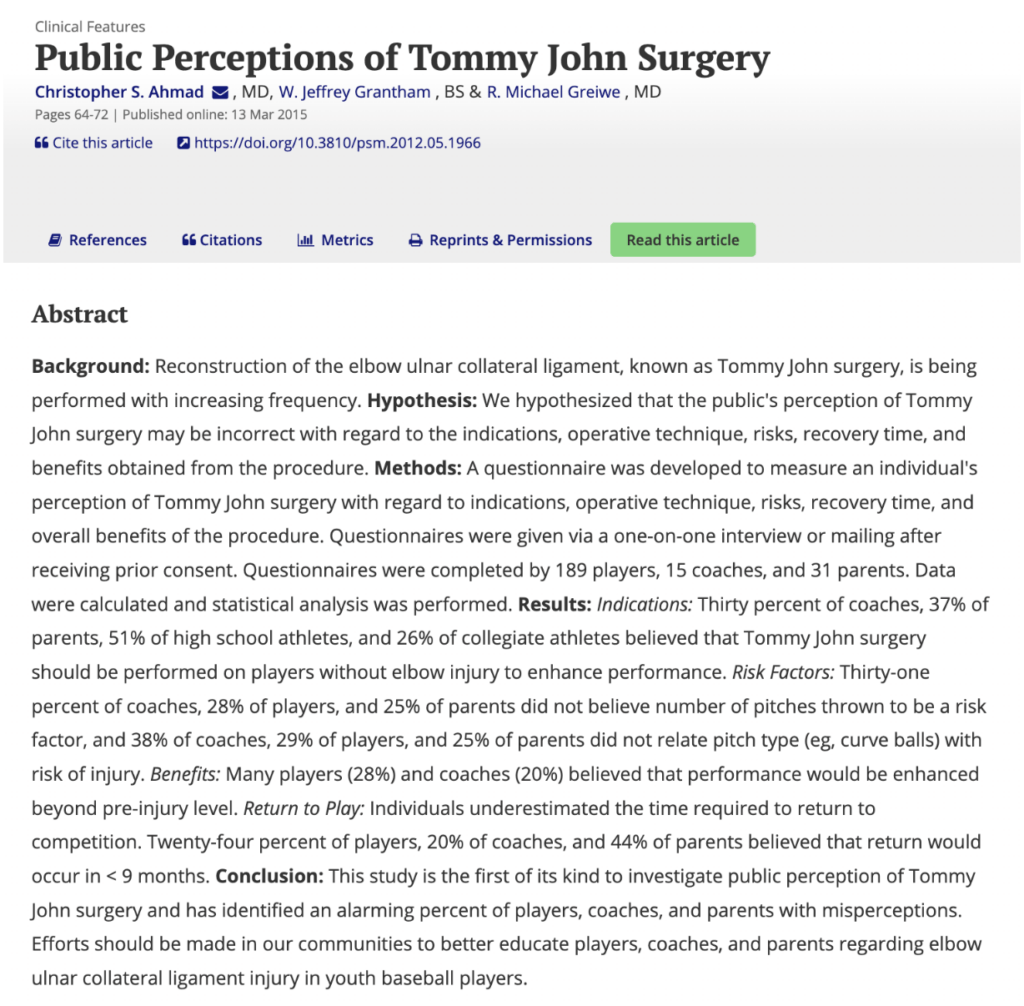
I first must start this second half with this peer-reviewed abstract. I had to screenshot it in its entirety. Its ridiculousness is frightening, and the misinformation about what people think and what is known about TJS is staggering.
I commend the co-authors for highlighting a major problem – a lack of education and a preoccupation with intervention over prevention.
I once was in a boardroom meeting discussing pitchers who we recently signed and having conversations not about how good the pitchers could be in our farm system but how we prolong the “inevitable,” that being TJS.
We also had the “save the bullets theory.” That meant we needed to restrict the number of throws at our lowest levels at all costs to delay surgery amongst our young, high-level prospects, which would reduce the liability of revision surgeries before arbitration or free agency that may turn our studs into duds.
Then there was the “cost of doing business” campaign. We launched a few versions of a weighted ball training program. We expected 25% of the athletes in them to have surgery, and we beat those projections.
In the early stages, 33% of the athletes had arm injuries, with most being surgery within one year of participating in the team’s high-intensity weighted ball training program.
When Jordan Oseguera, who is with ArmCare.com as our Director of Pitching Performance and then with the Angels, took over the pitching enrichment training programs – we dialed the plan in with customized routines and throwing arm strength evaluations provided by our complex physical therapist.
The team had zero surgeries for the first time, and 7 program graduates eventually reached the big leagues. We saw success and found the “magic bullet,” a process to monitor and condition pitchers and help them build a bulletproof arm.
We realized it was possible to throw a lot, throw faster, and be pain-free, not to mention surgery-free. With a data-led approach, the optics of a velo program when from risk>reward in my eyes to reward>risk.
PERFORMANCE METRICS POST-TOMMY JOHN SURGERY
Pitchers’ performance after undergoing Tommy John surgery is a critical topic in sports medicine. Research has shown that while a majority of pitchers return to the mound, their performance within the first three years post-surgery varies.
A study in The Orthopaedic Journal of Sports Medicine found that approximately 83% of pitchers return to MLB-level play following their first TJS.
However, their performance, measured by fastball velocity, innings pitched, and earned run average (ERA), tends to decrease slightly in the first two years following surgery.
1. Velocity: Pitchers typically experience a slight reduction in velocity after returning from TJS. This decrease is often less than 2 mph but can impact performance, especially for pitchers who rely heavily on fastballs.
2. Command: Command, or the ability to locate pitches accurately, is often diminished in the first year following TJS. This is attributed to the altered biomechanics and strength imbalance that may develop during rehabilitation.
3. Durability: The ability to pitch deep into games is often limited in the first few years post-surgery. Pitchers may experience fatigue or discomfort more quickly, leading to shorter outings.
As you can see, a TJS, even performed by the best surgeons on the planet, does not guarantee you will be better than ever.
The amazing thing is that for factors #1-3, using the ArmCare.com platform, making data-led decisions as it relates to a player’s Strength-Velocity Ratios (increasing throwing arm strength relative to velocity), identifying strength implications that are associated with losing command, and quantifying throwing arm fatigue levels will set the athletes on a path to have greater success following the surgical intervention.
WORKLOAD MANAGEMENT IS CRITICAL AND HAS TO BE INDIVIDUALIZED

A common factor in both primary TJS and revision surgery is improper workload management. Many pitchers experience a high volume of pitches at a young age, especially in college, leading to cumulative damage over time.
Modern research emphasizes the importance of monitoring pitch counts, innings pitched, and recovery periods to prevent overuse injuries. However, as mentioned earlier, the emphasis on velocity and performance often leads to increased workloads, particularly in competitive environments like college baseball, exacerbating the risk of injury and revision surgery.
When an athlete is ready to return to the field, the first few outings need to be scaled so that the demands are low, and you can reaffirm the throwing arm’s response with post-exams. If a pitcher is fatiguing in a 20-pitch bullpen at 100% effort, it should clue you in that the player is not ready to live by conventional pitch count standards on their first game back.
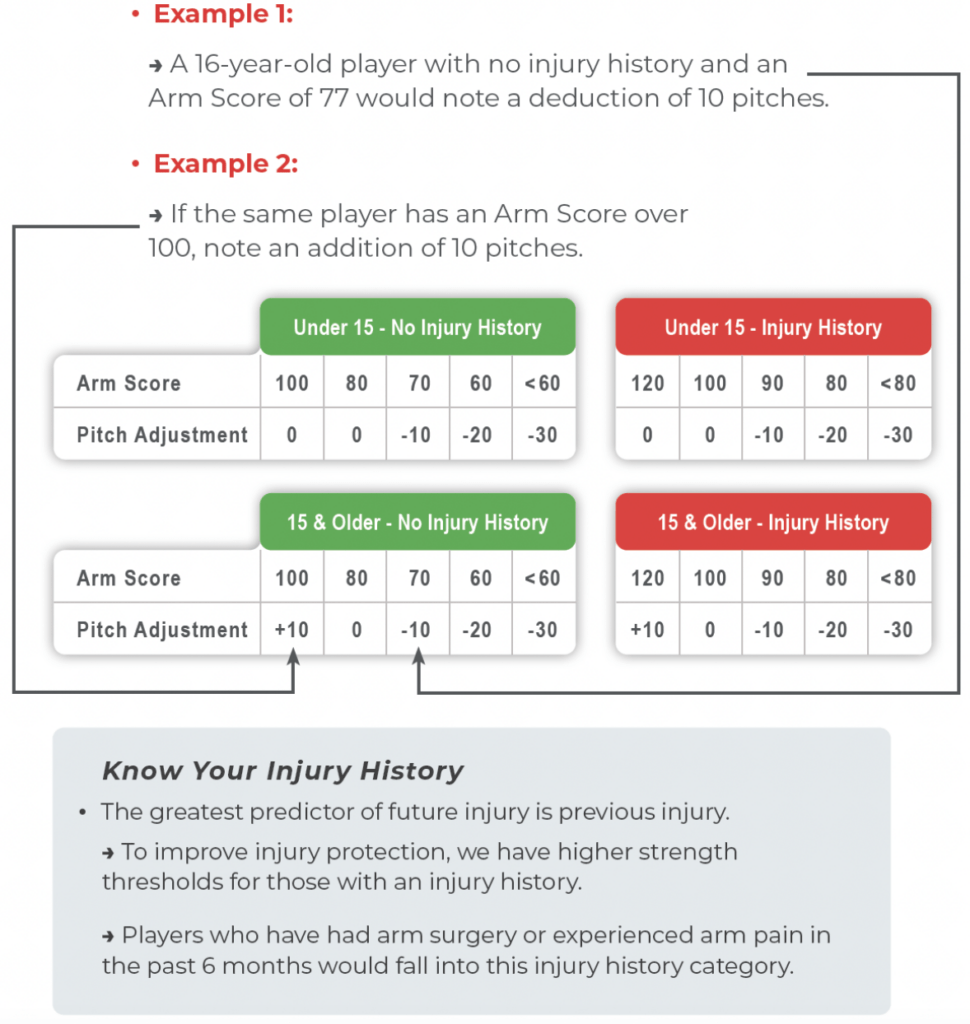
The individualized pitch count feature in the app is a perfect solution for reintroducing pitchers back into competition and more strict ranges on strength metrics are integrated in the app to protect athletes from injury.
WHAT THE RESEARCH SAYS AS IT RELATES TO RETURN TO SPORT FOR A FIRST TIME TJS
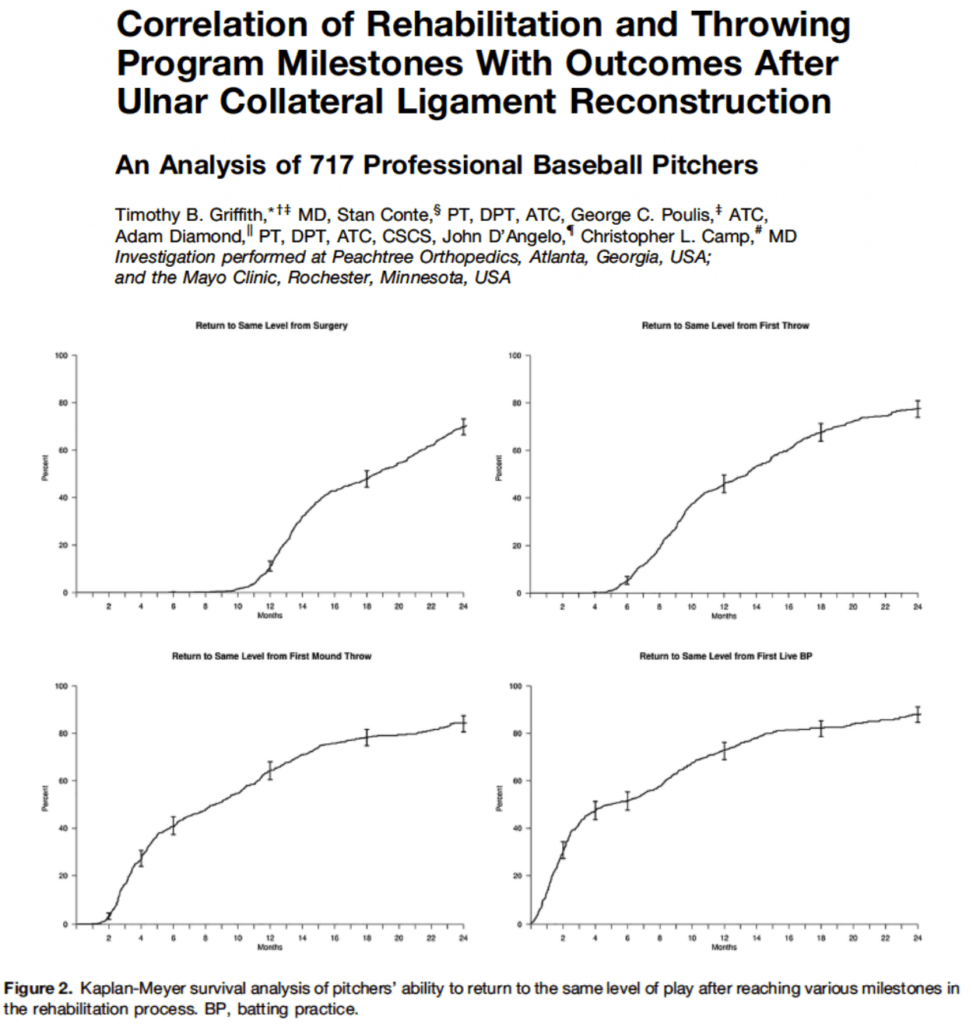
There are a lot of questions that need to be answered at amateur levels of play. Our greatest understanding of TJS recovery times comes from MLB, as the data is more stringent, and the bodies are much more developed with high medical observation.
Physically immature players could take longer in some cases to get to the same level of play and most are going to start throwing with pain during the rehabilitation process, as most physical therapy benefits only cover a limited amount of clinical visits, but here’s what the research says:
- Most pitchers are not on the mound until 9 months after surgery
- The average recovery time for MLB pitchers to return to play was 14.9 months
- The average time when a player returned to the same level of play was 17.4 months
NOW IMAGINE DEALING WITH THE ABOVE ALL OVER AGAIN! Years of an athlete’s life not doing what they love and the success rates with revisions are even lower and take longer.
CONCLUDING THE REALITIES OF SURVIVING YOUR FIRST TOMMY JOHN SURGERY
Tommy John surgery, once considered a reliable long-term solution for UCL injuries, has shown increased revision rates in recent years. The modern demands of high-velocity pitching, early return to play, and poor biomechanical habits contribute significantly to these outcomes.
While many pitchers can return to their pre-injury performance levels, the re-injury risk remains high, particularly within the first three years post-surgery.
As the baseball community continues to learn more about the factors contributing to UCL injuries, a greater emphasis on workload management, biomechanics, and proper rehabilitation will be crucial in reducing the need for revision surgery and extending the “survivorship” of Tommy John procedures.
Survive and thrive with a data-led approach. Progress your throwing workloads and intensity when you are strong, pull back the reigns when you are fatigued and not recovering well, and put the ball down and get in the gym when you are weak.
Not data-led for your first TJS? STRENGTH MATTERS MOST, and when you believe in it, you flip the script so your arm doesn’t rip…again.
It’s the offseason for many…..and you have to acknowledge very simple math this year:
Injury Prevention Focus > Surgical Intervention Approaches
Ryan
Ryan@armcare.com