Strength in Numbers #172
Olympic lifting, encompassing exercises like the snatch and clean-and-jerk, is often utilized in sports for its benefits in developing explosive strength, coordination, and power.
In baseball, where performance depends on speed and power, Olympic lifting can contribute to improved athleticism, but the FEAR (False Evidence Appearing is Real) clouds the benefits with a greater focus on risks over rewards.
When taught properly, the benefits of Olympic lifting are biomechanical, highly applied to speed development and kinetic chain transfer from the rate of force development, stretch-shortening, and, for some, triple extension (full plantarflexion, knee extension, and hip extension in popping the bar up).
In this two-part series, I will communicate the stages of Olympic lifting, modifications, and contraindications.
I will also show you a couple of variations that are highly focused on building throwing arm strength, increasing upper extremity force, minimizing fatigue, and connecting the ground to the fingertips. Don’t FEAR, but athlete readiness and technical instruction are key ingredients.
KEY ARGUMENT TO CHANGE MY MIND AND CAREER
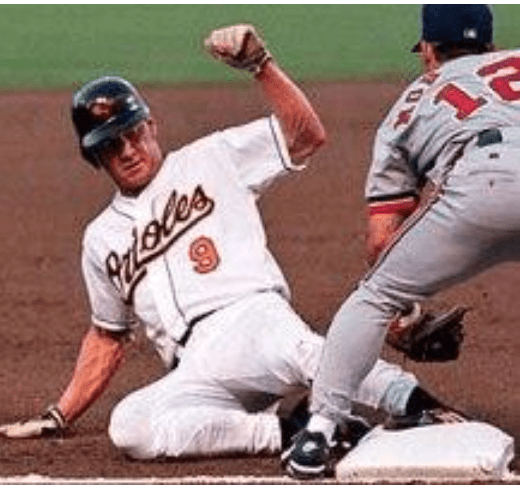
I was first introduced to Olympic Lifting by Brady Anderson, the Former Vice President of Operations with the Orioles.
He hired me, and it all started with an argument during an initial phone call. It was a simple question, “Do you think Olympic Lifting is bad for baseball players?”
I believed that Olympic lifting was taboo and would cause injuries for baseball players with the gravitational effects of load, elbow contractures, and overloaded wrist extension that increase the valgus opening of the elbow if driven together in the catch.
I simply thought, these dudes are worth millions, and was in full protection mode – it was a resounding NO for me.
Although I took every scientific angle, Brady had something I didn’t have: tremendous experience performing Olympic lifts and teaching them at a high level to the world’s best players.
He also stole over 300 bases in MLB and had a season of 50 homers, a season of 53 stolen bases, and one season with 36 stolen bases at age 35, which is unusual for a player that age.
How does that happen? It simply is the preservation of reactive strength and stretch-shortening, both stimulated with coordinated lifting strategies through Olympic Lifting.
It was interesting to me that I was hired after openly disagreeing with the man who became my boss and teacher.
Brady is a different leader in the sense that he enjoys discussion and conflict. Not necessarily to be right, but he wants to ensure he’s not wrong, and I brought a scientific perspective to the team.
However, when it came to Olympic Lifting, I was fully green.
At the University of Buffalo, I learned under the legendary Buddy Morris, who is currently with the Arizona Cardinals. At the time, my background was powerlifting, highly aligned to Westside Barbell training methods that had an emphasis on slow, deliberate lifting combined with dynamic lifting, which involve a very straight bar path. This training focus did not transfer well to weightlifting, which has a curvilinear bar path that requires strength and coordination.
I simply did not move all that fast with resistance as the bar was always on my back and posterior, rather in the front in squat positions with greater distance from my center of mass as a central axis of rotation.
In addition to Brady, I was connected with three great human beings who were with the team at the same time, way more versed in Olympic Lifting and high rates of eccentric training.
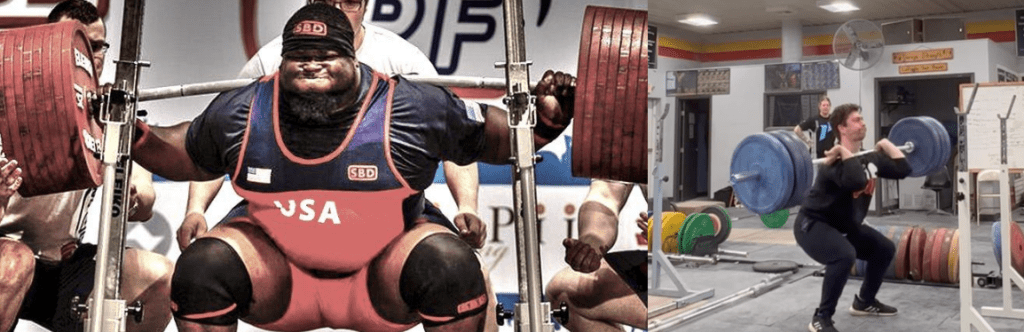
Paul Cater – Currently operating the The Lab in Monterrey, California. Paul is a pretty unreal coach and is very technical in his approach to Olympic Lifting. He has almost 30 years of coaching and has added layers to his Olympic lifting practice. You can see here how he incorporates vibration, eccentric overload, and velocity-based tools and has tremendous strength from the floor.
Joe Hogarty – a consummate learner and one of the longest standing strength coaches in the MLB. Through his 18-year experience as a strength coach with the Orioles and Red Sox, he has reinvented himself many times from an Athletic Trainer to a Strength Coach, and it was interesting to see him perform lifts and learn alongside me. He was a blend of size and height, and it was awesome to see him lift, as he was built like a corner player, and people tend to think tall athletes with a good amount of lean mass cannot be successful. He caught on quickly and was instrumental in a lot of the multidimensional pieces for the organization. He made my onboarding with the team very smooth, as he is one of the most thoughtful people I have ever worked with in my career.
Ryo Naito – Ryo is currently the MLB Strength Coach for the San Diego Padres and what a season they had. He was the first Japanese strength coach I had ever encountered in my nearly 10-year career, and he is the best I believe in today’s game. Ryo has a strong sense for corrective training, regressing and progressing players, and making them robust. He is a solid Olympic Lifter, and his skill is the ability to rapidly get under the bar. Where I could get under 242 lbs, Ryo could catch 286 easily and did not need to pull it as high. This was my first indication that Olympic Lifting can be scaled to anatomy, as deep squatting caused hip impingement for me, so my focus was on the hang to reap benefits.
Although no data has been published correlating Olympic Lifting to baseball injuries, identifying motor preference, anatomy, and previous injury can make their introduction more streamlined.
Technical and safety considerations are particularly essential, given the complex nature of these movements and the shoulder-intensive demands of baseball. While Olympic lifting may enhance attributes like strength-speed and reactive strength, poor technique and improper loading could increase injury risk, especially if athletes are not carefully coached in technique or adequately monitored.
We started with Pyrros Dimas, a legendary Greek Olympic Lifter, to see what one of the best could accomplish, and then we had to modify.
When you see Pyrros, his mass-to-height proportion doesn’t resemble our athletes; however, the set-up, tension, first pull, second pull, and elements of catch are critical technical components to master – but like all things in baseball, no one drill, skill, or approach is universal, or absolute. Optimization means you must individualize
KEY ANATOMICAL AND HISTORICAL CONSIDERATIONS
Here are some things to identify in players and how to match an Olympic Lifting style to motor preference, anatomy and injury history. We will dive into Motor Preference in Part 2, but let’s go with contraindications and modifications.
Back Injuries and Elbow Contractures – here we should understand that axial loading is contraindicated for guys with back injury histories. Athletes with back injuries require intensified trunk stabilization and can get benefits from high pulls where the ball travels up and then gets guided downward. The weight should be light and the athlete should be on a platform that the bar can be dropped as it’s guided down.
For guys who cannot straighten their elbows or have osteophytes that are asymptomatic and non-surgical in the elbow, the high pull gives the athlete tension, coordination and does not have the stress of having to catch a heavy weight on the bar. You will know if an athlete has a contracture on the throwing arm by being blocked from full flexion and extension.
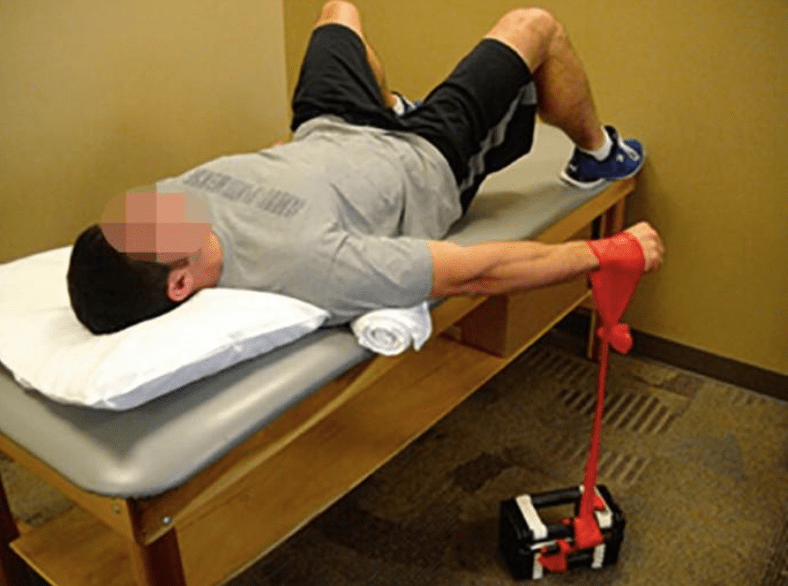
Unstable or Tight Shoulders – this one is easy with the ArmCare.com platform. If any athlete is incredibly weak in overhead testing (Accel, Decel, or Scaption), you know you have some room to work before considering overhead Olympic lifting, like snatches and overhead squats. Also, pay particular attention to shoulder balance scores as athletes who are highly active on the internal rotators, pecs, and lats, and require shoulder mobility if they cannot achieve 180 degrees of active range, which can also be captured with the ArmCare.com platform. I also prefer athletes to have an ArmScore above 100 for more complex overhead Olympic Lifting with a load on the barbell.
You have to prepare for this type of training initially, but with lighter weights, and even the bar, there’s a lot of strength to be gained overhead and function. I do not advise overhead Olympic lifts for shoulders prone to dislocation or SLAP tears, but with light bumper plates and a full drop (pulling up the bar with ankle, knee, and hip extension and getting the heck out of the way), this may be an option. Yet, the environment has to dictate the safety of dropping the bar and staying on the platform or risers.
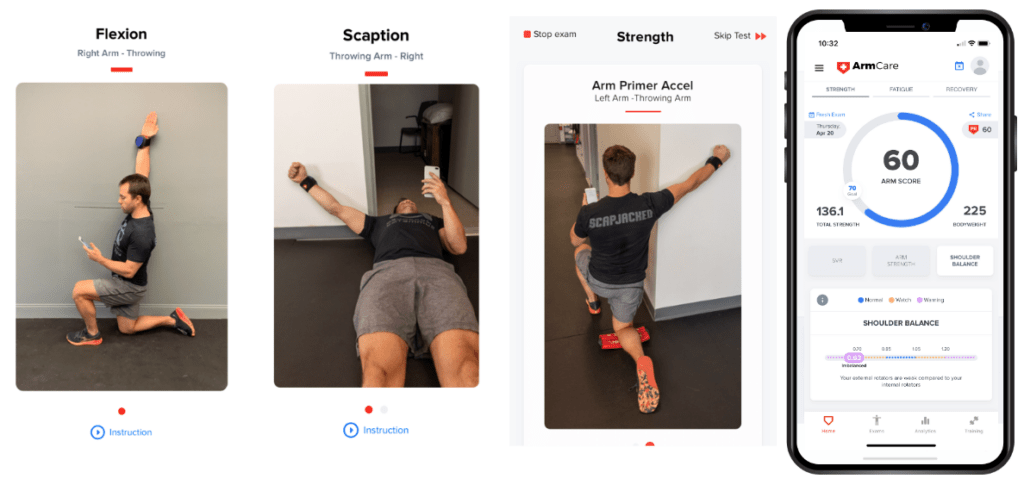
While there remains a need for peer-reviewed research specifically connecting Olympic lifting and injury causation in baseball, technical instruction and attention to detail in coaching are essential pieces, as well as foundational approaches. Why not use a PVC stick to learn the movement?
We can make everything safer and more effective with a data-led approach, and we know where the upper body is at all times. We use the platform as a guide to determining exercise selection, but the guys mentioned in this article have been my guide to understanding more reward than risk and opened my mind to a whole world of integrated training exercises that I am excited to share in Part 2.
Stay tuned, stay data-led, and prepare for lift-off!
Ryan
Ryan@armcare.com