Strength in Numbers #175
People often ask me what I miss about being in Major League Baseball. I used to think it was going to work and playing for a championship—the competitiveness of it all and wanting to dominate the league each day, especially being on teams that were sometimes the underdogs that the world counted out.
I miss the burning desire to win a World Series trophy and the chance of winning an MLB championship ring.
I miss the feeling that overtook me when I was with the Cardinals the night our New York Penn League team won it all – the dogpile, the stories afterward until 7 am, the complete feeling of satisfaction for the heinous bus rides, the motels, only to wake up the next day and want it all over again.
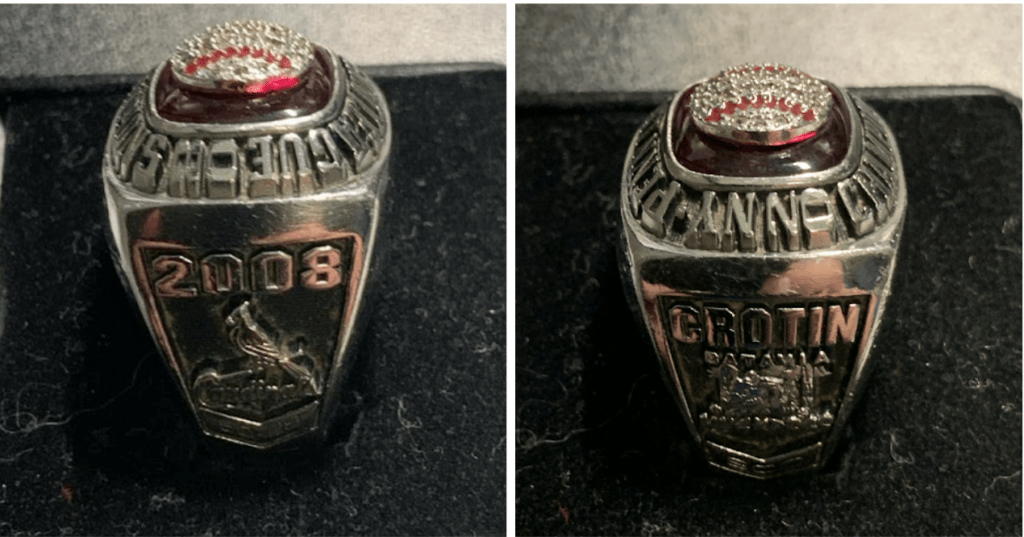
But most of all, I miss being around the guys, all of us wearing the same clothes everyone else does, talking about the brand, the jokes, the stories, the moments shared, and most importantly, the friendships made, as those last longer than any championship I ever won.
Silly moments like us playing around in Spring Training and having Mike Trout and Justin Upton make fun of me (my nickname is Crotesy) after dropping a ball in the outfield during batting practice. This happened directly after we worked with our outfield coaches to teach the guys dead-start drills in the outfield, blending head snaps, speed, strength, and glove work.
It doesn’t matter what league you are in; from the time we are kids playing this game, we connect with our teammates for a reason or a season, and only in time will you know the difference.
Just do your best not to be a turd (a nicer euphonism used in baseball instead of outright calling a player an A-hole).
In this newsletter, I will talk about my baseball history and how vital your teammates are – so prepare for something much different than the deep sports science insights and high-performance tips that are typically shared.
FIRST GAME IN EAST YORK
I grew up on the outskirts of Toronto in a town called Whitby, Ontario. In the summers, we played with the kids we went to school with. It was a time before travel ball hit the scene. You played for your town.
When I was 16, I played on all-region teams that played against the Metro team, with kids from Toronto and some from the inner city. They were physical and gritty, and they had a kid on that team that was as fast lightning – that’s Trevor Shimizu, TJ to his teammates.
My uncle had a connection to one of the coaches on the Metro team named Andrew Green, who has cultivated a deep baseball culture in East York that, even to this day, he often coordinates reunions and keeps the history alive with key updates on the developing talent of the now. I had an invite to come out and play for the East York Bulldogs, who have helped produce Canadian MLB talent and changed me in a good way.
I drove about an hour from where I lived to our home field in Toronto. I generally brought my baseball gear to school each day, and by the moment that high school practice was over, I jumped in my car and drove out to a 7 pm practice that was competitive and laser-focused on winning.

CULTURE IS ENVIRONMENTAL
I can generally tell what type of team I am playing on or against by taking a quick peek at their batting practice. Are they low motor, talkative, and do they try to yank everything and not have a plan.
Batting practice in EY was different. Infielders played their positions. If you are on the dirt, you are not in the outfield, and there’s no hanging out at the back of the lip stuff catching the balls off to the side. You had to field rockets on a city field that can give you rough hops.
If you shy away, the coaches call you out for it, and the players smirk. I played third and shortstop at the time, and TJ played second, and the kid gloved every ball in sight. He gave me a tip and mentioned getting my eyes as low as I could on the ball, and if it hops at my face, dropping my chin and taking it off the top of my head.
After 5-10 balls off my body, I got to know the field and started counting the hops, knowing when to come in on it or take a jab, step back, and glove a high hop.
The guys on the team were tough, independent, and street-smart, as they had to be in a tough part of town. It was the ethos of our playing environment or style.
I will never forget my first game with the club as it was epic – we had an absolute brawl with a team that ended the game in a forfeit and a sanction that our clubs could not play each other for two years. It was crazy enough that my mom came to the opener and wanted to phone the police when she saw 30 guys on the field trying to beat the crap out of each other.
These were the kind of guys you wanted behind you, as they always had our backs. They were also not the throw-it-inside kind of pitchers. If someone buzzed your tower, the first batter got it in the ribs.
ABOUT WINNING AND LOSING
In 2000, we had a super team of college baseball players. The talent was high, and we ended up having a handful of us playing in MLB-affiliated programs or independent league baseball in future years. It was a mix of divisions – D1s, jucos, some D2s, some played college baseball in Canada, but we were good, and the best part was that we knew it.
I know you should treat the sport with humility because on any day, you could lose, but showing up to the park genuinely believing you cannot lose was unbelievable until we lost.
After winning 32 games in a row, we lost to a subpar team, and our coach ran the hell out of us afterward. I have been around a lot of players, especially first-rounders who have never struggled, and then to watch them get knocked off their high horse in MLB and not get back up.
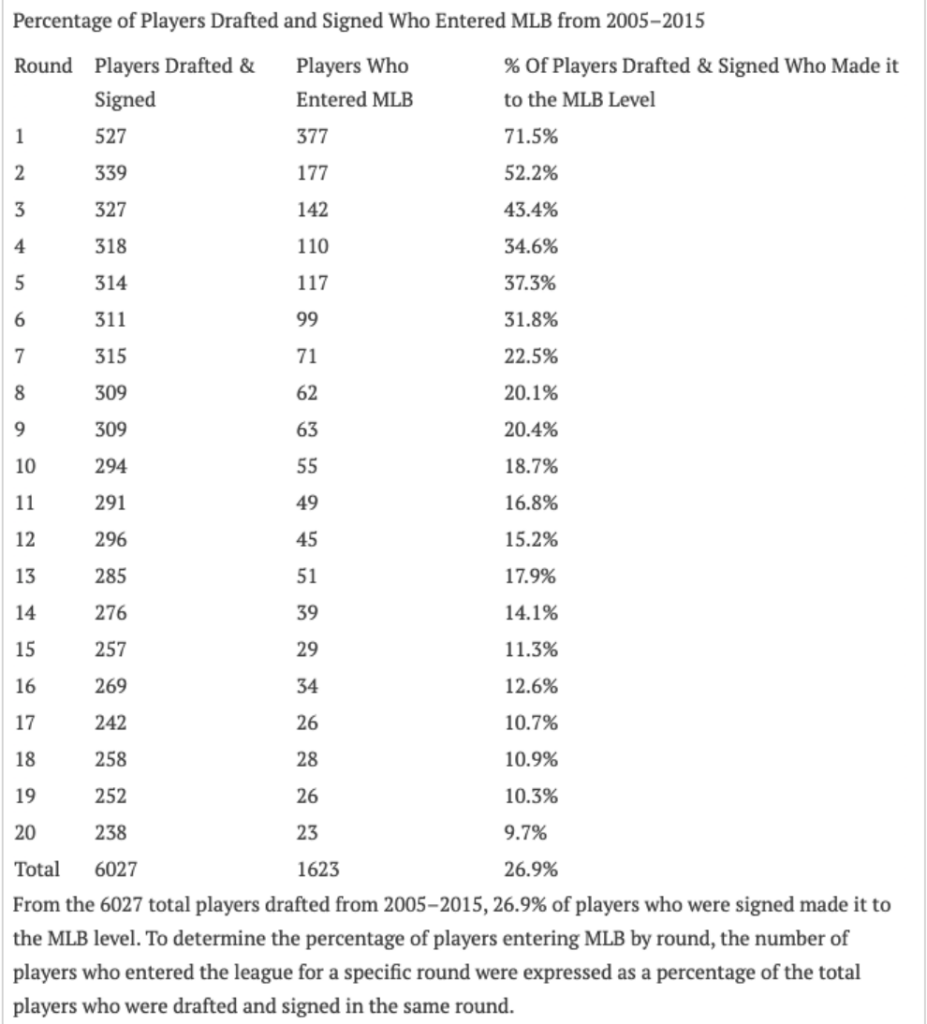
It happens more often than you think, as roughly 70% of first-rounders actually sniff an MLB game, which has been reported in research (ref). For us, it was a reality check and a message to never take our foot off the pedal, something I hold true to this day. Winning is important – it is the result of a cultural, physical, mental, and emotional process in balance.
That year, we went to the National Championship and should have won it all, ending the year 56-4 with three losses coming to good teams.
After that last game of the season, it was the first time I had ever cried on a baseball field, the second was at Tyler Skaggs honorary game, where we threw a combined no-hitter.
I was on that field as we surrounded the mound with Tyler’s jersey, an Angel most definitely in the outfield. A sea of fans cheered around us, and all we could see and hear was each other.
COLLEGE BALL REUNION
I graduated from the University of Maine at 21 and was not drafted or signed as a free agent. After two years of eligibility, I played unpaid in the Canadian Independent League for the Oshawa Dodgers to figure out my next move.
It was a rainout at the 18u game, and a Canadian college coach came to our night game. I happened to play well, and he offered me a graduate school scholarship almost on the spot.
I wanted to chase the sun and try to play in a better independent league to be signed, but the moment he said that TJ and a few of my other teammates, John Hull, and Chris Graham, were headed there, it was a no-brainer—I was going.
Imagine going to play college baseball with three of your teammates throughout high school who know you and that you know what they bring to the table. It’s pretty unreal.
The D2 experience was much different than D1. One of the things that I found unique was that we had captains’ practices – no coaches and we did our individual work. This is where the East York mentally came in because my guys were there, and they were not fooling around. We competed, and that was critical for success.
It was also unique as they were teaching me.
Johnny helped me navigate the outfield and was an excellent CF, and Grammo had a keen eye for my swing and opened stance and ended up a bit.
TJ did not have to say much, as in games, he taught the entire team by drawing all sorts of looks from the pitcher, walked a lot, saw many pitches, and communicated their pitch tips, and by the time I was on first base, I could get a good jump.
TJ had a season of more than 50 stolen bases in D2 baseball, and I believe it was a record at the time. And with their help, I tied a D2 record with 15 straight at-bats with 15 straight hits and was named as a two-time All-Conference player/
It was a great time being together in Salem, West Virginia, where there was nothing other than baseball, school, and living together in a trailer home in the middle of the woods, just hoping no one was going to walk in your front door and kill you 🙂
Our last year playing together was in 2004, and we each went on to play somewhere worldwide. TJ went to the CanAm League to play for the Quebec Capitales, which is now in the Frontier League, and I ended up playing winter baseball in Australia and then Germany. We hadn’t seen each other for 20 years. Life happened—bills, kids, and wives—and we had not seen each other until only a few weeks ago.
RE-UNITED WITH A DATA-DRIVEN CONNECTION
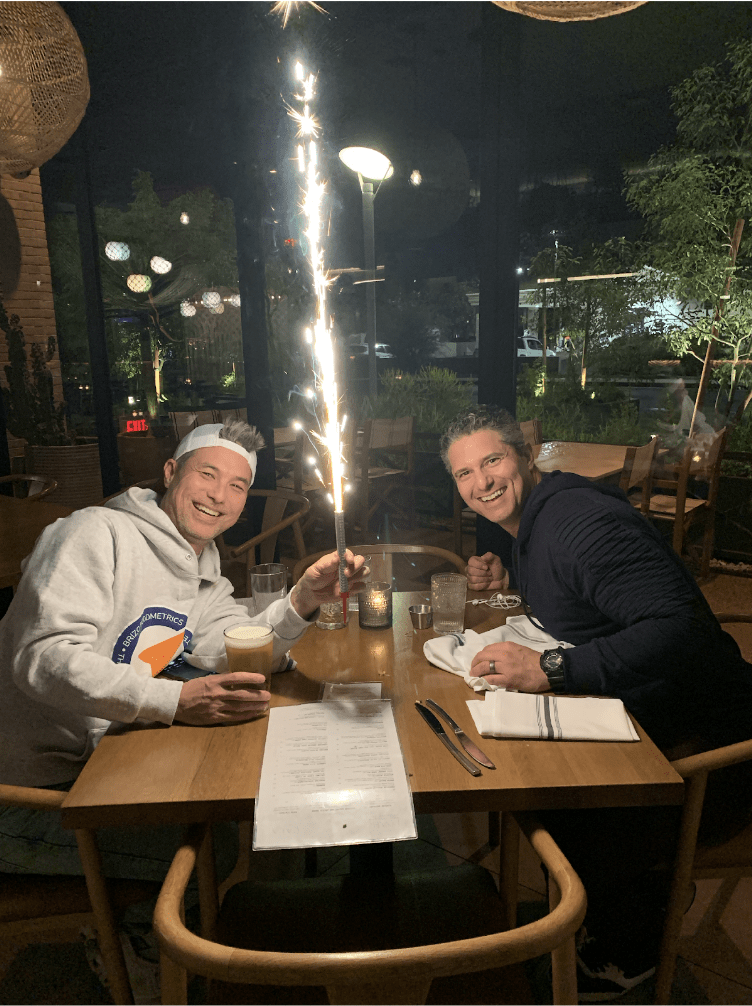
Out of nowhere, TJ reached out to me, and I found out that he was at a convention in the data industry related to the food and beverage industry.
We met for dinner, and the conversation was if we never left the team, and that’s when you know that you played together for a reason and not the season.
When you are with successful athletes and buy-in to a winning culture its brotherhood no matter how long you retire from playing the game.
For athletes reading this article, your 20s are very different than your 40s, and you won’t realize how interesting the career paths are for yourselves and your teammates after the game.
TJ has significant experience in the software as a service (SaaS) industry, most recently with Brizo Foodmetrics. His investment in bringing baseball technologies and equipment to Canada brought so much creativity into the night.
It is amazing how baseball, the use of statistics, and remote high-performance industries across many business verticals are advanced with technology, data-led decision-making, and TJ and are contributing to it, and so are you with every ArmCare test you take.
Our discussion can be summarized by answering the following key questions:
- How are we identifying people’s pain figuratively and literally?
- How are we empathizing with their problems and showing them objective information to help them better understand their pain points?
- How do we lead them to intervention and create a path for them to find a data-led solution?
In the baseball world, there’s literal pain for every player to throw a baseball at some point. Unfortunately, 5% of every kid who steps on a mound right now will have surgery that will take an average of 18 months to fully rehabilitate.
Worse, college players have a 20% risk of surgery, which needs to stop with regular throwing arm evaluation using the ArmCare platform and individualized training (ref).
SUMMING IT UP
After all these years, TJ has become a real teacher for me, just as he had many years ago, and kids, that’s why you cannot be a turd. We need to be good teammates because they fire us up, give us creativity and encouragement, and never let us lose sight of the stories and triumphs of yesterday while we create change for the future.
When you hang up the spikes, the only thing the game allows you to truly keep with you are the memories and the stories, and if you are fortunate like I am, you will make friends for life.
As I always say, Strength Matters Most, but in the name of this weekly newsletter, “Strength in Numbers,” there’s nothing stronger than a team of people with a common goal.
Be data-led in what you do, understand your pain points, objectively solve your problems, and win.
Try to catch up with a teammate this weekend. You will be glad you did.
Ryan
Ryan@armcare.com