Strength in Numbers #81
Last week I introduced you to the F’D Up Burnout Cycle. Of course, it happens to us all and occurs more to people who are wildly passionate about something they cannot put down easily.
The cycle of forgetting, being frustrated, being fatigued, and feeling like a failure is the f’s that lead to low enjoyment, low productivity, and low self-esteem, and can have people change careers.
So how do you avoid it?
TAKE A NOTE FROM DUGGAN
There are strategies that you can execute to break the cycle, but you have to note that you are actually in it before it’s too late. That’s where family comes into play. For example, your spouse may mention that you forget family-related or other essential things.
I am not talking about taking out the trash. I am talking about forgetting your anniversary date, which has happened to me. I took a lesson this week from our company President, Duggan Moran, that is deeply important and needs to be shared.
Duggan can shut it off, and here is how he does it.
The one thing he mentioned to me that resonated was that when the work day is over, he unplugs by shutting off his phone. He likely had not always been that way. He grew Crossover Symmetry from the ground up, pounded payment until his hands bled, and introduced dynamometry to identify people who deeply need the right training tools, who have identified imbalances—a concept that led to the inception of ArmCare.com working hand in hand with Crossover Symmetry.
Over time, Duggan established ArmCare.com in addition to Crossover Symmetry, and after a day of managing two companies disconnecting is something you need to do.
POWERING-UP & POWERING-DOWN
Duggan mentioned to me his routine, and that’s the first thing you must establish, so you don’t get F’D Up— identify if you are a lark or a night owl.
Are you more creative and productive in the evening or the morning? And do you give yourself enough time to think and develop professionally in these critical hours?
Duggan and I have opposite schedules, but he builds in quiet time to educate himself in the early morning while I am up late at night. Either way, this quiet time is critical to productivity, so block time each day to avoid distractions and think.
Now where Duggan has many of us beat, including me, is his ability to power down. I don’t mean completely shutting off, but powering down so he can be more present. Duggan has a routine around powering down by putting his phone down after work and checking his messages the following day.
The best reward for a hard work day is allowing yourself to be present. Your brain needs a rest, and your relationships in life nurture and restore you. It’s your opportunity to tap in.
In my nine years in MLB, I never turned it off, and from January 1st to November 1st, I never spent one Saturday night with my family or friends. I never shut off my phone because I wanted to ensure I got all the calls from the GM and was available for a big trade or injury case or always available in a time of need for the people I led.
My inability to power down also made the job more stressful, and one of the ways that I battled the first F (forgetfulness), was that I needed a clipboard to go anywhere. So, I wrote everything down to get all the details.
The stress of forgetting took me right from forgetful to failure in my mind, and attention to detail was a departmental value for me, and I had to exemplify it every day.
While it did help me to avoid the other F’s (fatigue and frustration), it did not get me off the cycle of rarely sleeping more than 5 hours straight, being wound up all day on data, managing athletes, constantly trying to find new technologies, growing concepts for staff, continuing education, and handling internal politics.
I want you to avoid going through this, regardless of if you are in MLB or Little League. You need time to power down, unload and unwind your mind, and be in touch with the people who need you most.
THE MAIN THING
I was biting off more than I could chew in my first year.
There were training schedules to make each day for over 240 athletes, new technologies to onboard, training apps, and meetings to determine how a Spring Training Day would fit together. I was constantly zipping around from the MLB level to the minor leagues to work with players and coaches and to provide my input in various meetings.
It was when my friend Danny Escobar approached me one day with a question. He is currently Minor League SC Coordinator for the Reds, but at the time, he was one of my most trusted staff members, and he asked me, “Ryan, do you trust us?”
This comment threw me off, but I said, “Yes, of course!”
But in Danny’s eyes, I was not trusting because I was trying to do everything, and he set me on an important path of delegation.
As I started learning how to share the load, I began to unload and was more effective than ever. However, I was putting more on my staff and pushing them into the F’D Up Burnout Cycle.
That’s when my friend and Angels Assistant SC Coach, Adam Auer, said, “Crotes, I want you to read a book.”
He told me about a book called Essentialism by Greg McKeown. The title alone clued me in that I was pushing my staff too hard, and they needed to make the main thing the main thing. And that was to individualize programming and focus on only our two most important objectives:
- Increasing power for our athletes,
- Boosting injury protection.
I had the staff look through and collect data, but rather than having them present a report, I asked them to translate it into the most critical aspect of our performance—individualized player development plans.
RE-ENGINEERING THE EISENHOWER MATRIX
Every project or request I had given anyone on my staff or who had passed on to me had to be assessed through the matrix.
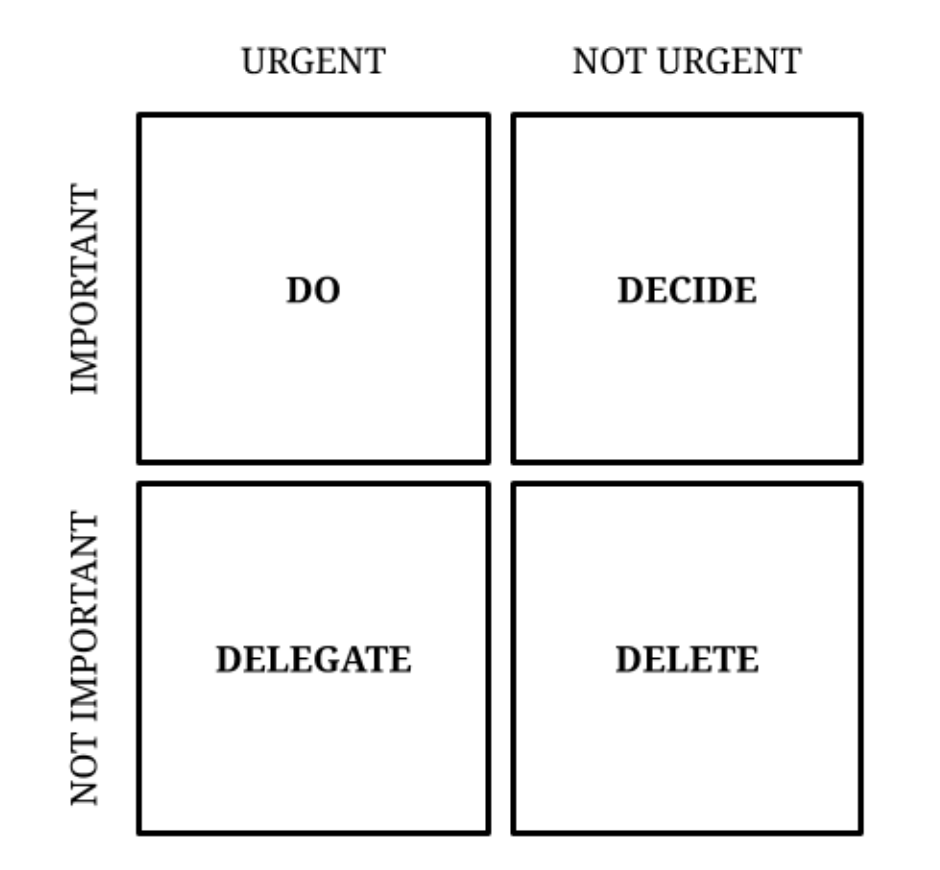
First, is this undertaking important, or is it urgent? If the answer was yes, then it was the focus.
If it was important and not urgent, I kept a shared sheet, kept working on a plan when I could, and added other department members when the time was right and I needed to do so.
Then for anything urgent and unimportant, I delegated but had a running list of what undertakings my staff was working on since I did not want to burn them out.
They were the ones to execute and work with players every day. They were real heroes. If I overloaded them, it would create tremendous role strain (having to coach, collect data, analyze, and implement approaches) and could lead to burnout.
The quadrant I like best is the “not urgent and not important box.”
When you see these two intersect, you feel a sense of relief when you get to hit delete.
That’s the beauty of what we have provided you with our company’s technology, products, and education. We have deleted extraneous spending on difficult-to-use technology, wasting your staff’s time doing extra work they are not happy to do in becoming data collectors.
DELEGATE TO ARMCARE
With ArmCare, you can delete the time required to enter information manually, being bogged down by spreadsheets or needing to create a proprietary coding creation.
You can remove the time required by medical staff members to assess players since players can assess themselves. You can delete the time needed to program athletes through our slick app. You can delete the time to scour 1000s of articles, having to work 20 years in collegiate and professional baseball to figure out what works and doesn’t work and how to intersect strength testing, range of motion assessment, and pitching biomechanics through two critical certifications – our Certified ArmCare Specialist Course and soon to be released – Certified Pitching Biomechanist Course.
For the Eisenhower Matrix – focus on the lower right box before all others.
Eliminate so you can delegate more important objectives and focus your mind on what is important so that you don’t forget, you don’t become fatigued, frustrated, or feel like a failure so that you deliver on what is most important for the athletes – eradicate injuries and dominate throwing performance. Make the main thing the main thing.
Try this matrix out right now when you are buzzing from the start of the college season and all the things that need to be done and accomplished to succeed. Pitchers and catcher camps are just around the corner, and soon, mini-camps will begin, and there will be many players to manage.
I hope you will revolutionize the matrix this year and delegate when possible.