Strength in Numbers #231
I was recently visiting Oklahoma City. When on the plane, I was thinking about how flying affects our bodies. In Major League Baseball, red-eye flights across time zones wreak havoc on the body. Travel, in my opinion, is one of the most challenging aspects of pro sports to master, but there are some things we can do to soften the blow.
Whether you’re a high school player flying to tournaments, a college athlete navigating long road trips, or a professional pitcher grinding through cross-country series, you’re experiencing real physiological stress that influences fatigue, recovery, cognition, and physical performance.
For pitchers in particular, especially starters who have to compete the next day, or sometimes on the same day if flying through the night, flight-related stressors can show up in subtle yet damaging ways—reduced arm speed, altered trunk timing, grip-strength changes, mobility restrictions, and even compensations in mechanics that increase joint torque on the shoulder and elbow.
This Strength in Numbers article outlines the key physiological challenges of flying and links them to what matters most for baseball athletes: the throwing arm, biomechanics, and injury protection. It also references three critical studies demonstrating how fatigue alters mechanics, stride length, and efficiency in baseball pitchers, as lower-body fatigue is a problem as well.
1. Germ Exposure & Immune Disruption: Why Immune Stress Impacts Arm Health
Airplanes are enclosed environments where recycled air, high passenger density, and shared surfaces increase exposure to viruses and bacteria. Even minor immune activation can have downstream effects on performance:
How Immune Stress Impacts Throwing-Arm Function
- Immune activation increases systemic inflammation, which can heighten muscle soreness and slow tissue recovery.
Think about going 110 pitches in a game, it goes into extra innings, and your flight leaves at 1 am, where you arrive across the country at 6 am and must play a 605pm game.
- Cytokine changes can reduce neuromuscular firing efficiency, leading to decreased arm speed and slower warm-up patterns.
You arrive across the country during the playoffs, and the temperatures are much colder. The body may have inefficiencies in warming up soft tissues, which exposes the athlete to injury risk.
- Immune stress alters sleep quality, decreasing growth hormone release and impairing soft-tissue repair, especially in the rotator cuff and forearm flexors.
Couple the first two concerns, imagine you are a reliever and may have to get up and compete on back-to-back nights – a body that experiences recovery deficits is at risk of injury.
The inflammation stage can extend, and your remodeling period to reintegrate tissue could be delayed if you do not have a travel action plan for flights. This is an important insight into the timeline from our Eliminating Arm Pain and Soreness Course.
Mechanics Implications
Subclinical illness—even without overt symptoms—can drive fatigue-related compensations that resemble those seen in exertion studies.
I studied altered mechanics and dove deep into how stride length changes with fatigue or ineffective coaching approaches.
I was able to demonstrate that fatigue-induced stride-length shortening, or being told to shorten the stride, can increase trunk momentum, delay hip-shoulder separation, and elevate trunk speed to very late in the delivery – all of which force greater reliance on the shoulder and elbow in developing pitch velocity.
When immune stress is layered on top of a travel day, athletes may unknowingly enter games with the same risk profile as a late-fatigue outing from the get-go.
2. Prolonged Sitting: Blood Flow, Stiffness, and Arm Recovery
I can be guilty of this one as I work as much as possible on flights – glue my rear to the chair at times. Here’s the reality: flights reduce natural joint motion and slow venous return for pitchers; prolonged hip, spine, and lower-extremity stiffness from sitting too long changes how the upper body must work.
Physiological Effects
- Reduced lower-body circulation increases risk for blood pooling and, in rare cases, blood clots during long flights.
- Hip flexors shorten, glute activation decreases, and thoracic spine mobility declines.
- Reduced blood flow slows waste-product removal, impairing recovery from prior throwing sessions.
Throwing-Arm Implications
Pitchers often report:
- Delayed arm warm-up
- More “dead arm” sensation if it is a night game with traveling out, followed by a day game
- Reduced layback from increased thoracic stiffness, or the potential of excessive shoulder motion to load the arm, because of thoracic stiffness
- Tight hips, not being able to get full leg extension off the mound
Because the kinetic chain relies on sequential force transfer from the lower body, loss of hip and spine mobility increases stress on the shoulder and elbow.
Circulation is critical for throwing arm health, and letting blood pool without moving around lowers the amount of blood that could be sent to the throwing arm when sitting for long periods of time. In our Eliminating Arm Pain and Soreness Course, you can see that the throwing arm needs more blood flow to help heal tissues that otherwise are nearly avascular (no blood supply)
Mechanics Implications
Prolonged sitting can exaggerate mechanical inefficiencies such as:
- Reduced stride length
- Slower pelvis rotation
- Late trunk timing
- Late hip-shoulder separation
- Reduced propulsion ground reaction force
Now, why are these interactions scary for pitching health? These mechanical compensations match the altered mechanics observed in the research I had coauthored that had other dots connected with my academic advisors, Dr. Dan Ramsey, Dr. Karl Kozlowski, Dr. Scott White, and Dr. Peter Horvath – a blend of exercise physiologists and biomechanists focused on fatigue-induced injury mechanisms in pitchers.
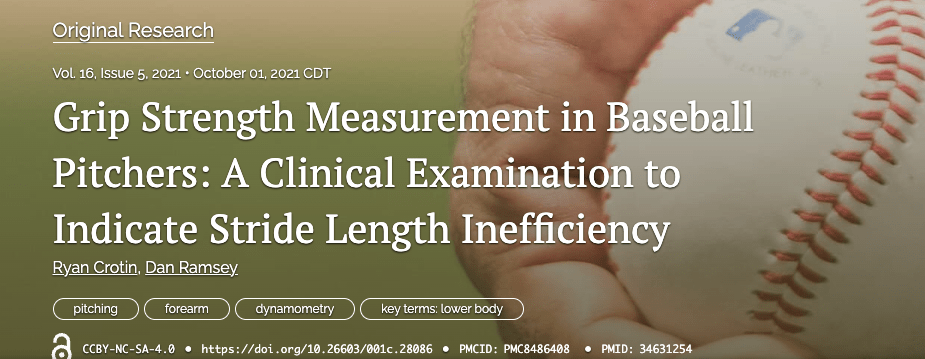
You can even download a vital paper that presents a clinical examination of grip strength and stride inefficiency, showing that decreases in grip strength—often a sign of systemic fatigue—are associated with poorer lower-body sequencing. Travel-induced stiffness and circulatory restrictions mimic the same fatigue patterns.
3. Dehydration: The Silent Destroyer of Performance and Arm Function
This part is not well-known. Airplane humidity can drop below 10%, causing accelerated dehydration. Even a 2% drop in hydration reduces power, force production, tendon elasticity, and fine-motor control.
Impacts on Throwing-Arm Health
- Dehydration increases the viscosity of synovial fluid, making the shoulder and elbow feel “sticky.”
- Muscle tissue becomes more prone to microtears due to lower elasticity.
- Neural conduction slows, impacting arm speed and command.
We have many techniques in our Certified ArmCare Specialist Course to promote circulation and blood flow. Still, hydration is needed to increase blood volume, which helps repair damaged tissues and lubricate joints.
Mechanics Impacts
Dehydration-driven fatigue can cause:
- Early arm drag and restricted layback
- Inconsistent release points are causing trunk lean
- Reduced trunk–arm separation
- An altered knee leads to knee bracing
These mechanical degradations parallel the changes described in a popular research article that elite scientists at ASMI and ASU undertook to identify determinants of biomechanical efficiency, which showed that disruptions in motor patterns and energy transfer reduce efficiency and elevate joint torques in the inner elbow.
4. Sugar Drinks, Alcohol, and Canned Beverages
Airports and airplanes are loaded with high-sugar beverages, alcohol, and aluminum-canned drinks—each carrying unique physiological consequences. I do not drink, and generally, no alcohol is served on MLB flights, but early in my days, the occasional beers were floating around.
Sugar Drinks
- Spikes blood glucose → rapid crash → sluggish neuromuscular output
- Increases systemic inflammation
- Causes quick dehydration due to osmotic shifts
Alcohol
- Impairs sleep quality
- Reduces growth hormone spikes
- Slows soft-tissue healing in the throwing arm
- Too many and it drops testosterone
Aluminum Cans
Research is evolving, but aluminum exposure is associated with oxidative stress and inflammation. For pitchers already managing elbow or shoulder recovery, increased systemic oxidative load may worsen tissue irritability.
You should adopt some of the anti-inflammatory diet approaches we mention in our Eliminating Arm Pain and Soreness Course. This specialized diet approach is designed to support healing after injury, but can also be preventative and help avoid sluggishness from heavy fat intake that can bog down the system.
Mechanics Implications
The fatigue induced from sugar crashes and alcohol parallels exertion-driven compensations, including shortened stride length and overuse of the upper extremity—a relationship demonstrated in the fatigue papers you referenced. It may also lead to lactic acid profiles.
5. Food Choices & Snack Quality: Fueling During Travel
Most airport meals are high in sodium, oils, and processed carbohydrates. Poor nutrition before or after a flight leads to:
- Increased inflammation
- Reduced nutrient availability for tendon repair
- GI discomfort, which alters posture and trunk rotation patterns
For pitchers, inadequate fueling results in:
- Slower recovery from prior throwing
- Reduced power output in the legs
- Decreases in grip strength, a key global fatigue marker tied to stride inefficiency
Proper travel snacks should include:
- Water + electrolytes
- Nuts
- Lean proteins (jerky, tuna packets)
- Fiber-rich fruits
- Avoidance of sugary beverages and packaged desserts
The next time you are offered one of those addictive cookies on your flight, think again, as it doesn’t help you perform at a high level and is full of processed chemicals.
6. Time Zone Changes: Circadian Rhythm & Neuromuscular Timing
Crossing time zones disrupts circadian rhythm, reducing alertness and impairing reaction time. For pitchers, circadian shifts impact:
Arm Health
- Lower collagen synthesis during disrupted sleep cycles
- Higher likelihood of inflammatory flare-ups
- Diminished hormonal repair cascades
Neuromuscular Timing
- Delayed arm speed
- Poor sequencing between the pelvis, trunk, and arm
- Errors in proprioception (release point feel, balance)
Tommy John Surgery happens when your support system and shoulder balance are out of whack. You need to have strength to support layback speed and changes in wrist position to protect the UCL from blowing up. In our Eliminating Arm Pain and Soreness Course, you will learn how these injuries happen and how alerted mechanics, sleep loss, and inflammation that arises from tough travel days can increase risks.
Mechanics
Pitchers may exhibit:
- Early trunk rotation
- Decreased stride length
- Loss of scapular rhythm
- Increased glove side lean and knee joint angle changes from foot contact to release
Exactly the types of compensations observed in fatigue-focused research on mechanics and strength losses for the arm.
Bringing It All Together: Why Flying Matters for Injury Prevention & Pitching Efficiency
Multiple physiological systems must align to produce efficient, low-stress pitching mechanics. Travel disrupts these systems simultaneously:
- Hydration → impacts tissue elasticity and nerve conduction
- Circulation → affects recovery, hip mobility, and trunk rotation
- Immune status → alters neuromuscular control
- Fatigue → increases stride and timing compensations
- Nutrition → affects tendon repair and energy delivery
- Circadian rhythm → disrupts coordination and power output
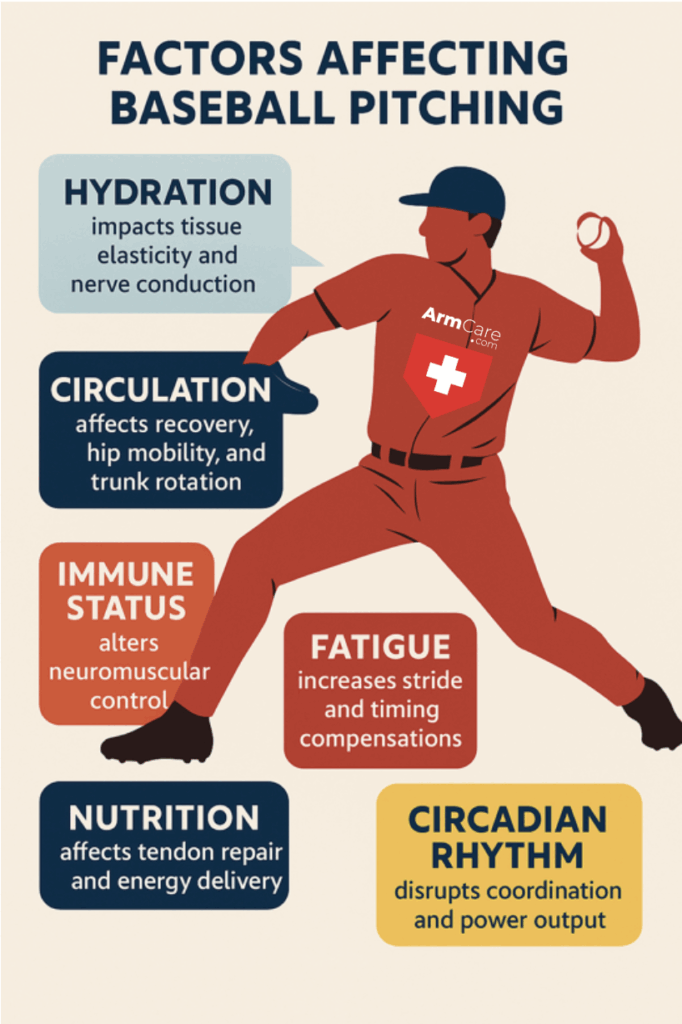
When these layers stack together—such as after a long flight followed by a same-day light throw or next-day start—the pitcher is primed for mechanical inefficiency and elevated injury risk.
Practical Recommendations for Players & Coaches
Before the Flight
- Hydrate aggressively 24 hours prior
- Pack clean snacks
- Mobilize hips and T-spine
- Avoid sugary or alcoholic drinks
- Lighten lifting loads before walking on a plane
During the Flight
- Drink 8–16 oz of water per hour
- Walk or stretch every 45–60 minutes
- Avoid soda, juice, and canned alcoholic beverages
- Keep shoulders relaxed, avoid slouched posture
After Landing
- Perform 10–15 minutes of mobility if you are not on a red eye
- Rehydrate with electrolytes
- Avoid immediate high-intensity throwing
- Sleep-adjust for the time zone shift
For Pitchers Specifically
- Constantly monitor your arm strength
- Monitor stride length and timing in early catch play
- Defer bullpen sessions when the arm feels “dead,” uncoordinated, or unusually tight
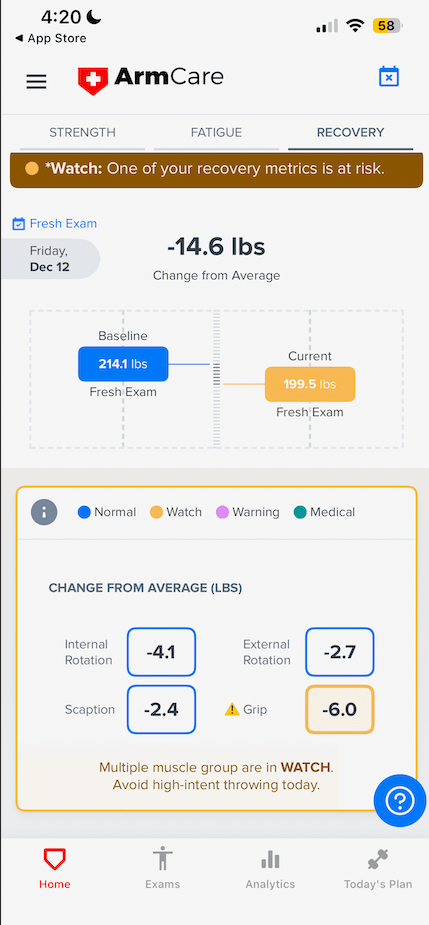
Overall, a player can lose more than 10 lbs on a travel day; it is unavoidable but manageable. Recognizing how flights affect physiology enables players to adjust their pre-flight recovery plans.
In this case, a closer performing heavy trap bar deadlifts before hopping on a plane and waking up in a new city, catching 6 hours of sleep before showing up to the ballpark, may not be the best move, given the grip strength lost.
Key Takeaway
Recognizing how flights affect physiology allows players, coaches, and performance teams to reduce hidden load on the system, protect the throwing arm, and sustain mechanical efficiency throughout the season.The most important nugget of information is that the arm is the window into the soul.
Test the throwing arm to adjust and advance how you prepare for travel to promote optimal health and performance on the mound.