Strength in Numbers – 258
What can adding 6 MPH of exit velocity do for a hitter?
Research on ball flight tells us that a 6 MPH increase in exit velocity can add roughly 25–35 feet of carry distance, turning warning-track outs into home runs and routine ground balls into extra-base hits.
We are going to dive deeper into the physical properties underlying this phenomenon.
Where Does Exit Velocity Come From?
Elite exit velocity is a product of force transfer through the body that results in a stronger bat-to-ball impact.
The biggest contributors include:
- Glutes and hips generate rotational force
- Obliques and trunk muscles transferring energy
- Scapular stabilizers create a strong upper-body connection
- Forearm and grip muscles maintain bat control
- The lead side acts as a braking system to transfer momentum into the barrel
Exit Velocity, Launch Angle, and Barrel Percentage
Okay, this is where things get a little more technical. Exit velocity alone isn’t enough.
The most productive hitters combine high exit velocity with an effective launch angle.
When those two variables align, hitters create “barrels”—batted balls that historically produce the highest batting averages, slugging percentages, and OPS values in baseball.
What Qualifies as a Barrel?
According to MLB Statcast, a barrel is a batted ball that combines:
- High exit velocity
- Optimal launch angle
The starting point is:
- 98 mph exit velocity
- 26°–30° launch angle
As exit velocity increases above 98 mph, the acceptable launch-angle window widens.
Examples:
| Exit Velocity | Launch Angle Range for Barrel |
|---|---|
| 98 mph | 26°–30° |
| 99 mph | 25°–31° |
| 100 mph | 24°–33° |
| 105 mph | Wider range |
| 110+ mph | Even wider range |
The harder you hit the ball, the more forgiving the launch angle becomes.
In professional baseball, players who consistently increase Barrel% often see improvements in:
- OPS
- Slugging Percentage
- Extra-base hits
- Home runs
- Run production
The goal isn’t simply hitting the ball hard.
The goal is to hit the ball hard in the right window with an effective bat path – posture is important throughout the entire swing.
Why Posture Matters
One of the most overlooked pieces of hitting performance is maintaining posture and “holding the hinge.” This is so important for Barrel% numbers to take off.
As the swing unfolds, the athlete must control the plane angle while rotating aggressively. Losing posture early often causes energy leaks, reduced bat speed, poor barrel consistency, and an ineffective bat path through contact.
Maintaining posture allows hitters to:
- Stay in the hitting zone longer
- Improve barrel accuracy
- Increase rotational power transfer and maintain a swing from the shoulder level
- Create more consistent launch conditions
- Reduced side spin/cutting the ball, more backspin, and better plate coverage
Simply put, better posture often produces faster bats.
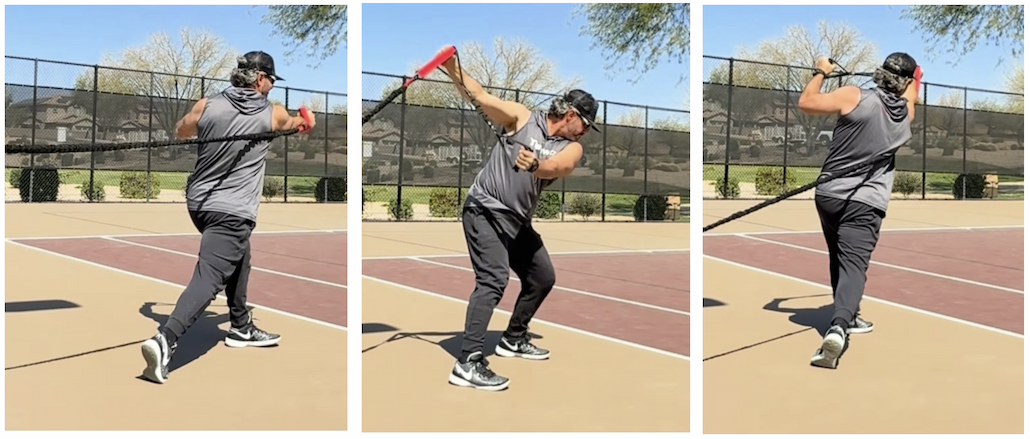
From left to right: The angle of pull from the band is completely level with the dual handle and parallel to the ground in the first rotational exercise. The spine is completely upright and does not involve a hinge. In images 2 and 3, you can see the initial loading point, where the band and the handle are 90 degrees to each other, with a high-low-high rotational path that is intensified by a lower anchor point for the band, increasing loading at the back and loading through explosive rotation.
The ArmCare Takeaway
Rotational power, trunk stability, grip strength, posture, and efficient force transfer all contribute to offensive success.
Just like velocity and release point consistency matter on the mound, exit velocity and bat path matter at the plate.
DO NOT IGNORE THE CORE!
The best hitters don’t simply swing harder—they transfer energy more efficiently, and the TORQ system conditions bat speed, rotation, and posture simultaneously.
Check out this insane study from Northeastern JC that led to an average exit velocity increase of 6 mph and over 100 homers for the season.
Strength Matters Most.
Ryan