

Strength in Numbers #246
I have worked with many athletes across all competitive levels. Amongst all of them, they think fatigue only comes from training, games, or throwing volume.
But, at the college and high school level, there’s another source of fatigue that can quietly affect throwing performance and arm health…that’s mental stress.
No question, succeeding academically creates opportunities in baseball. Scholarship money is more readily available to high-achieving student-athletes.
That said, during exam periods, athletes often experience heavy cognitive load from long study hours, disrupted sleep, and increased psychological pressure. Even if you’re not throwing more, your body can still enter a fatigued state that impacts how your arm performs.
Athletes I work with at Ivy League and other academically competitive institutions battle with stress on and off the field. They wonder why they have muscle knots after pitching or playing a weekend series, a tight neck, or just a general feeling of exhaustion.
The fresh exams don’t indicate these changes in some instances, but the fatigue exam is when you see whether the nervous system needs a reset.
Physical Fatigue vs. Cognitive Fatigue
These two types of fatigue are different — but they can influence the nervous system in similar ways.
Physical Fatigue
Physical fatigue occurs when muscles experience mechanical stress from training or competition.
Common signs include:
- Muscle soreness or stiffness
- Reduced strength during testing
- Slower recovery between throwing sessions
- Evidence of tissue micro-damage from workload
This is the fatigue most players recognize.
Cognitive Fatigue
Cognitive fatigue comes from mental effort, not physical activity.
Examples include:
- Long study sessions
- Academic stress and lack of personal time to unwind
- Lack of sleep
- Emotional pressure
Even though this fatigue does not cause muscle damage, it still affects the nervous system.
The brain controls muscle activation, coordination, and reaction time. When cognitive fatigue is high, the nervous system may struggle to recruit muscles efficiently, which can lead to:
- Reduced arm strength output
- Slower reaction and coordination
- Increased perceived effort during throwing
- Higher overall fatigue levels
In other words, the arm may feel or be tired even without heavy throwing workloads.
Managing Throwing During High Academic Stress
When exam periods arrive, athletes should treat mental stress as part of their workload.
Helpful strategies include:
- Creating a regular study schedule to review class material so you don’t have to cram
- Prioritizing sleep during study periods
- Maintaining hydration and nutrition
- Adjusting throwing intensity if fatigue rises
- Avoid high-threshold lifting or physical testing during exam periods
- Monitor arm strength and recovery
Sometimes the smartest adjustment isn’t mechanical — it’s recognizing the nervous system needs recovery.
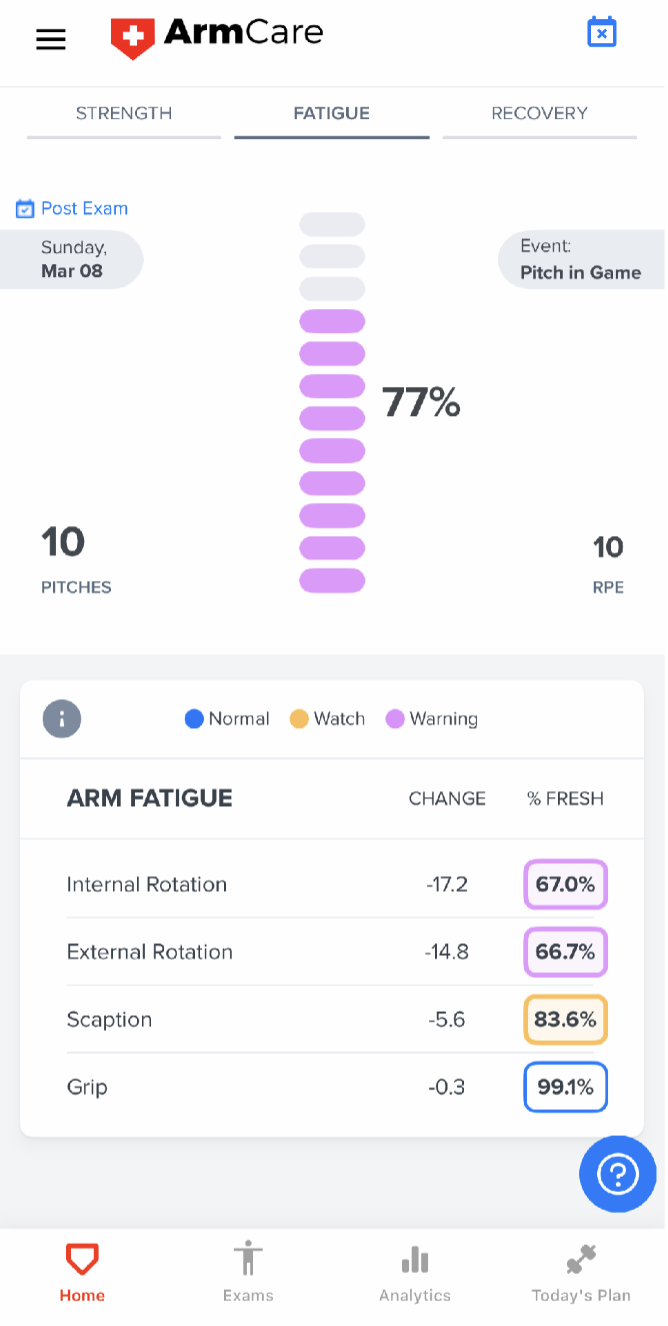
Here you see post-exam data from a high academic reliever. It is easy to see in the data where the nervous system can be depressed with combined physical and cognitive fatigue or stress.
The fresh exam may not reflect cognitive nervous system disturbances. Still, when high recruitment effort and adrenaline collide with cognitive load and an athlete’s busy exam schedule, a significant loss in force will likely be detectable.
Key Takeaway
Not all fatigue comes from throwing.
Cognitive stress can influence the nervous system in ways that resemble physical fatigue, even when muscles and tissues are healthy.
For athletes balancing academics and baseball, recognizing the impact of exam stress and adjusting training and competitive conditions is another step toward protecting arm health, maintaining strength, and performing consistently throughout the season.
Strength Matters Most.
Ryan
Ryan@armcare.com