Strength in Numbers – 256
When coaches talk about velocity, they usually focus on the throwing arm. However, one of the biggest keys to performance is the arm that never releases the baseball.
The glove arm plays a critical role in velocity, command, timing, and durability.
I know firsthand, from working with pitchers and position players who lack command, cannot hold velocity, and get out of sequence, that the glove arm is the key to unlocking improvement.
Research on elite pitchers consistently shows that high-level throwers create separation between the pelvis and torso before transferring energy up the chain.
The glove arm is a major contributor to this process because it helps organize rotation and stabilize the trunk during acceleration. Think of the glove arm as a braking and steering system. If the glove side flies open early, the torso often rotates too soon.
When that happens, energy leaks, timing breaks down, and the throwing arm is forced to do more work.
If the glove arm remains stable and controlled, the body can sequence rotational peak speeds efficiently:
Lead Arm → Pelvis → Torso → Throwing Arm
This order allows energy to flow from the ground, through the trunk, and ultimately into the baseball.
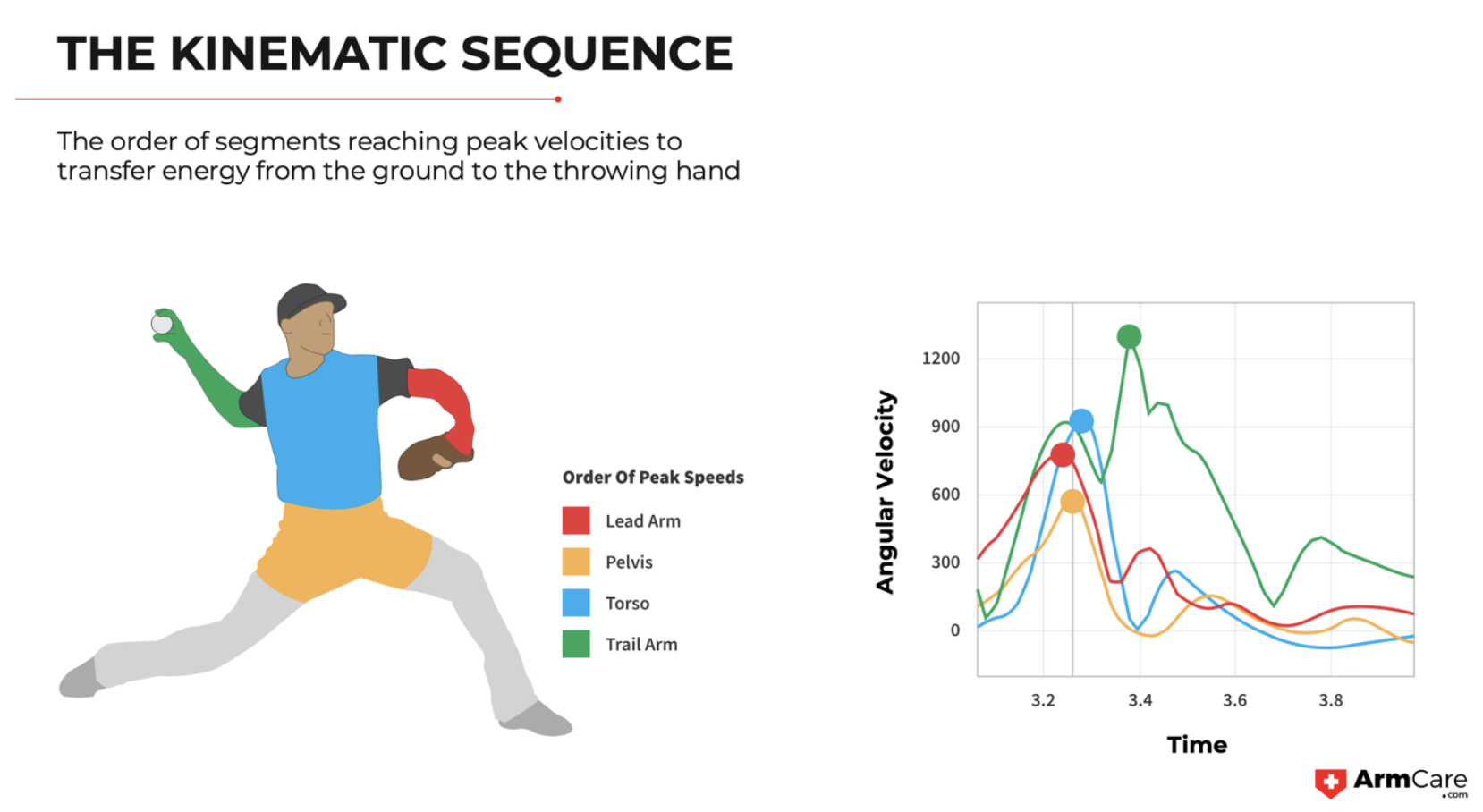
Segment speeds are measured in 3D, in degrees per second. It’s one thing to move segments fast; it’s another to have them hit their peak velocities in the right sequential order.
Ideally, pitchers should have their glove arm reach peak velocity first, as shown in the graph. You can see that in the ideal order, the red dot (peak glove arm velocity) is ahead of the other segments.
Do a Monthly Full Exam
One of the most important structures involved is the shoulder blade.
Strong scapular stabilizers on the glove side help athletes maintain posture, control rotation, and create a stronger “anchor point” for the trunk to rotate around.
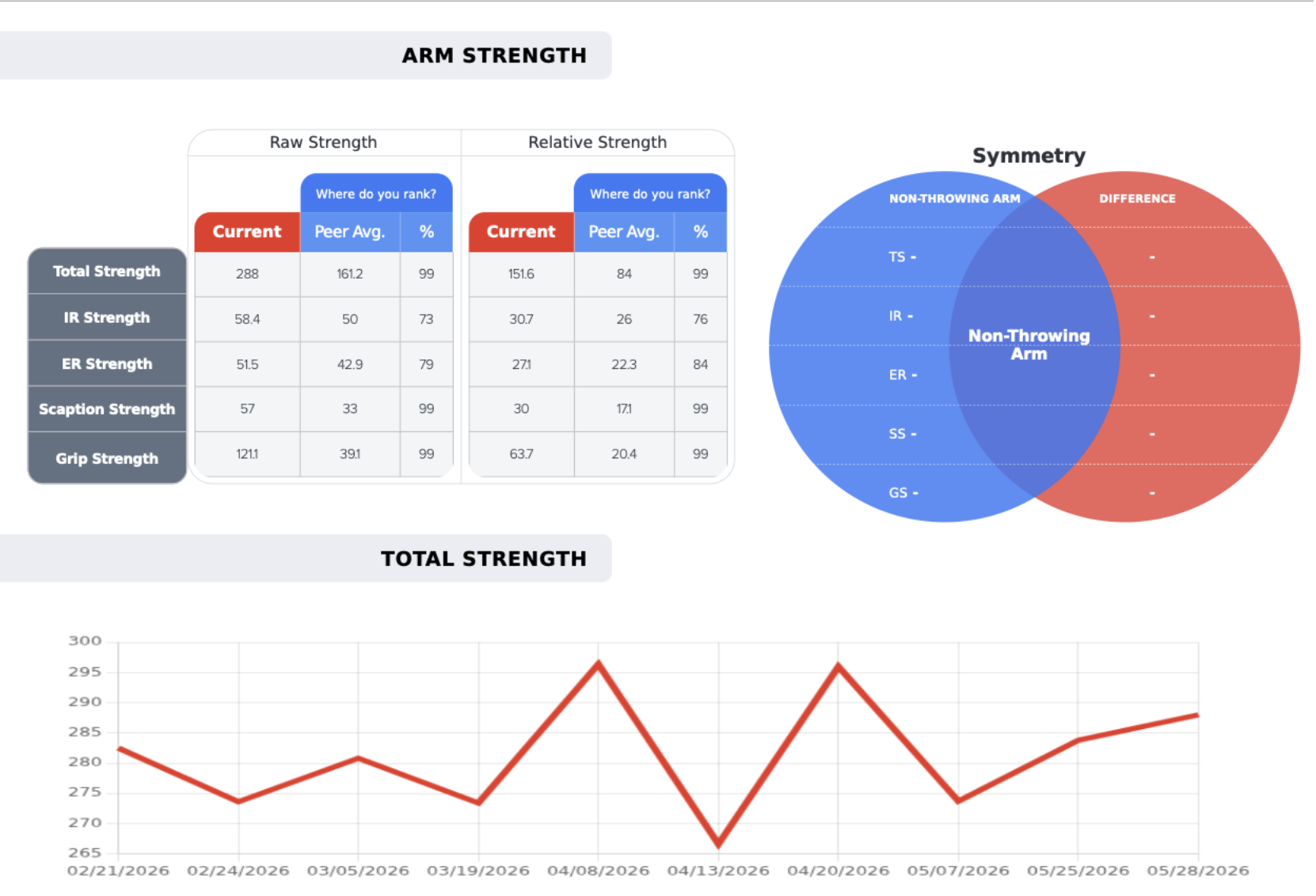
If you are testing only your throwing arm with the QUICK EXAM, you may miss important symmetry signals even if the throwing arm is very strong.
Attempt to do a FULL EXAM at the beginning of each month to check your glove arm, your throwing arm, and correct side-to-side asymmetries.
In many cases, glove arm problems are not mechanical problems at all—they are strength and motor control problems.
Athletes who struggle to control the glove arm often benefit from:
- Scapular stabilization training
- Rotational strength development
- Oblique strengthening to hold trunk-loaded posture
- Single-arm control exercises
- Drill work that teaches the glove arm to stabilize and “stop”
Some coaches even place a light-weighted ball in the glove during drill work to improve awareness and recruitment of the glove-side musculature.
The goal is not to create a perfect-looking delivery. The goal is to create a repeatable delivery that transfers energy efficiently and places less demand on the throwing arm while maintaining high velocities and command.
Sometimes the fastest way to improve the throwing arm is to train the other one. If you want to dive deeper into the importance of the glove arm, then check out this video.
STRENGTH MATTERS MOST.
Ryan