Strength in Numbers #157
In Major League Baseball (MLB), the pursuit of increased pitching velocity has been a major focus for both players and coaches. However, recent research suggests that velocity alone is a poor predictor of Tommy John Surgery (TJS), a common procedure for pitchers involving ulnar collateral ligament (UCL) reconstruction.
Instead, the primary factors contributing to TJS are fatigue, poor recovery, and mismanagement of workload.
I looked around for credible research with enough of a sample size, and I have mentioned the flaws in the only study ever published that connected throwing arm injuries to velocity and joint loading here.
Several studies have explored the relationship between pitching velocity and the likelihood of requiring Tommy John Surgery.
A 2016 study by Erickson et al. analyzed MLB pitchers and found no significant correlation between velocity and the incidence of UCL injuries requiring surgery.
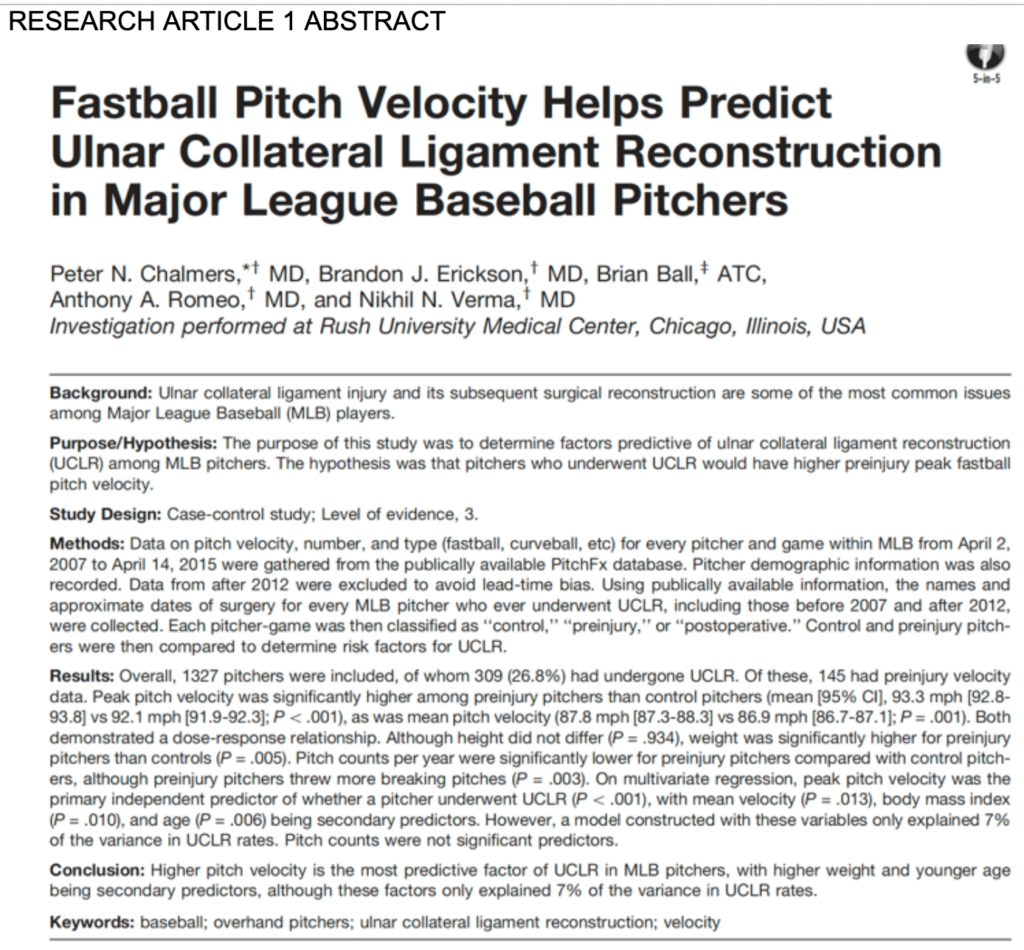
Similarly, a study published in the Journal of Shoulder and Elbow Surgery in 2018 by Chalmers et al. concluded that while increased velocity can contribute to higher elbow stress, it is not a standalone predictor for TJS.
Looking into these studies, they meet the objective scientific rigor in forming conclusions without confirming my biases. I posted about it on LinkedIn, one single post with over 21k impressions. People are both fascinated and irritated that throwing slower is not a cure.
Dr. Peter Chalmers and Dr. Brandon Erickson are two exceptional surgeons. I have published with them, and they deeply understand biostatistics. Truthfully, they have taken over much of the analysis in papers I have been a co-author on regarding injury epidemiology. Like all of us in the world, they want to see a dramatic reduction in injury rates, and it may be ironic, as surgery is their income stream.
DIVING INTO THE RESEARCH
For each of these research articles, I will provide you with the abstract and then go a little deeper into the data tables so you can explore the findings a little more deeply.
SETTING THE TABLE
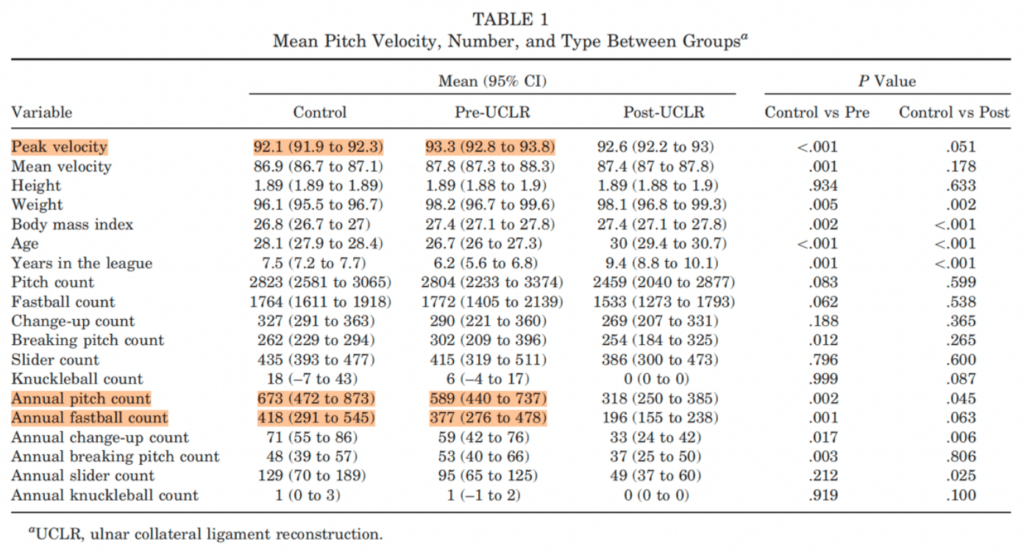

If only 5% of the TJS risk is predicted by velocity, then what explains the other 95% of the risk of injury that does not involve reaching triple-digit heat?
This is rhetorical, obviously, but you know what I always say—STRENGTH MATTERS MOST, and when high-velocity throwing is not tempered with workload adjustments, that’s where the recipe for disaster lies.
FATIGUE AND RECOVERY: THE CELLULAR TO FUNCTIONAL IMPACT
The main contributors to UCL injuries are fatigue and inadequate recovery. At a cellular level, muscle fatigue leads to a decrease in the ability of muscle fibers to contract efficiently, causing a reduction in force production. This can result in compensatory mechanisms where other structures, such as the UCL, bear additional stress. Prolonged periods of insufficient recovery exacerbate this issue, as there is a loss of stress shielding that leads to microscopic damage accumulating faster than it can be repaired.
Please see this article if you want to geek on various stress-shielding concepts or equations.
On a functional level, fatigue impairs neuromuscular coordination, leading to altered pitching mechanics. Poor mechanics increase the strain on the elbow joint and UCL. When pitchers continue to throw despite fatigue, their risk of injury rises significantly. This phenomenon is compounded by errors in workload management where the intensity and volume of throwing are not adjusted according to the athlete’s recovery status.
Even with low-intensity throwing, athletes can fatigue differently, unexpected to our conventional understanding, and it’s completely individual. If this is the case, it is the inability to identify fatigue and poor recovery in the first place which is the culprit at play.

Workload Management in Velocity Enhancement Training and Command
One of the critical errors leading to UCL injuries is poor workload assignment and assigning inappropriate ball weights. Without proper evaluation of a pitcher’s fatigue and recovery, coaches may inadvertently assign workloads that are too intense or too frequent. This not only increases the risk of injury but also affects a pitcher’s command. When pitchers lose command, they tend to throw more pitches to achieve the desired outcomes, further contributing to overuse injuries.
Velocity programs that prioritize velocity and de-prioritize command is a problem, especially when throwing to a wall that is unmarked. The other element is selecting the right ball weights and strategizing to optimize strength, volume and intensity.
TYING IT ALL IN FROM SCIENCE TO PRACTICE
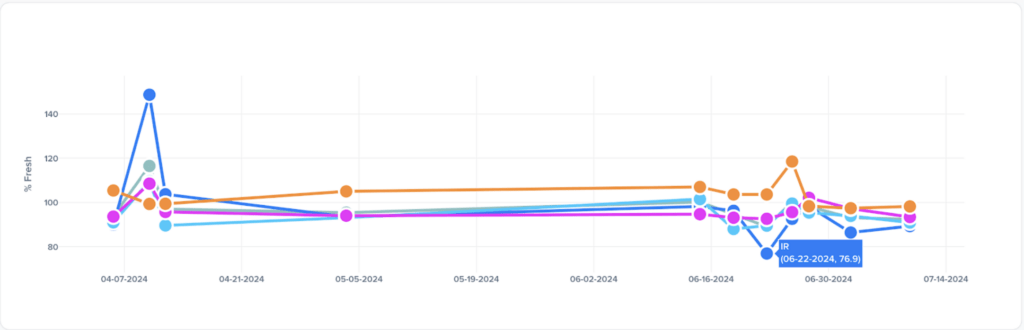
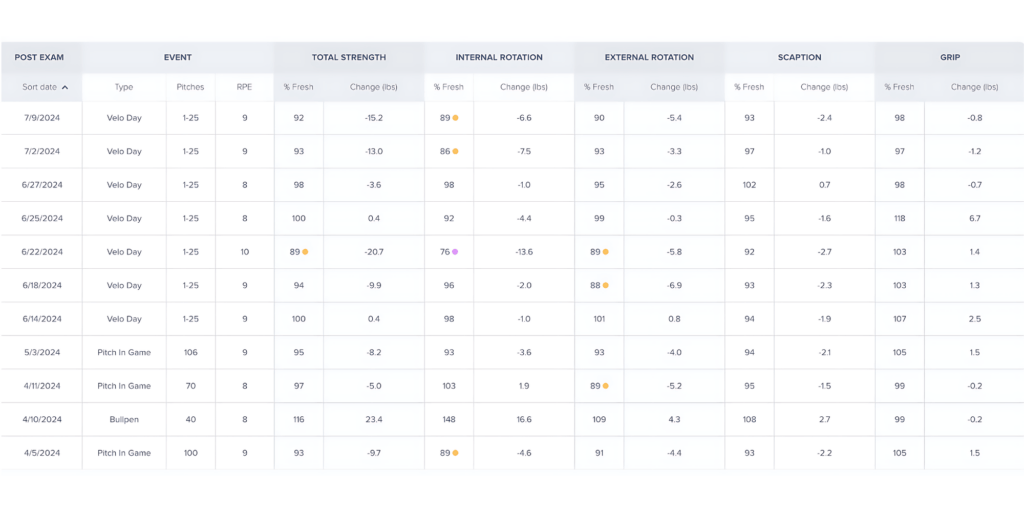
Velocity is a factor in injuries, but it’s true influence is suspect owning less 5% in explaining a TJS. From the above, you can see in real-world examples that missing observations and overwhelming the arm accounts for the greater majority. Intuitively, a throwing arm that does not recover or is fatigable makes athletes highly susceptible to breaking down.
Historically, many coaches have lacked detailed insights into their athletes’ throwing arms, limiting their ability to make informed decisions about workload and recovery, but that time has passed.
ArmCare.com enables a player-informed approach, allowing for real-time adjustments based on an athlete’s current physical status. A proactive management of workload helps in maintaining optimal performance while safeguarding against overuse injuries.
You can throw smoke without being burned – and clearly, that is a fact.
Ryan