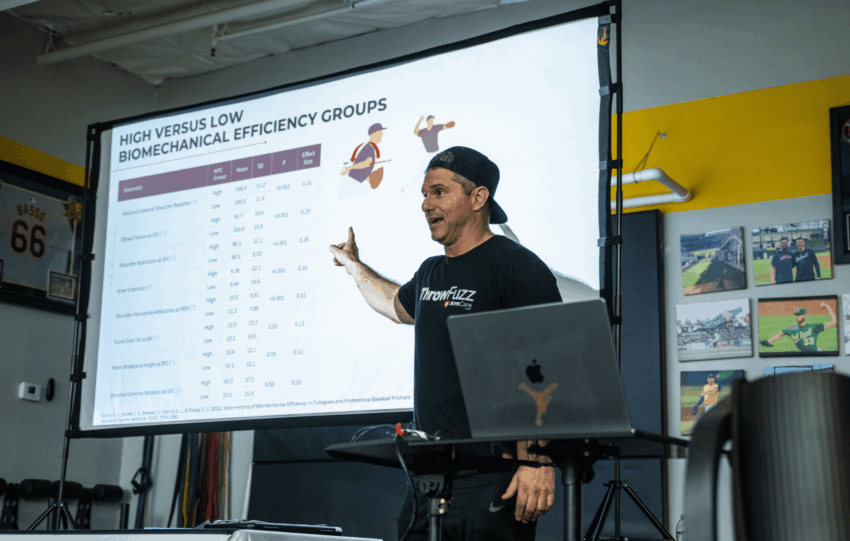
Strength in Numbers #181
Athletic performance, particularly in sports like baseball, is profoundly influenced by the condition of the nervous system. The central nervous system (CNS) and the peripheral nervous system (PNS) are critical in coordinating muscle function, reaction time, and overall performance. However, these systems are susceptible to fatigue, especially in athletes engaging in high-intensity training and competition.
Understanding CNS and PNS fatigue and learning strategies to manage and overcome it is essential for optimizing athletic performance and preventing overtraining. Testing your glove arm is an important factor in determining whether fatigue is localized to the throwing arm or at the brain level.
I often have pitchers test both arms at the start of every month to check in on their CNS drive and help shape the training around the throwing programs, bullpen, and game schedules.
You may push the arm, but the sensory-motor area of the brain may be the governor to unlock high performance.
This article is worth reading if you are only doing the Quick Exam on the ArmCare platform and have not really considered testing the glove arm and why it matters.
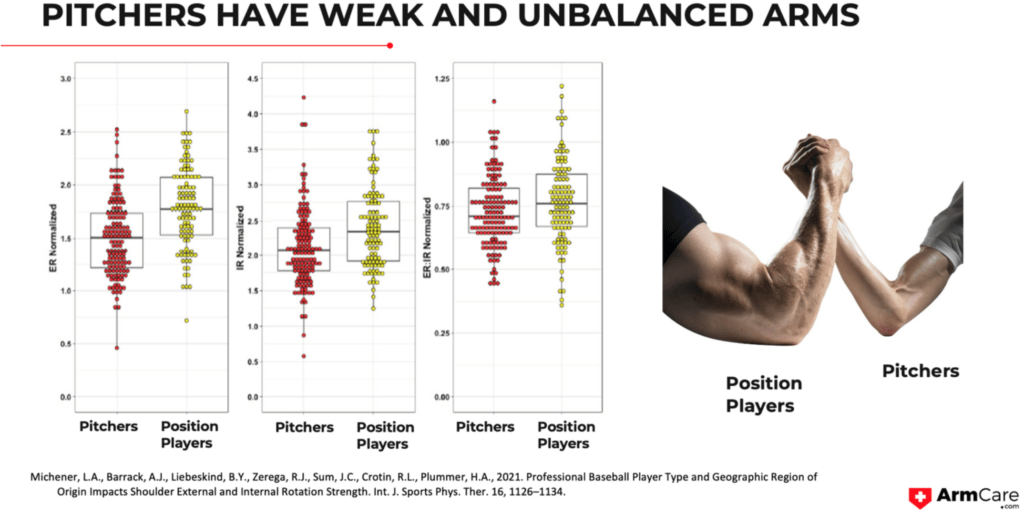
I was at an NPA Clinic in Houston, where I saw an athletic pitcher throw with both arms. I had always communicated the importance of testing the uninvolved side to look for imbalances and truly get a feel for the intrinsic weakness of the throwing arm.
While with the Angels, not only did we find North American Pitchers with the weakest professional throwing arms, 53% of them had a stronger glove arm.
There’s no wonder why the injury risk is so high in pitchers, given the natural strength deficits that are seen between both hemispheres of the body, the sheer size of the modern-day pitcher, and the firepower coming out of an arm that is simply a wet noodle by comparison to a big engine from the shoulder down.
Linking Central Nervous System (CNS) and Peripheral Nervous System (PNS) Recovery is Important for Baseball Performance
For baseball players, nervous system recovery is particularly important due to the sport’s reliance on explosive power, precise motor control, and mental acuity. Fatigue in either the CNS or PNS can lead to:
- Decreased throwing velocity or accuracy.
- Slower reaction times at the plate or in the field.
- Increased risk of injury due to compromised motor control or muscle function.
Adopting a balanced approach to training that prioritizes recovery and accounts for both central and peripheral fatigue is essential to maximize performance and career longevity.
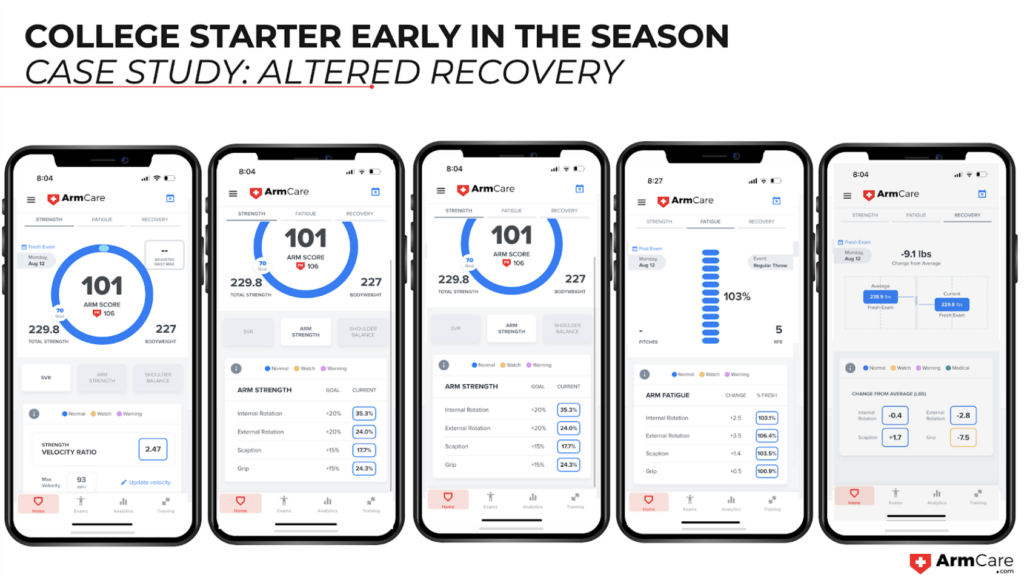
When it comes to testing, glove arm strength deficits can signal more CNS impairment, while the throwing arm, which is routinely captured with Quick Exams on the ArmCare platform, will give you an indication of PNS fatigue. It is a good idea to test the glove arm and throwing arm for the first week of each month to determine the extent of CNS and PNS fatigue experienced by the athlete.
Central and Peripheral Nervous System Fatigue Defined
The nervous system is quite a beast. If you focus on fatigue in the local system, which is just the arm, you miss what is happening systemically in the body. Although the throwing arm throws, the fatigue may be only happening within the arm and that’s a good thing.
A much more detailed approach to recovery is needed when it is systemic. Let’s look at the differences.
- Central Nervous System Fatigue (CNS Fatigue):
- CNS fatigue occurs at the level of the brain and spinal cord, where motor commands are generated. It primarily affects the ability to sustain voluntary force production.
- CNS fatigue is linked to reduced communication between the brain and muscles, often caused by neurotransmitter imbalances, insufficient recovery, or high psychological stress.
- Symptoms include:
- Declines in reaction time and coordination.
- Increased feelings of lethargy or mental fatigue.
- A diminished ability to concentrate or focus during training or games.
- A diminished ability to maintain consistency in a movement pattern
- Peripheral Nervous System Fatigue (PNS Fatigue):
- PNS fatigue occurs at the level of the neuromuscular junction and muscle fibers. It results from the inability of muscles to contract effectively due to metabolic changes and impaired nerve signaling.
- PNS fatigue is often caused by energy depletion, accumulation of metabolic byproducts (e.g., lactate, hydrogen ions), and cellular damage.
- Symptoms include:
- Decreased muscle strength and endurance.
- Localized muscle soreness and stiffness.
- Slower recovery of muscle performance after exertion.
Essentially, CNS fatigue impacts the neural charge to the muscles, and PNS fatigue impacts contraction signaling. When together, there’s a major decline in psychomotor ability and coordination.
Overtraining and Nervous System Fatigue
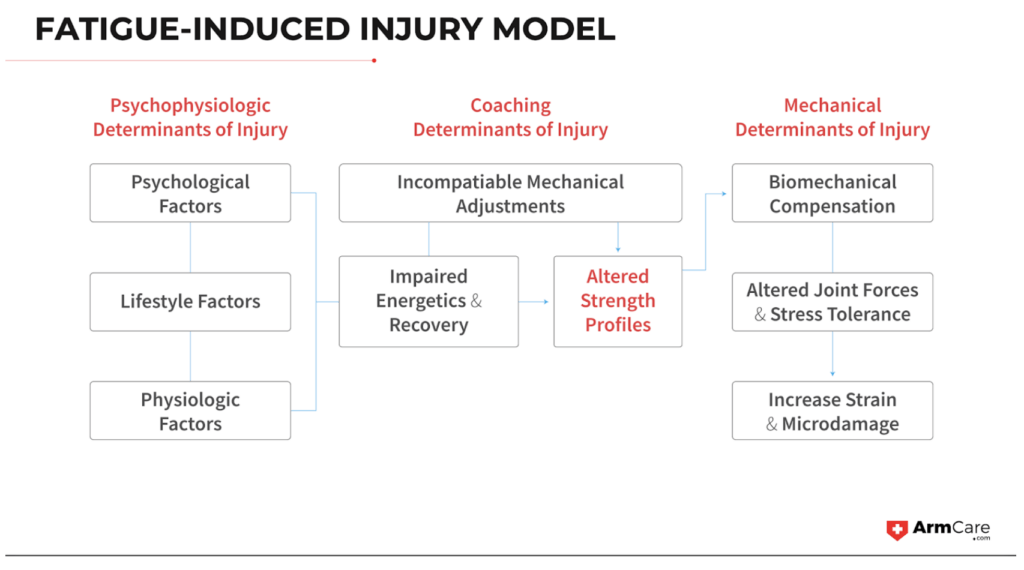
I firmly believe that overtraining syndrome (OTS) is hard to encourage in baseball players in weight room activities. However, when it comes to high-intensity throwing, athletes can chronically train beyond their ability to recover, leading to cumulative CNS and PNS fatigue. Overtraining can manifest as two types that can wear out a throwing athlete if left unchecked:
- Sympathetic Overtraining:
- Associated with CNS fatigue due to excessive high-intensity training.
- Symptoms:
- Restlessness and inability to relax.
- Increased resting heart rate and blood pressure.
- Poor sleep quality.
- Parasympathetic Overtraining:
- Associated with PNS fatigue from prolonged moderate-intensity training.
- Symptoms:
- Decreased resting heart rate.
- Chronic muscle soreness.
- Persistent fatigue and a lack of energy.
Acute Physiological Impacts of Overtraining:
- Increased stress hormone levels (e.g., cortisol).
- Reduced glycogen storage in muscles.
- Higher levels of inflammation and oxidative stress.
Chronic Physiological Impacts of Overtraining:
- Suppressed immune function that impacts recovery.
- Altered hormonal profiles, including reduced testosterone levels that impairs recovery and strength.
- Long-term declines in neuromuscular performance.
What I find interesting is that you can change whether the athlete is more PNS or CNS impaired by either providing the nervous system more gas or brakes. In other words, you can feed a CNS impaired athlete moderate-intensity training, while a PNS athlete can be boosted by high intensity training – that means ECON (Eccentric After Co-Contraction)
training for the throwing arm. Stronger arms are harder to kill, but if the body is in a state of dysregulation, you need to put water on that fire.
Managing and Overcoming Nervous System Fatigue
For baseball players, preventing and managing CNS and PNS fatigue involves a combination of recovery strategies, training adjustments, and lifestyle modifications.
In last week’s article, we discussed the environment and what an intense family setting can do to an athlete hormonally and cognitively. If you are a coach and your players have voiced friction in their family life, not truly eager to be with their families over long extended holidays, more reason to check in and add some water to the fire.
Here are some simple tips…
1. Adequate Recovery:
- Sleep Quality: Ensure 7–9 hours of restorative sleep per night, as sleep is critical for CNS recovery and muscle repair. If this is not happening, identify barriers and overcome them.
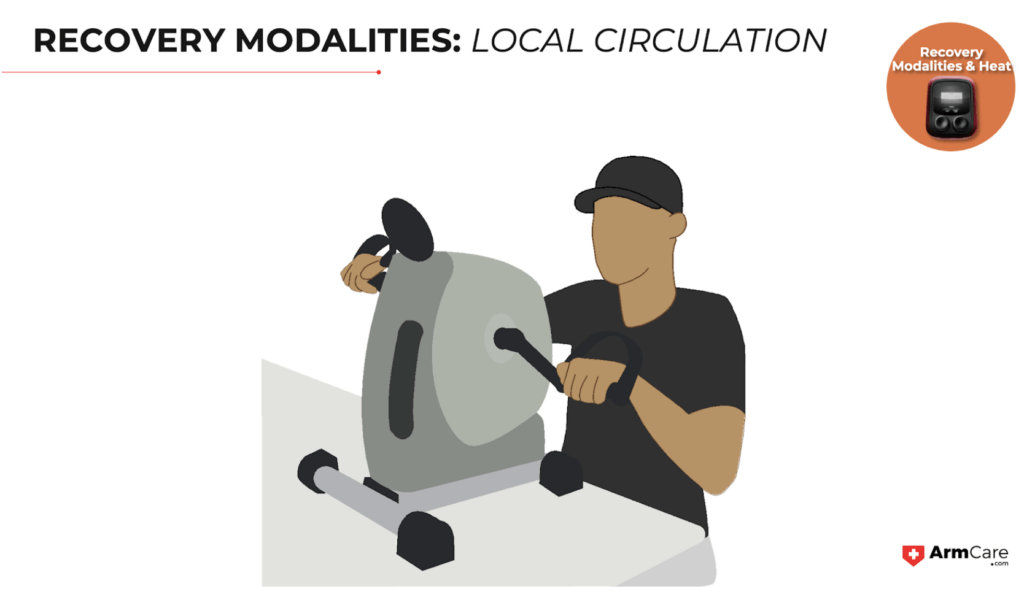
- Active Recovery: Incorporate low-intensity activities (e.g., walking, yoga, or swimming) to promote blood flow and reduce muscle stiffness. Incline walking is a perfect choice after lifting sessions to lower the sympathetic nervous system throttle.
- Rest Days: Schedule sufficient rest days, download, or deload weeks to allow the nervous system to recover fully. Download meaning that you reduce volume but not intensity – do this when you see a WATCH alert in the app. Deload means you reduce both volume and intensity – do this when you see a WARNING on the ArmCare platform.
Putting it All Together
Understanding central and peripheral nervous system fatigue is critical for baseball players aiming to perform at their best while avoiding overtraining and injury. By incorporating effective recovery strategies, monitoring workload, and managing stress, athletes can maintain optimal nervous system function.
As the demands of modern baseball continue to grow, addressing these components will help players stay competitive and resilient in their sport.
Look no further than this course below, which will take your performance into overdrive without over- or under-rating your engine.
Get Ready to Put the New Year in High Gear – STRENGTH MATTERS MOST.
Ryan
Ryan@armcare.com