Strength in Numbers – 254
One of the most overlooked parts of arm care is stabilization training because throwing isn’t just about creating force — it’s about controlling force.
The shoulder and elbow must constantly react to movement, vibration, and stress while remaining stable at high speeds. That’s why vibration drills, perturbation training, and unstable positions like quadruped, bird dog, half-kneeling, and plank variations are so valuable.
These drills force the arm to react dynamically while the trunk and scapular muscles stabilize the body, creating a more connected and resilient athlete.
The biggest benefit is better joint control under fatigue.
The rotator cuff, forearm muscles, scapular stabilizers, and core all work together to keep the shoulder and elbow stable during throwing. When that coordination breaks down, stress on the arm rises quickly.
Another major benefit is circulation.
Post-throw vibration drills and rhythmic stabilization exercises help increase muscular activity and blood flow throughout the arm. That circulation delivers oxygen, nutrients, hormones, and recovery factors needed to repair tissue after throwing.
These drills can also increase lactate levels, which may help support recovery and tissue adaptation through important signaling pathways.
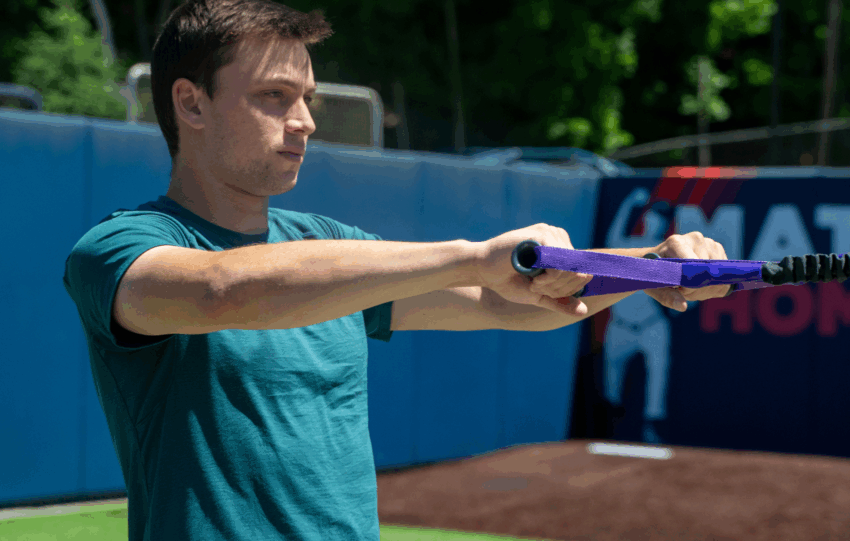
This is why low-level stabilization circuits and vibrational plyoball work can be highly effective after throwing or at the end of an arm care routine.
Benefits of Plyoball Vibrational Training:
- Increased circulation
- Improved muscular coordination
- Better joint stability
- Reduced post-throw stiffness
- Enhanced recovery
As stabilization demands increase, the body learns to control movement under greater challenge — exactly what the throwing arm must do on the mound.
Velocity matters. Health matters. But circulation is king.
To see Plyoball Vibrational Training in action, check out the video below.
Strength Matters Most.
Ryan