

Strength in Numbers #170
I used to be squeamish at the sign of blood until I was present in the OR room for my teammate’s shoulder surgery at Penn Medicine.
My teammate was a 29-year-old pitcher who came in and out of sedation to talk to me while being operated on for a slap tear. I saw the scope inside his arm, saw the images on screen, and watched a precise procedure with minimal incisions – I thought to myself, surgical intervention is so high tech, procedures are being performed more frequently and faster than ever, but our injury prevention strategies SUCK.
That was back in 2015, almost 10 years ago and long before the ArmCare.com era.
In this article, I will get to the nitty-gritty of what is causing revision rates and the things you need to pay attention to re-write the script on preventing revision surgeries rather than doing them faster and more often.

THE GREATEST TJ SURGERY EVER
TJS is performed to repair or replace a torn UCL, a ligament crucial for the elbow’s stability, especially during high-velocity throws like those performed by baseball pitchers.
Since its inception in the 1970s, the surgery has become nearly synonymous with arm injuries in baseball, with more than 25% of MLB pitchers having undergone the procedure at some point in their careers. While TJS has a high success rate, failures are not uncommon, especially in the era of increased throwing velocities and intensive schedules for pitchers.
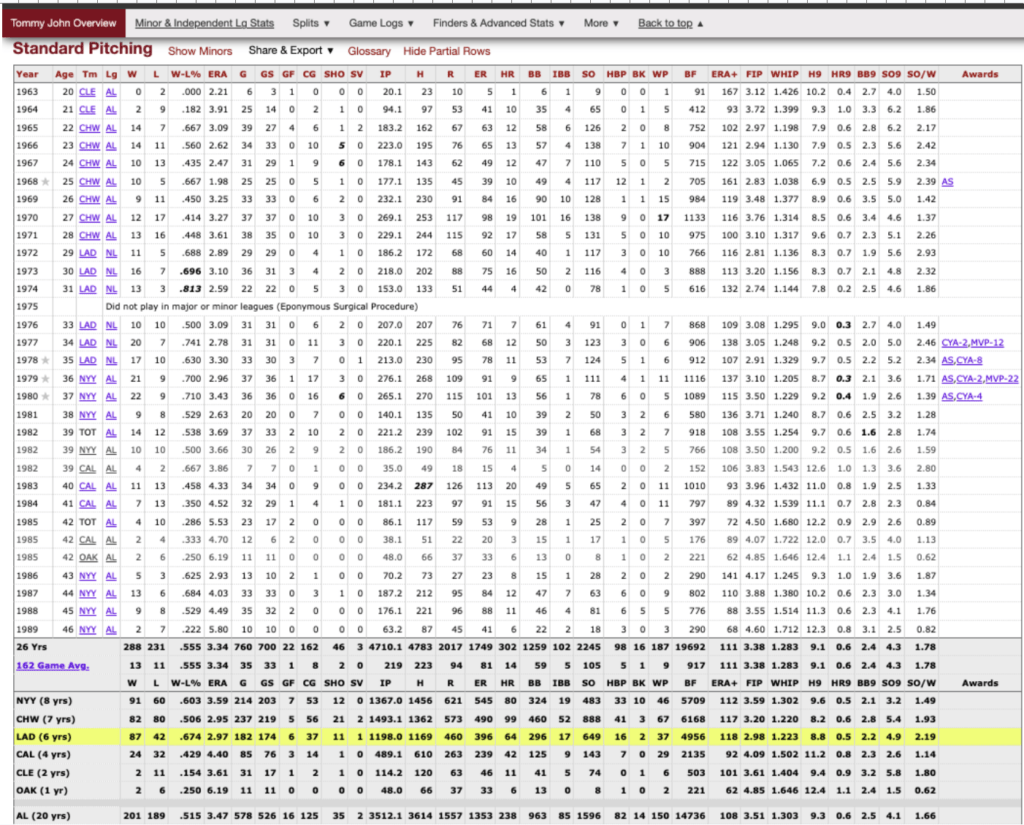
But here’s the truth – the best Tommy John Surgery was the first one ever – 16 years post-Tommy John Surgery for Tommy John that is a record that stands to this day 50 years later:
THE SECOND-EVER TJ SURGERY
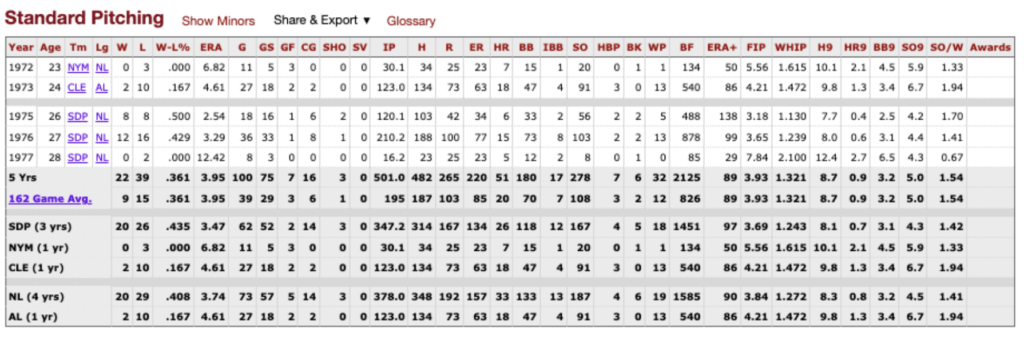
In the same year, someone I truly admire in the game had the second-ever Tommy John Surgery. This person is none other than the legendary Brent Strom—one of the most successful MLB pitching coaches of all time.
His survivorship and performance could not match Tommy John, playing only three years after the surgery. That said, note that Brent accumulated 210 innings two years from the time of his surgery and retired from the game 2 years after that.
This rise and fall of TJS is not unusual and is actually more of the norm these days. In a sport where three strikes, you’re out, the vast majority of pitchers are exiting after two.
TOMMY JOHN REVISION RATES IN THE CURRENT DECADE
In the current decade, revision rates for Tommy John surgery have increased. Studies indicate that revision rates for TJS range from 10% to 25% for MLB pitchers and around 20% for college pitchers.
These rates represent a stark rise compared to earlier decades, where the procedure’s success was generally considered long-lasting with lower revision rates.
A retrospective cohort study published in the Journal of Shoulder and Elbow Surgery in 2020 indicated that among MLB pitchers who underwent TJS between 2000 and 2015, around 15% required a revision within their career, with revision rates significantly increasing over time. Another study in the American Journal of Sports Medicine reported a revision rate of 10.9% for MLB pitchers in the first 10 years following their initial surgery.
For collegiate pitchers, the numbers have followed a similar trend.
Increased demand for young pitchers in competitive college environments has led to higher rates of UCL injuries and subsequent revisions. A 2022 review found that revision surgery in college pitchers is on the rise, primarily attributed to overuse and insufficient recovery time.
When it comes to a 13-year-old boy, how many times will his elbow be opened and closed? That answer is – it depends.
For some, it could be within 3 years or less, while others may not see a revision until they are 23 years old.
However, if the player has had a revision before hitting arbitration, it could affect career earnings and a lot more in their future, including addiction to painkillers, which I have seen in my career.
Bottom line, prevent the first one!
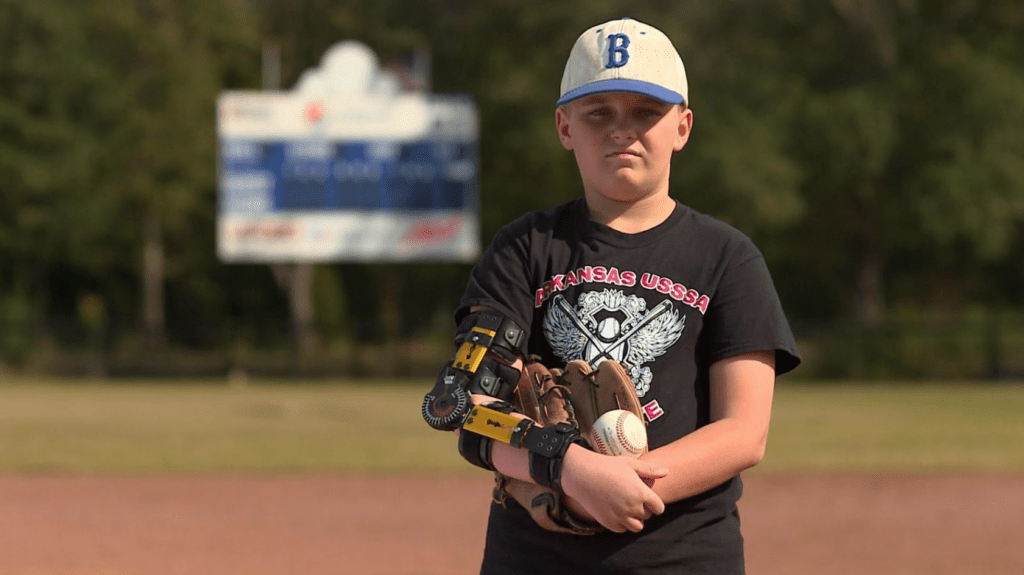
More and more parents are reaching out to me about their sons who are wearing braces on their arms instead of their teeth. It’s a harsh and sad reality.
FAILING GRADES AND SOLUTIONS
The failure of Tommy John surgery can result from multiple factors:
1. Overuse and Early Return to Play: One of the most common reasons for UCL reconstruction failure is pitchers returning to play too quickly before the ligament has fully healed. This can lead to re-injury and the need for revision surgery. Current data suggest that 20-30% of pitchers return to the mound too early after their initial surgery, contributing to increased failure rates.
Solution: Evaluate your throwing arm after pitching and high-intensity throwing days. Any time you see alerts, scale your workload and use the individualized pitch count feature to dial in the right amount of work given your throwing arm strength metrics.

2. Biomechanical Issues: Poor throwing mechanics can place additional stress on the elbow, contributing to UCL re-tears even after surgery. If a pitcher does not correct the mechanical issues that may have caused the initial injury, they are at a much higher risk of needing a revision.
Solution: This one is a little more intricate, but if you can have the pitcher go and do a mocap screen, you can identify the elbow torque in 3D, and then you can evaluate the grip strength performance to evaluate if the relative grip strength is greater than the relative torque on the elbow. If you want more information, read this article. If you are hungry for more, our Certified Pitching Biomechanist Course has a whole exercise section on how to increase pounds of grip force relative to elbow torque to protect the UCL.
3. Increased Pitching Velocity: The modern emphasis on velocity is a major contributing factor to UCL injuries and their recurrence. High-velocity pitching generates significant stress on the UCL, and research shows that pitchers who throw harder are more likely to suffer a second injury. A study published in Sports Health in 2018 found that pitchers who consistently threw at speeds of 95 mph or higher were at a higher risk of TJS failure.
Solution: This is tough one – you cannot coach an athlete to throw a slower fastball for obvious competitive reasons. Also, the rehabilitation process is unsuccessful if players cannot at least achieve the same velocity prior to injury or better. Although greater velocities are linear with elbow torque increases, not all pitchers react the same way. If you want to learn more about the Velocity-Torque relationship in individual pitchers, this is your read.
4. Poor Rehabilitation and Recovery: Inadequate or rushed rehabilitation programs contribute significantly to TJS failure. It takes time for the ligament graft to mature and integrate fully into the elbow structure, and insufficient rehab can lead to re-injury. This one is a modifiable factor.
Solution: We can improve our rehabilitation efforts with data. Why guess it when you can measure it? Every athlete should have the ArmCare.com platform, but it is especially important for injured players. Far too often, players return to the wild because they are not in pain and have gone through a protocol. A weak arm is a weak arm, no matter how you slice it. I have seen plenty of athletes go into rehabilitation and come out with a weaker arm. There are over 80 exercises shown in our new ArmCare Specialist Course. There’s no shortage of options to build a powerful, well-balanced throwing arm.
If you want to go deeper into the science on the aspects mentioned above, please look at these three articles.
It’s time to flip the script on Tommy John Surgery. It’s time to focus on advancing prevention versus intervention. If you have had an arm surgery, it’s time to be data-led to significantly reduce the risk of being cut up a second time. Trust me, it stinks watching your friends compete for 18 more months, a second year in a row.
Ryan
Ryan@armcare.com