Strength in Numbers #217
With the offseason fast approaching, now is the ideal time to commit to your professional growth—because stronger knowledge builds not just better athletes, but better careers.
My kids are now in school full-time, and while I work hard to educate our community, I also must find time to educate myself. I am in the fight with you all. I am focused on finding better ways to optimize players, making them more durable and sustaining long-term success. Like you, we have had many successes and failures, but each time, we grow wiser, and we personally share that wisdom with all of you.
You may need to sit down and ask yourself, ‘How am I moving my career forward?’ What areas do I need to spend more time understanding? Where should I go to gain more knowledge?
You then have to map out education opportunities for yourself and dive in – these are mine:
- I am a research associate at a few universities and assist in sports science studies
- I write academic publications and must read a lot to make applied connections
- I advise athletes who have substantial injuries and help bring them back to life
You may not fall into #1 or #2. Still, I guarantee you will encounter an athlete who sustains an injury and will either figure out a way to help themselves or allow someone else to take over, such as a sports medicine specialist.
You may be a parent, a coach, a physical therapist, an athletic trainer, a strength coach, a scout, or even a player yourself. Whoever you are reading this article, you are affected by injuries, but you need to ask yourself – Am I making an impact?
We have nearly 500 dual-certified specialists, most actively using our technology and platform daily. I do some simple math – if you assigned an average of 10 athletes per dual-certified specialist, only 5,000 athletes out of our nearly 70,000 athletes using the system are getting the most profound insights. You can change that and gain the understanding to fully customize everything you do.
We will delve further into how to create a competitive advantage through your education in this article and explore how you can support athletes to the highest degree.
Education is the Competitive Edge
Applying deeper insights—like mastering program individualization, analyzing workload data, or interpreting strength/range of motion metrics—makes you stand out. That knowledge helps you create smarter training regimens and safer return-to-throw plans, enabling teams to win championships, athletes to earn scholarships, and players to get drafted.
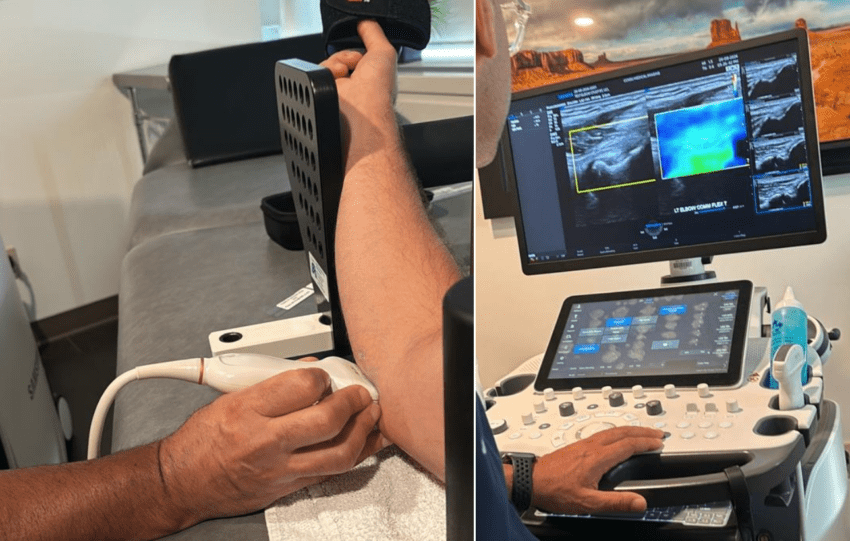
One of the questions I receive most frequently from students and others interested in our education is: How do I use the Coaches Portal Dashboard? Instead of writing long-winded emails, having you read a whole bunch of paragraphs on how to navigate the application, the process, and how to execute on the data from monitoring, settle in here for 20 minutes and watch a section on it from our Certified ArmCare Specialist Course.
There are many features in the Coaches Portal – gaining familiarity with where to find specific data points is essential, as the first step in creating impact is observation. You are measuring what matters, but you must be able to see the big picture and also take in the nitty-gritty details to keep athletes performing at their best.
The Harsh Reality of Injuries in Baseball
From youth to pro levels, arm, shoulder, and core injuries are climbing:
- Youth baseball: tens of thousands of injuries annually—overuse and growth plate damage are alarmingly common. (Wikipedia)
- High school: averaging 2.29 injuries per 1,000 athlete-exposures, many related to throwing and overuse. Other studies have shown that 5% of all pitchers will experience arm surgery(American Academy of Orthopaedic Surgeons)
- College ball: injuries rising steadily, with pitchers and upper extremity injuries among the most prevalent. (PMC)
- Pro level: Velocities have soared, and pitching injuries—including UCL tears—are skyrocketing. MLB IL placements increased from 212 (2005) to 485 (2024), and the trend continues. (AP News)
The cost of stagnation in knowledge is steep—injuries derail careers and derail dreams. The cost of doing business at the MLB level is outrageous, and it’s a problem that started at the youth level.
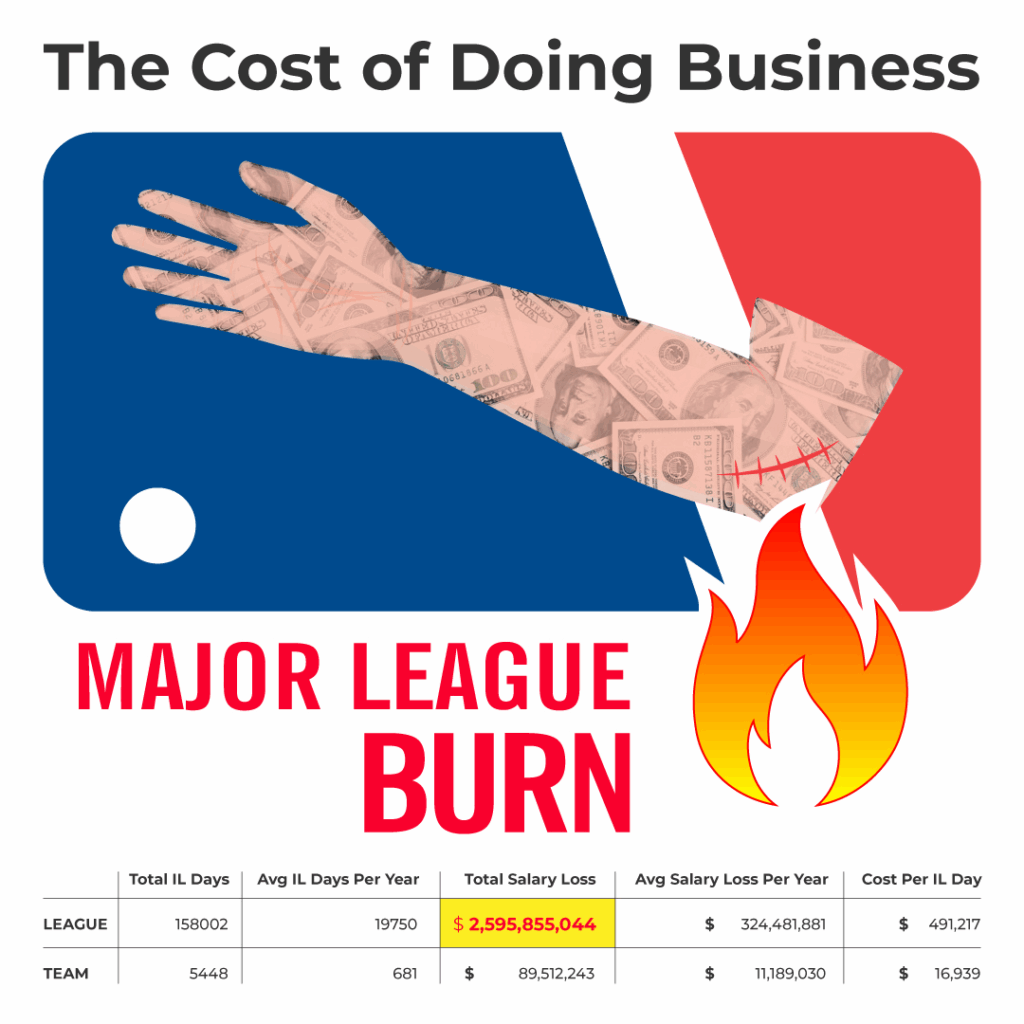
For much of my career, people in the industry casually say, “it’s the cost of doing business”, as it relates to throwing arm injuries in professional pitchers. This type of thinking is incorrect and perpetuates a hostile atmosphere, suggesting that every pitcher has a bomb in their arm waiting to explode – but after receiving education, you know this is not true!
In the table, you can see that over the past decade, the league has spent nearly $2.6 billion on lost salaries. Still, our country incurs almost $3.5 billion per year in surgical repair cases for amateurs. We have a problem to solve, and it requires education.
ArmCare.com’s Certifications: Education Built on the Real World That Transforms
We offer two premier, career-level, fully online certificates:
Certified ArmCare Specialist (CAS):
- Learn to interpret arm strength, fatigue, asymmetry, and ROM data.
- Customize training, throwing, and recovery for each athlete using real-time metrics.
- Go through technical instruction with a ton of new exercises to boost scores
- The course is for any baseball performance enthusiast, but approved for Athletic Trainers, Strength Coaches, and Physical Therapists
Certified Pitching Biomechanist (CPB):
- Master analysis of pitching mechanics, ball flight aspects, and workload.
- Create interventions to optimize efficiency, deception, velocity, and command.
- Develop training programs that enhance mechanics and increase athletes’ efficiency.
- Like the CAS course, this course is designed for any baseball performance enthusiast, but is also approved for Athletic Trainers, Strength Coaches, and Physical Therapists.
Getting dual-certified means you command both movement science and strength data—you can identify problems and correct compensatory patterns, restabilize motor habits, and spot what’s causing excessive arm stress. You also gain advanced training tools, such as fixed isometrics, which are highly effective for safely ramping up throwing arm and throwing body activation – key coordination concepts that reduce injury and pain. When you are dual certified, you have access to unique classes – such as one we are building on wall isometrics.
Catch a highlight here of one exercise:
In this video, you will learn a technique to activate the proximal body, including layers of muscles from the pelvic floor to the shoulder joint. Muscles must fire, pressure needs to be built in the abdominal cavity; the combination creates a consistent release point, especially with scaption strength dialed in, as you can glean from our exams.
Individualization: Your Greatest Tool
Baseball performance hinges on individual differences in biomechanics, workload tolerance, and recovery strategies. Broad-brush training fails the arm. Using data to download, deload, reload, or overload—based primarily on volume adjustments—helps preserve arm quality over time without disrupting force-capacity or mechanics. Quality is maintained through controlled exposure, not one-size-fits-all spikes.
You will be dealing with tall athletes, muscular athletes, hypermobile athletes, athletes who have undergone previous surgery, athletes going through growth spurts, and those with painful motion that requires adjustment. These athletes can be of the same age and competitive level despite these differences. YOU NEED TO KNOW HOW TO INDIVIDUALIZE. As I always say, generalization leads to hospitalization, but individualization leads to optimization, and you need to invest the time to optimize your learning curve.
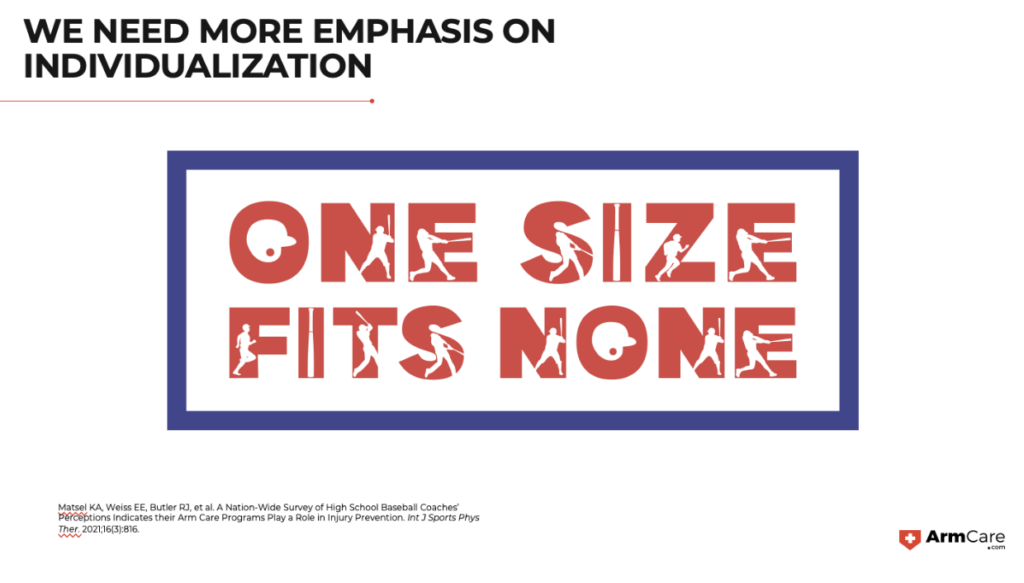
Not much more to say about this visual. It is the truth. You may have some foundational concepts in performance, but there needs to be customizations to improve an athlete’s strength, symmetry, recovery, and fatigue resistance.
Takeaway Message
The beauty of what is offered in our electronic education is that you will own your process and be able to think objectively about how you coach yourself and others.
Prepare to learn strategies to reinforce your coaching approaches, and in some cases, you may consider revising or discarding certain elements. Either way, you will master your daily approach to performance and health. You will be enlightened, and you will separate yourself from the norm.
The best time to sharpen your skills is when everyone else rests.
Invest in a professional edge this offseason that will deliver significant returns in these areas:
- Longer, healthier careers
- Better athletes, stronger teams
- Scholarships, championships, and pro contracts
Back-to-school should be for everyone, not just players. Parents, coaches, and sports medicine staff, too—because elite programs are built, not born.
And you may be the missing link from good enough to greater than ever.
Strength Matters Most.
Ryan