

Strength in Numbers – 272
The pitcher throwing 100 mph. The prospect with incredible stuff. The athlete who dominates a showcase and attracts attention with a radar gun.
But baseball also needs another kind of pitcher…
The workhorse and swingman.
The athlete must be dependable, one who adapts, recovers, competes, and remains ready when opportunity arrives, and can fill the role of starter and reliever.
In my past, I have had a chance to work with almost 3500 MLB and MLB-affiliated athletes, and I know a lot of them by arm strength and performance data, and most importantly, their ability to be on the mound. As a performance specialist, if you are not concerned about innings pitched, then you really are not developing pitchers that can last.
One player I want to feature who worked incredibly hard was a workhorse and swingman when I was with the Angels. Jason Alexander maintained a calm presence on the mound and was built to pitch in any role.
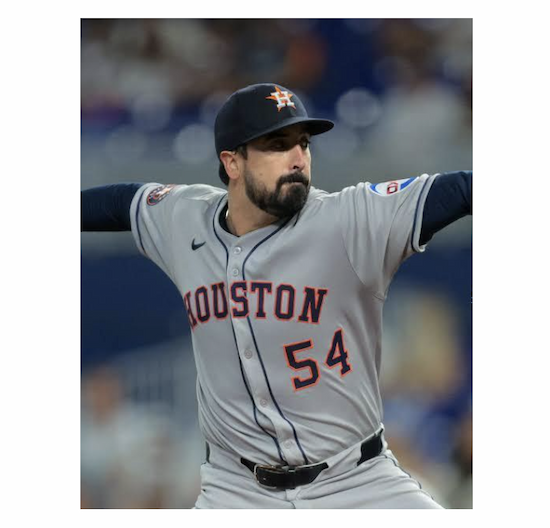
Jason Alexander is a swingman who can compete as a starter and reliever.
From Tommy John Surgery to the Big Leagues
Alexander’s road to professional baseball was anything but conventional.
After attending Santa Rosa Junior College and Long Beach State, Tommy John surgery interrupted his collegiate career and cost him two seasons. He eventually returned to pitch at Menlo College in 2017.
He went undrafted.
The Los Angeles Angels signed him as a free agent, beginning a professional journey that took him through multiple levels of the minor leagues.
By 2019, he had reached Triple-A.
Then, in 2020, the team released him.
After spending approximately 10 months away from professional baseball, including working as a car salesman, Alexander found another opportunity with Miami in 2021.
He eventually joined Milwaukee and made his Major League debut on June 1, 2022, at 29 years old.
For a pitcher who had undergone surgery, missed seasons, gone undrafted and been released, reaching the Major Leagues was already a remarkable accomplishment.
But his story wasn’t finished.
The Value of Being Ready
After additional stops with Milwaukee, Boston and the Athletics, Alexander joined the Houston Astros in 2025.
He initially struggled with the Athletics, recording an 18.00 ERA over six innings.
Houston gave him another opportunity.
With injuries affecting its pitching staff, the Astros needed someone capable of stepping into the rotation.
Alexander responded with 13 starts, a 4–2 record and a 3.66 ERA across 71⅓ innings for Houston.
The Astros went 10–3 in those 13 starts.
What Makes a Workhorse?
Jason’s journey raises a question I’ve spent much of my career investigating.
What allows one pitcher to repeatedly tolerate competitive demands while another struggles to maintain physical capacity?
During my time with the Angels, we began monitoring throwing-arm strength throughout the season, pre- and post-pitching, rather than relying exclusively on preseason, midseason, and end-of-season assessments. It was continuous.
One relationship became especially interesting: Shoulder Balance, measured through the external-to-internal rotation strength ratio.
ER Strength ÷ IR Strength = ER Ratio
An athlete producing 40 pounds of external rotation strength and 40 pounds of internal rotation strength has a ratio of 1.0.
But the ratio alone doesn’t tell us everything.
We also need to know whether both muscle groups are strong enough, how those values respond to pitching, and whether strength returns before the next demanding outing.
A balanced arm isn’t automatically a durable arm. A durable arm must also demonstrate the capacity to recover, not fatigue, and repeatedly perform.
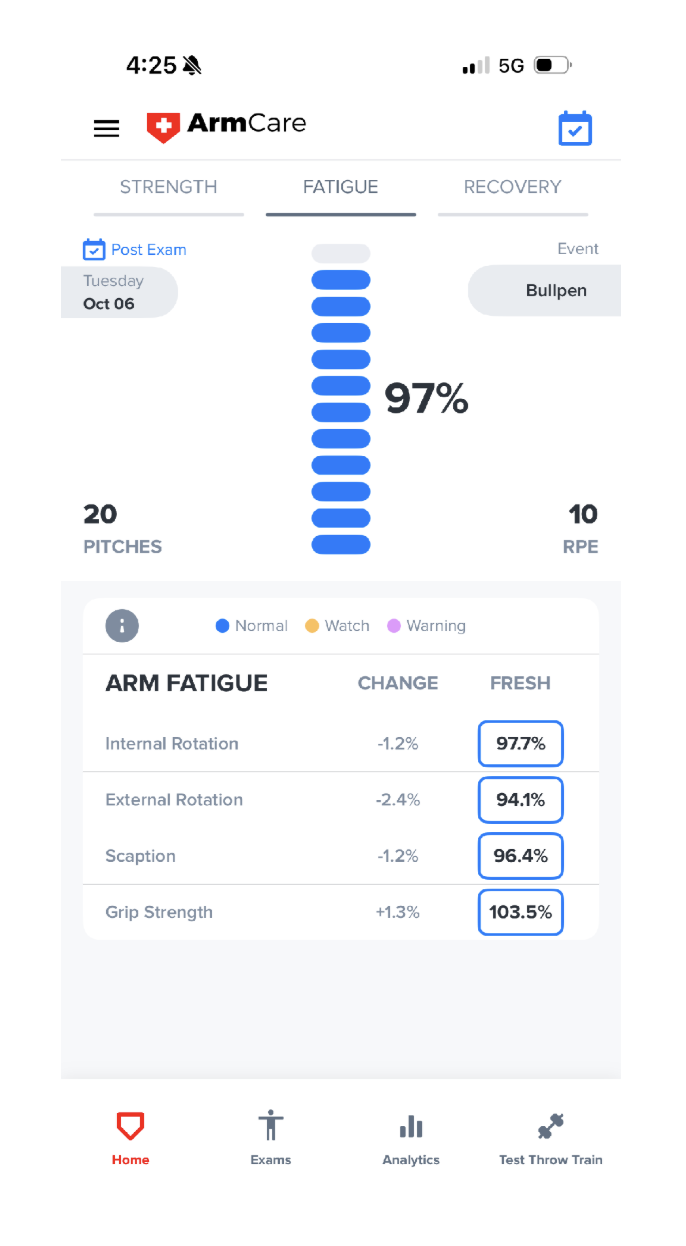
When it comes to understanding the arm, there’s more to know outside of shoulder imbalances. We knew how our players fatigued and want to see how they manage workload to determine how to progress or regress the demands. We found that within 10% of the baseline value indicates a limit of fatigue that did not correspond with an increase in treatment post-throwing or between outings. In the image above, you can see that this athlete had a short, high effort outing and was able to manage fatigue across all muscle groups, while amplifying activation in the throwing arm.
Build the Athlete Who Can Answer the Call
Jason Alexander’s career reminds us that player development is rarely a straight line.
His journey doesn’t prove that any single strength metric on its own is the rule, as Jason was able to display a balanced and resilient throwing arm.
Jason’s story shows us we need to develop the physical qualities that support repeated competition, adaptable roles, and recovery from demanding workloads.
A showhorse demonstrates what an athlete can do on his best day. It’s the showcase guy, the social media arm throwing to a radar gun indoors with a handful of guys screaming when triple digits light up the screen.
A workhorse demonstrates what an athlete can keep doing when the game demands it and plays consistently in front of crowds.
Baseball needs both at times, but regardless of where the pitcher is on the spectrum of workhorse and showhorse, one thing is for sure:
Strength Matters Most.
Ryan
Ryan@armcare.com

