Strength in Numbers – 273
When baseball players think about throwing-arm strength, the rotator cuff usually gets most of the attention.
But beneath the shoulder blade is another key part of the throwing system: the serratus anterior.
It doesn’t directly throw the baseball. Instead, it helps position and control the platform that the shoulder depends on to throw at high speed.
For throwing athletes, that makes it a muscle worth understanding.
Where Is the Serratus?
The serratus anterior originates along the upper ribs and wraps around the side of the rib cage before attaching along the inside border of the scapula.
If you’ve ever seen the finger-like muscles along the side of a well-developed athlete’s rib cage, you’re looking at portions of the serratus anterior.
Its location gives it an important job:
It helps control where the shoulder blade goes.
Rather than thinking of the shoulder as simply a ball-and-socket joint, think of it as a system.
Arm → Shoulder → Scapula → Rib Cage
The scapula has to move with the arm. The serratus is one of the major muscles helping make that happen.
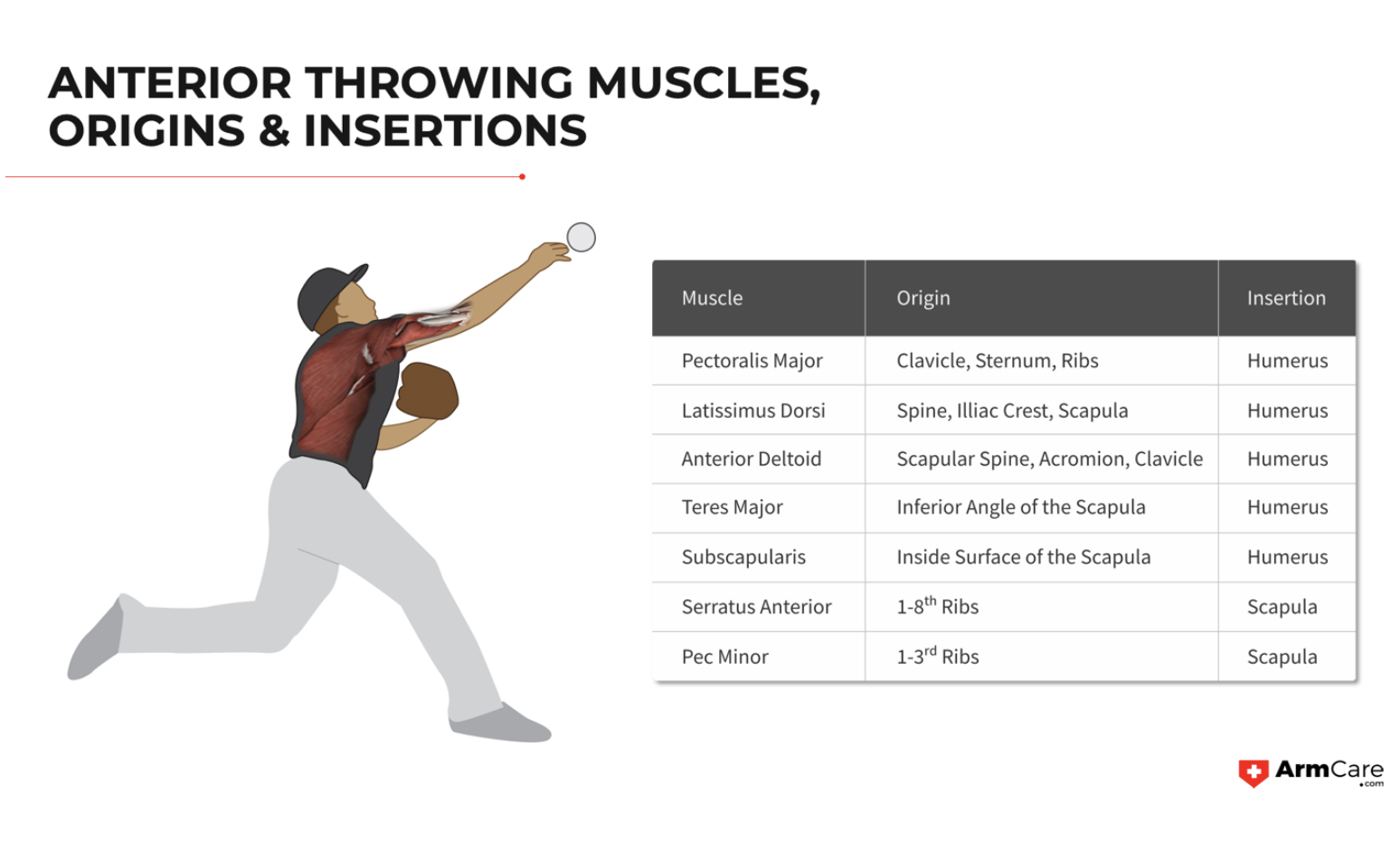
The serratus anterior is an important muscle considered an anterior, or front-facing, muscle that coordinates movement toward the front of the body.
Why Upward Rotation Matters
As the throwing arm elevates, the scapula must rotate upward along the rib cage.
The serratus anterior works with the trapezius to create this movement while also keeping the scapula appropriately positioned against the thorax.
Think about upward rotation as moving the socket with the arm.
The humerus moves rapidly overhead, but the shoulder blade isn’t supposed to stay stationary underneath it.
It has to move too.
This coordinated relationship helps maintain positioning of the glenoid—the socket of the shoulder—as the arm travels through the throwing motion.
That’s why scapular function shouldn’t be viewed as simply:
“Squeeze your shoulder blades together.”
Throwing requires the scapula to move, not just be held in place.
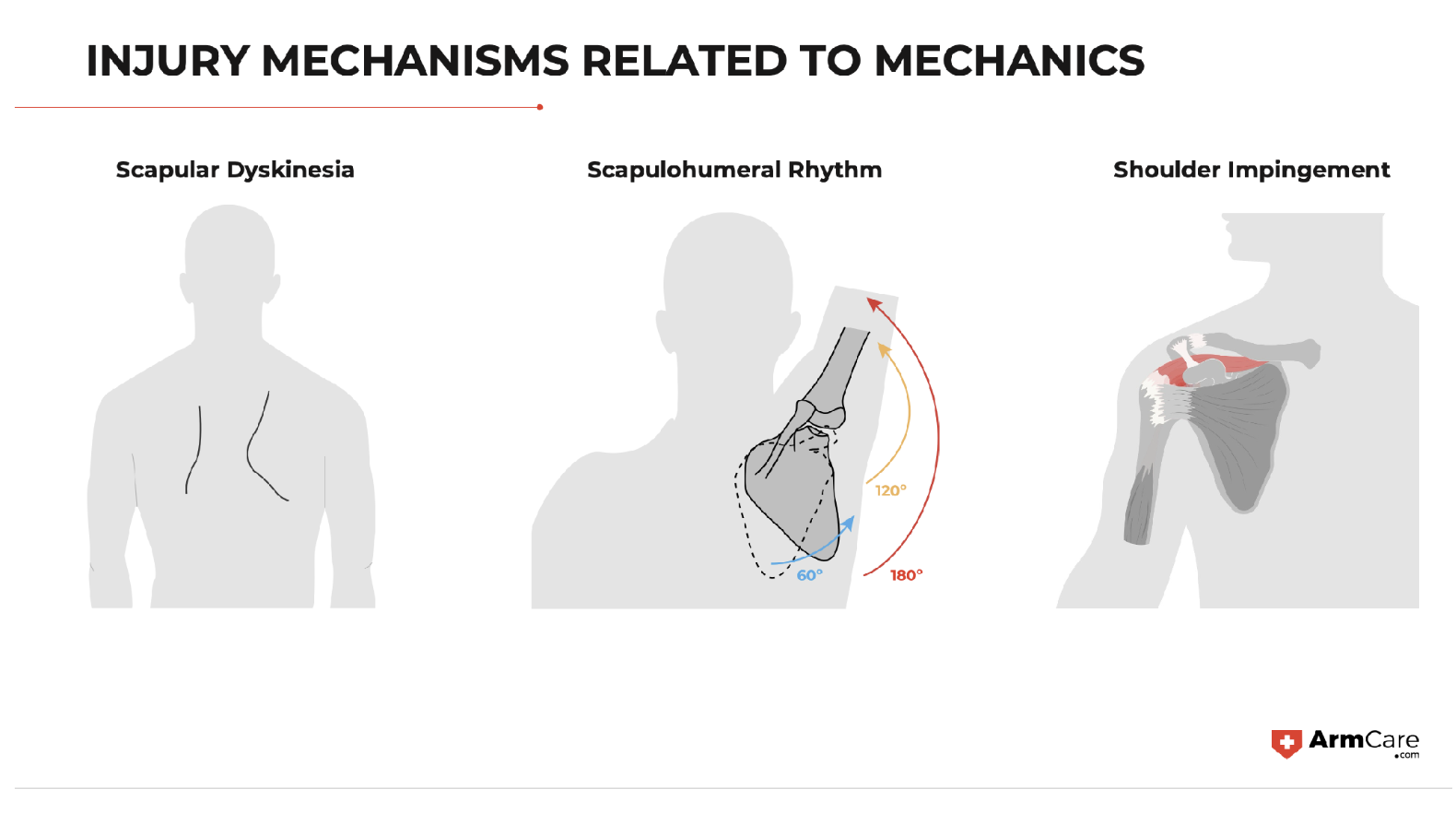
If the serratus is weak, it can lead to a winging scapula, ineffective upward rotation of the shoulder, creating problems for scapulohumeral rhythm (elevation of the shoulder blade and arm), as well as be involved in shoulder impingement, pinching rotator cuff fibers underneath the acromion of the scapula because it’s not moving correctly.
From Layback to Ball Release
This becomes especially interesting during the fastest portions of pitching.
Near maximal external rotation—or what players commonly call layback—the shoulder is preparing to transition from storing and transferring energy into extremely rapid arm acceleration.
From layback toward ball release, the humerus rapidly internally rotates while the scapula continues moving around the rib cage.
The serratus anterior contributes to scapular protraction and upward rotation, helping the scapula move with the accelerating arm rather than simply acting as a fixed base.
That’s an important distinction.
We don’t necessarily want a shoulder blade that is just stable.
We want one that can be:
Stable when stability is required—and mobile when movement is required.
For a thrower, control is the ability to do both.
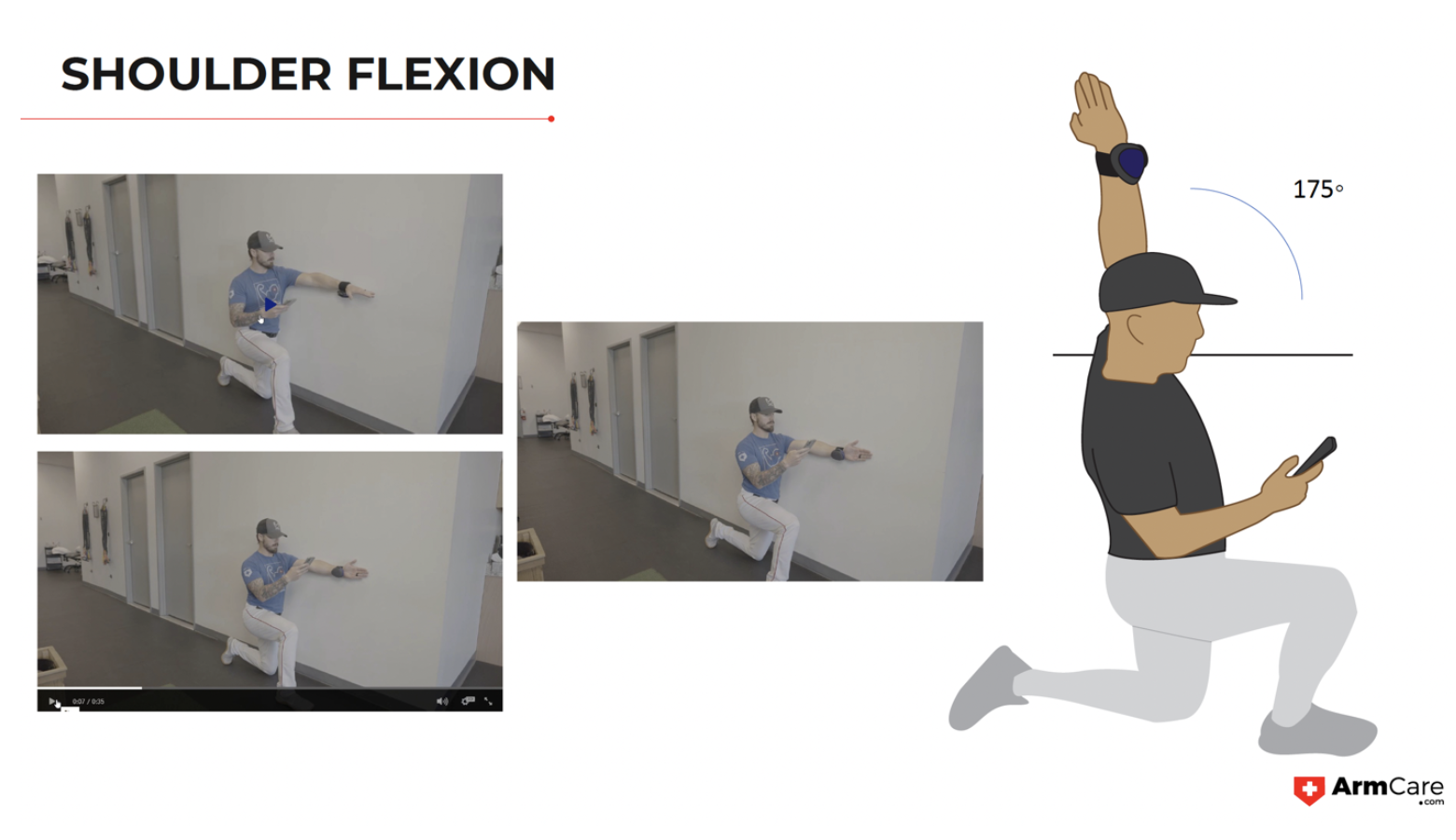
The serratus anterior helps with shoulder positioning, not just layback and follow-through.
Shoulder flexion (arm elevation) range of motion can suffer if the serratus anterior is weak and doesn’t engage properly to rotate the shoulder blade upward. If you are losing range of motion, it may not be restriction; it could be weakness in the serratus anterior.
Takeaway Message
The serratus anterior is a great example of why we shouldn’t train the throwing arm as a collection of isolated muscles.
The body doesn’t throw that way.
The ribs, scapula, shoulder, elbow, and hand interact as force moves through the entire kinetic chain.
The next time you think about shoulder strength, don’t just think about the muscles surrounding the ball-and-socket joint.
Think about the muscles controlling the socket itself.
Below, I’ll show you some of the ways we train the serratus anterior specifically for the demands of the throwing athlete.
Strength Matters Most.
Ryan
Ryan@armcare.com