Strength in Numbers – 266
We’ve had plenty of ways to measure how fast an athlete could throw for years in professional baseball.
First, we measured catching velocity as soon as the ball crossed the plate, but now we have advanced radar tracking that captures the ball right out of the hand.
What we didn’t have was an equally simple way to answer a more important question:
Does the athlete have enough throwing-arm force to support that speed?
When I was hired by the Angels, we inherited the worst team in baseball for pitching injuries.
One key factor in our injury rates was a low Strength-Velocity Ratio (SVR)—a metric that connects the maximum force the throwing arm can produce with the maximum speed the athlete can generate.
I connected these dots early in my research looking at grip strength and velocity, yet the actual computation is the following:
SVR = Total Throwing-Arm Strength ÷ Maximum Throwing Velocity
So let’s say an athlete has 180 pounds of total arm strength and throws 90 mph. The SVR is 2.0 pounds of arm strength for every 1 mph of velocity. That’s pretty darn good.
That relationship gives us something velocity alone cannot: context.
When Velocity Outruns Strength
Throwing harder is not inherently the problem. The concern is what happens when velocity increases while the arm’s force-producing capacity fails to keep pace.
ArmCare’s framework recognizes that throwing velocity and elbow torque rise together. A higher SVR therefore represents more arm strength available relative to the speed being produced.

Think of your arm as a catapult. The hinge is your UCL, the spring is your forearm muscles. The faster your arm accelerates, the more your muscles have to stabilize and put the brakes on before you break.
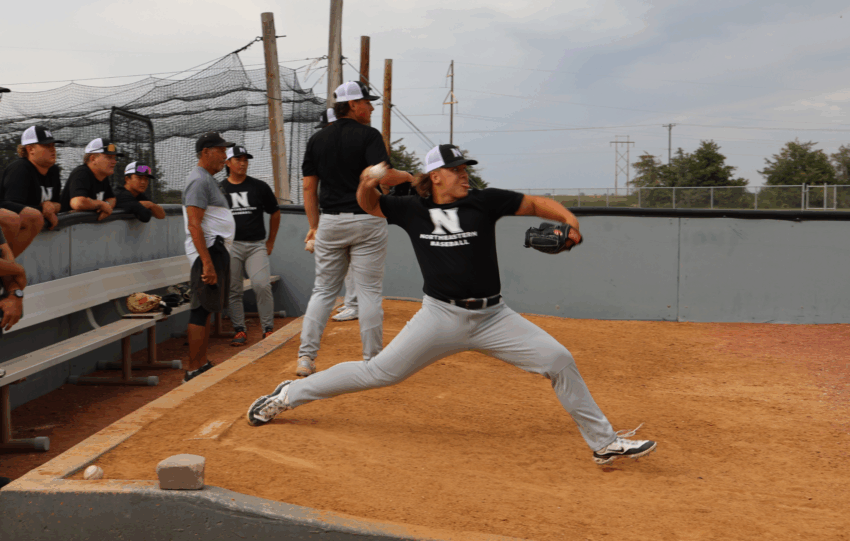
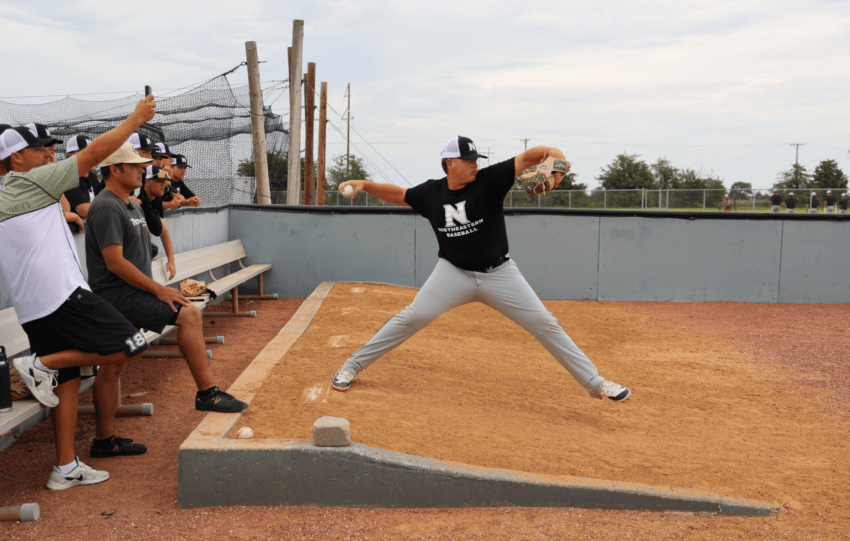
Think about two pitchers who both throw 90 mph.
One produces 180 pounds of arm strength.
SVR = 2.0
Another produces 135 pounds.
SVR = 1.5
The radar gun sees the same pitcher. The body does not.
When force capacity drops while arm speed stays high—or keeps increasing—greater demand may shift to passive structures that cannot actively contract to protect themselves. That’s where the UCL, capsule, and labrum become increasingly important in resisting the tremendous forces created during throwing.
Velocity tells us how fast the arm can go. SVR tells us how much force is available to control it. Think of a player who puts on 10 mph in an offseason. That’s 10x the loading on every max-effort throw. You cannot lose arm strength.
What Is a Good SVR and Where Do You Stand?
SVR changes considerably as athletes mature, which is why comparing a 12-year-old directly with a college pitcher makes little sense.
ArmCare’s normative database provides age-specific percentile standards.
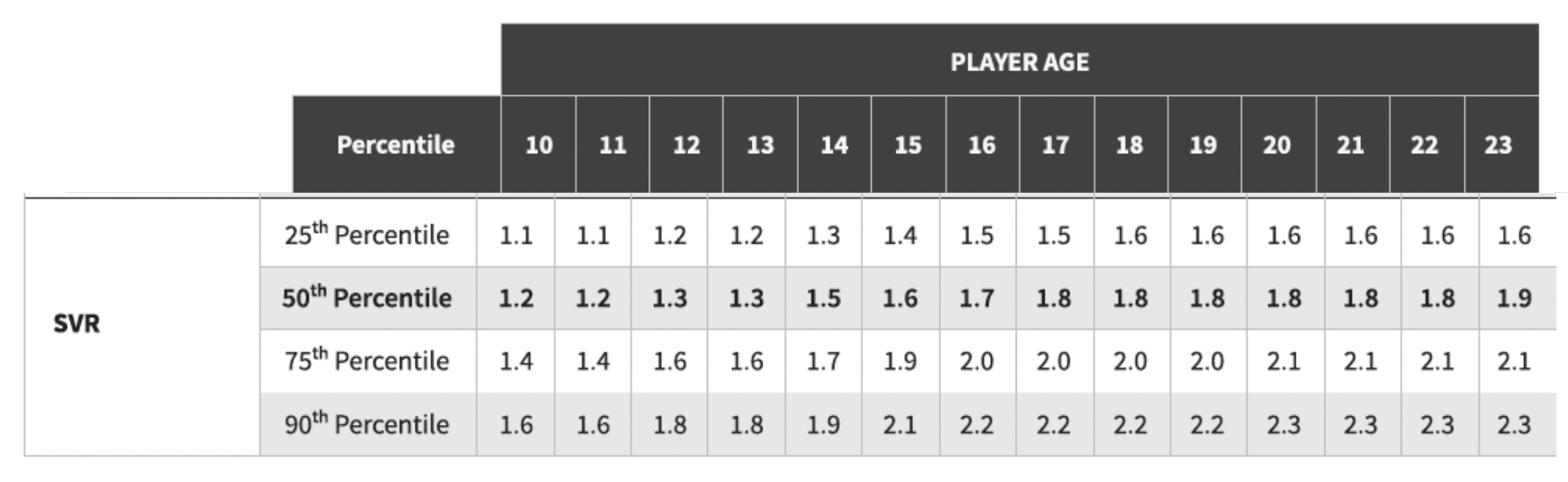
See where your SVR measures up for your age group. If you are below the 75th percentile and over the age of 14, there’s some work to do.
The goal is to shoot for +2.0 SVR, but this can represent a very different level of development depending on age. At 16–19 years old, that is around the 75th percentile. This may result from insufficient arm speed, as the athlete may be high on the force side of the throwing-arm power dial.
For younger pitchers, reaching 2.0 represents an even more exceptional strength-to-speed relationship.
For practical programming, ArmCare considers 1.5+ a Strong Arm target for ages 8–14 and 2.0+ for ages 15 and older. However, the app recommends 1.6 lbs per mph.
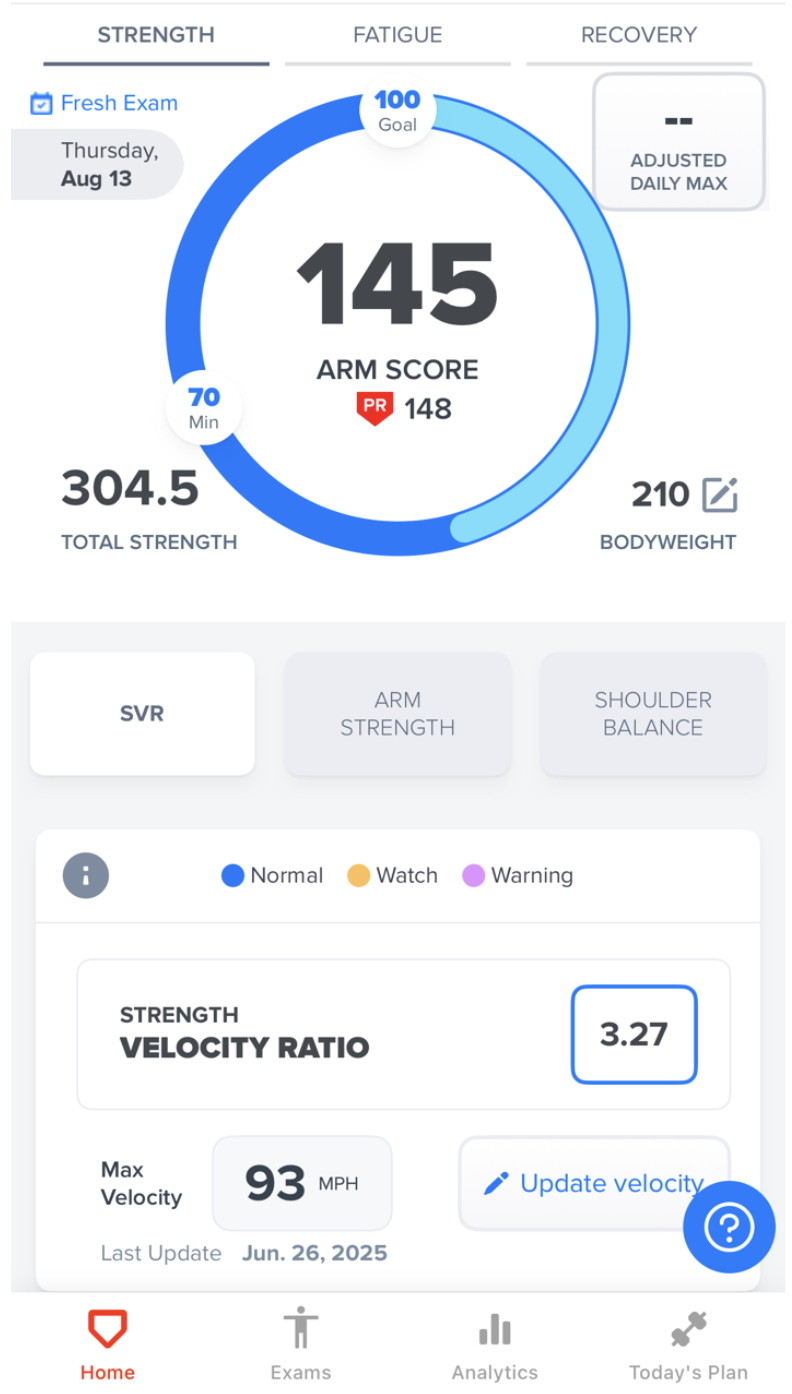
When you have immense total arm strength, such as the athlete data featured above, it affords greater safety in velocity enhancement programming and amplifies players’ ability to shield passive tissues from stress. This athlete is off the charts with a 3+ lbs per mph SVR and is approaching 95mph.
Takeaway Message
A strong arm isn’t simply an arm that produces a big number on a strength test.
A truly strong throwing arm needs enough force for the athlete’s body size, velocity, and workload—and it needs to maintain that strength as throwing intensity rises.
Reaching an ArmScore above 100, SVR above 2.0, balanced shoulder strength, and strong recovery are benchmarks for building greater throwing-arm capacity before aggressively pursuing performance changes.
The radar gun will always tell us who throws hardest.
The Strength-Velocity Ratio helps tell us whether the arm is strong enough to handle it.
Strength Matters Most.
Ryan