

Strength in Numbers #226
Having worked closely with some of Japan’s most remarkable athletes, including Shohei Ohtani, I’ve witnessed firsthand the discipline, adaptability, and extraordinary work ethic that define Japanese baseball players.
These athletes are masters of routine and resilience—able to handle immense workloads. However, once they come to the US, Asian players must battle time-zone shifts and cultural transitions, facing unique challenges when adapting from the NPB system to Major League Baseball.
I have been fortunate to be part of a research group evaluating MLB and NPB (Japan’s Major League) injury patterns, which revealed that MLB players experience a 3.7 times higher injury rate. At the same time, NPB pitchers endure more extended recovery periods. We have problems keeping Asian players healthy on US soil.
This crossover of risk means that Japanese players competing in MLB inherit both worlds of stress—greater game density and increased velocity demand, as well as differing recovery and workload structures.
That’s why adaptability, testing, and individualized monitoring are critical. Arm strength testing—what I call the window into the soul of the athlete—tells us how prepared a pitcher truly is to perform and recover.
In this feature, we examine how Yoshinobu Yamamoto managed to achieve shortened rest, sustained elite velocity, and demonstrated what modern, data-informed arm care could achieve for him and many other international players who enter the MLB at the highest level and need to answer the bell when it rings.
World Series Domination for Dodgers Nation
Yoshinobu Yamamoto entered Major League Baseball with sky-high expectations—and in the 2025 postseason, he delivered at a historic level. Over 17 ⅔ innings in the World Series, he posted a 1.02 ERA, struck out 15, allowed only 10 hits and two walks, and earned three wins, including the decisive Game 7. The guy was the critical factor in winning it all.
During the regular season, Yamamoto finished with a 12-8 record, 2.49 ERA, and 201 strikeouts, along with a WHIP (Walk-Hits per Innings Pitched) of 0.99. These numbers already placed him among the league’s elite starters—yet his postseason elevated him further.
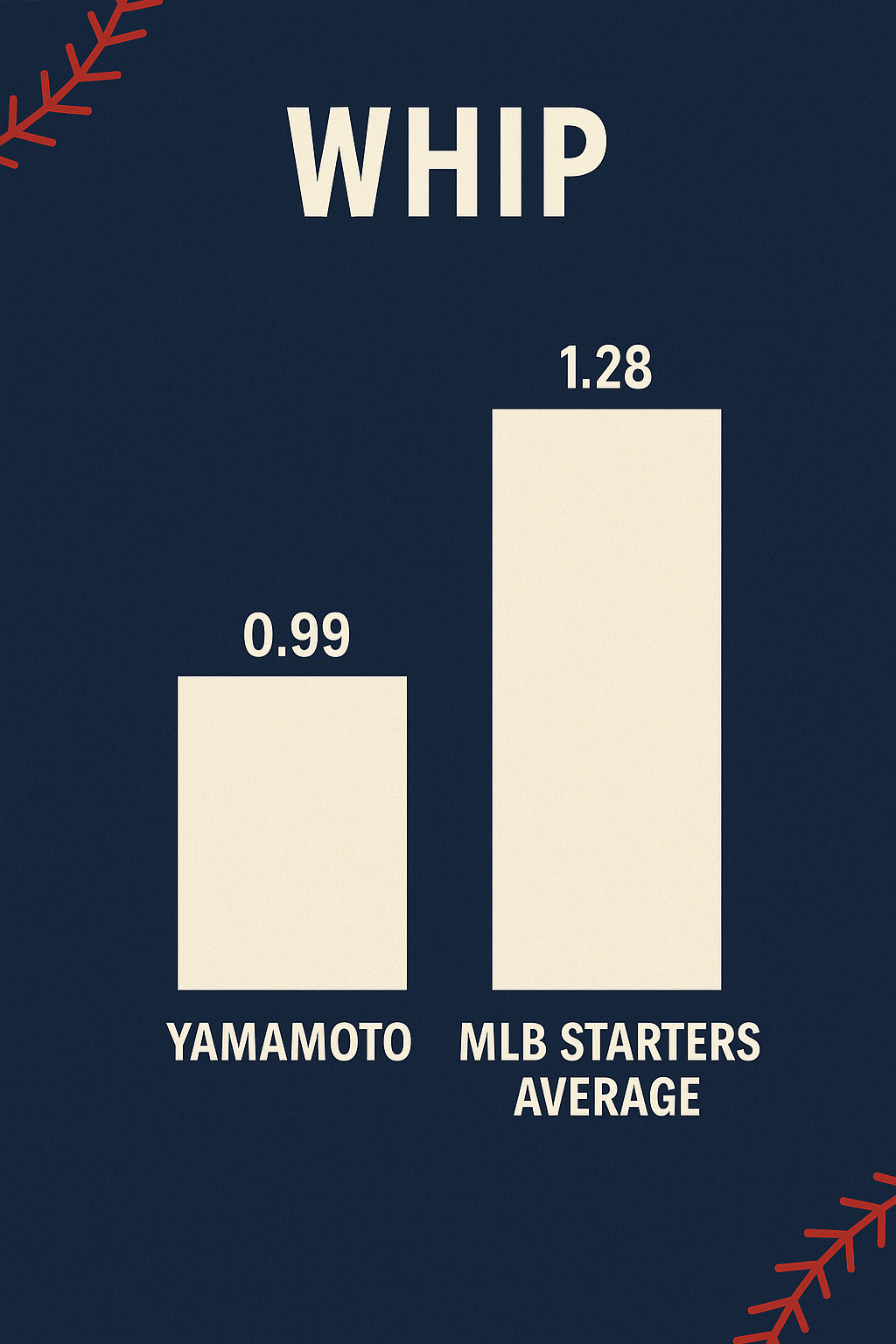
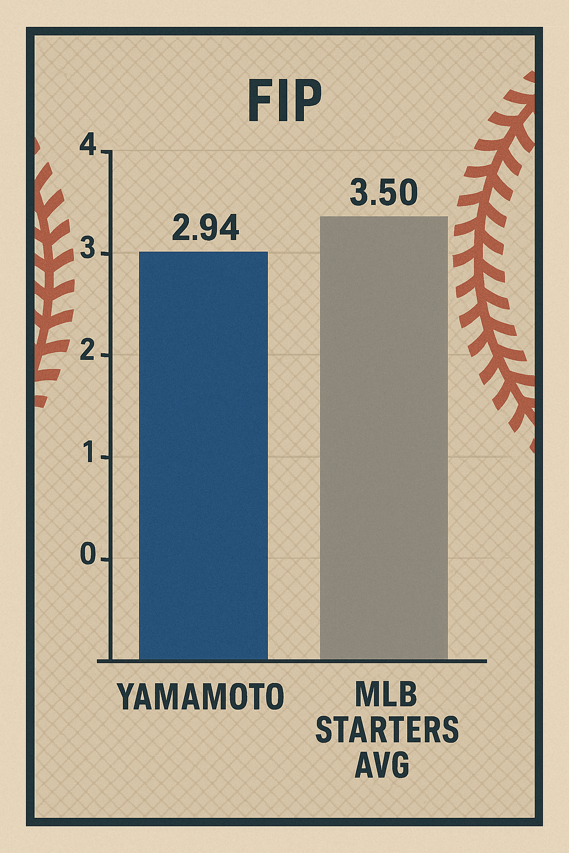
WHIP — short for Walks plus Hits per Inning Pitched — tracks how many baserunners a pitcher allows per inning, giving insight into how effectively they keep opponents off base.
FIP, or Fielding Independent Pitching, isolates a pitcher’s actual performance by focusing only on outcomes they directly control—strikeouts, walks, hit batters, and home runs—removing the effects of fielding and defense.
Both metrics help evaluate a pitcher’s effectiveness, with lower numbers reflecting stronger command, efficiency, and overall dominance on the mound.
Yamamoto’s advanced metrics tell a similar story: on Baseball Savant, he ranked in the 90th+ percentile for exit velocity suppression with a Hard-Hit % (~39.3%) and Barrel % (5.7%) significantly better than MLB averages.
In simple terms, the dude induces a ton of weak contact.
But how does he do it?
We do not share data on MLB pitchers, but what I suspect is happening is that he is finding a happy place where he’s neurologically efficient with his delivery. When you combine that with incredible command, deception, and control – that is what I call Neuromechanical Efficiency.
Critical Metric 1 – Neurological Efficiency in Workload Response
Neurological efficiency is the pitcher’s ability to execute complex, high-speed movements with minimal neural fatigue. It represents a seamless coordination between the brain and body to generate elite velocity, precision, and repeatable mechanics.
When we have high ArmScores, we tend not to tap into our nervous system as much for movements that do not require maximum neural drive – that’s where we see a really high Fresh and Post Exam score.
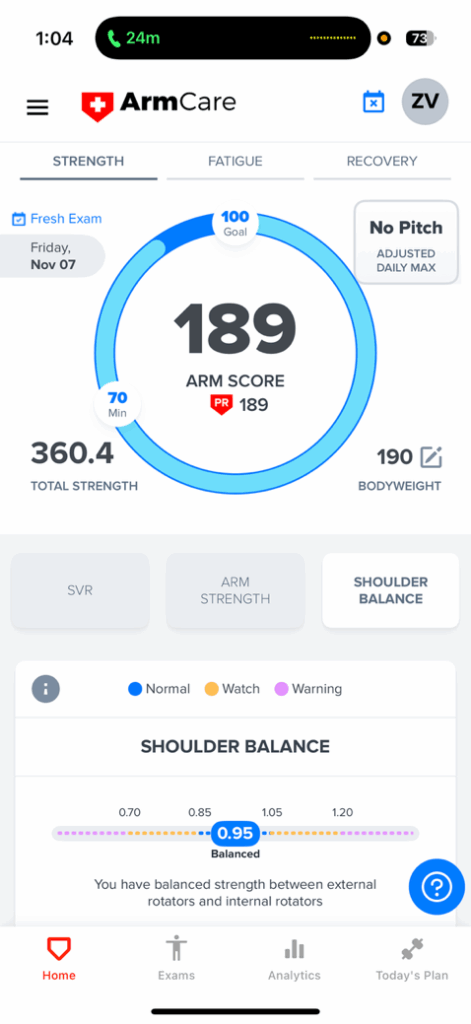
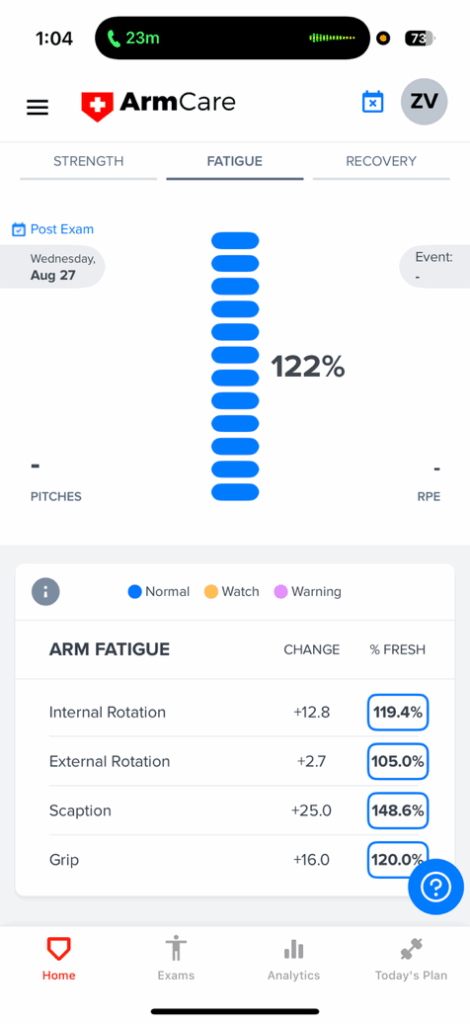
This is one of the strongest arms in the database, which contains almost 80k players. I work with this athlete who continues to impress me. What you can see is a crazy high arm score, and then a post-exam result that shows an insane amount of neural drive. This athlete is a position player, so you may not see a significant increase in %fresh strength after pitching; however, this is what I am visually referring to with neurological efficiency.
Key Concepts:
- Efficient neural signaling enables high-level performance without excessive strain on the nervous system.
- Low movement variability — consistent mechanics across innings — reflects superior control and energy conservation.
- Sustained force output under fatigue indicates that the pitcher’s neuromuscular system remains stable and efficient.
Critical Metric 2 – Speed-Accuracy Tradeoff & Neuromechanical Control
Elite pitchers with exceptional neurological efficiency can maintain both high velocity and precision — defying the traditional “speed-accuracy tradeoff.”
Performance Highlights:
- They exhibit advanced motor control, sequencing muscle activations perfectly across the kinetic chain.
- High strike-throwing percentages, combined with velocity, demonstrate mastery over both speed and accuracy.
- This efficiency allows pitchers to induce chase and miss rates from hitters through consistent command and deception.
Critical Metric 3 – Quantifying Neuromechanical Efficiency
Neurological efficiency isn’t just observed — it can be measured. ArmCare.com’s dynamometry-based arm strength assessments reveal how efficiently the throwing arm recovers post-outing.
Key Assessment Indicators:
- Minimal strength drop-offs in internal/external rotation or grip strength reflect low neural fatigue.
- Balanced shoulder function supports coordinated force transfer through the arm and hand.
- Post-pitching fatigue assessments provide insight into recovery and readiness for the next appearance.
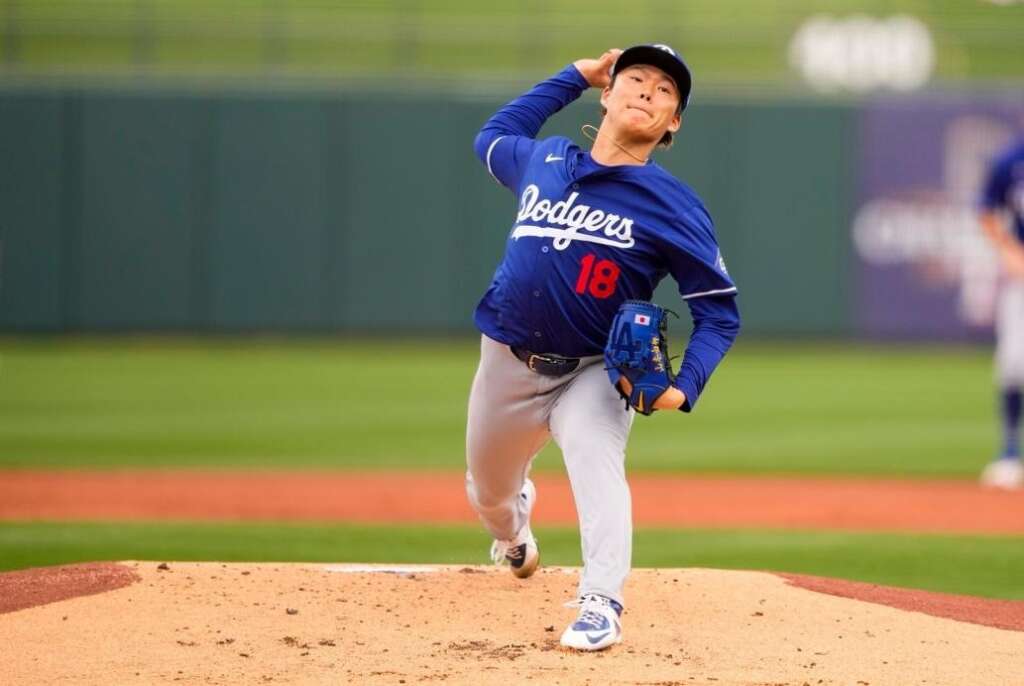
Yoshinobu Yamamoto defies all odds during the World Series with back-to-back performances in arguably one of the best series recorded in the history of Major League Baseball.
The Measure of Yamamoto’s Madness on the Mound
At the intersection of power, precision, and endurance lies true neuromechanical mastery — what can be called “the measure of madness on the mound.”
Defining Traits of Elite Pitchers:
- They sustain command and velocity deeper into games with less neural degradation.
- Their repetition consistency reflects efficient brain-body communication.
- High strike percentages paired with low neurological fatigue define dominance through efficiency.
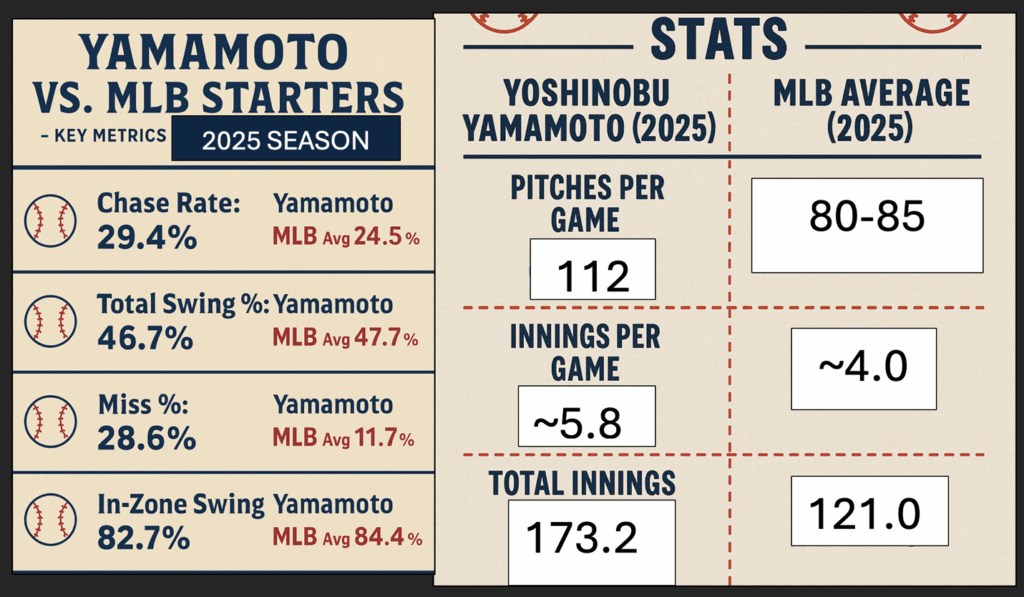
Yamamoto gets batters to chase pitches; they have fewer in-zone swings than the MLB average, allowing him to cruise the ball by batters, and when they swing, they miss.
There’s also one thing I AM EXCITED ABOUT – that’s pitch efficiency. He averaged approximately 19 pitches per inning, while the MLB average was around 21 pitches per inning.
Deliveries need to be efficient. We need our athletes to perform more with less physical cost. If you do not understand the ins and outs of these terms, look no further than our Certified Pitching Biomechanist Course, which will walk you through all aspects that quantify efficient pitching and how to train it.
Welcome to the Strength & Coordination Decision Tree – otherwise known as the Mechanics Decision Tree to determine when and how to adjust while reducing damage to the throwing arm.
Take Home Message
Yoshinobu Yamamoto’s World Series dominance combines elite stuff, next-level mechanics, and a resilience blueprint that few have matched. From his training lineage in Japan to his data-rich maturity in MLB, he represents a new gold standard for high-stakes pitching.
Staying healthy is about being efficient and reducing wear and tear. Next week, we will walk you through pitching on short rest and delve deeper into the heroic effort Yamamoto displayed in this Fall Classic.
Happy offseason to all, and if you are still throwing on the mound……Strength Matters Most!
Do not ignore fatigue, recovery, and shoulder balance, as spring is far ahead, and you need to be strategic and dynamic in how you recover.
Ryan
Ryan@armcare.com