Skip to content Skip to footer

Author page: Ryan Crotin, PhD CSCS RSCC, Executive Vice President

Navigating Deloads Without Losing Your Edge

Strength in Numbers #203 In sports performance, residual training effects refer to the physiological capacities an athlete retains after ceasing training for a specified period. Understanding how strength, speed, power, and endurance decline during training breaks is crucial, especially for throwing athletes who require precise control over fatigue, capacity, and recovery to maintain their health…

Read more

Creating a Championship Culture Through ArmCare

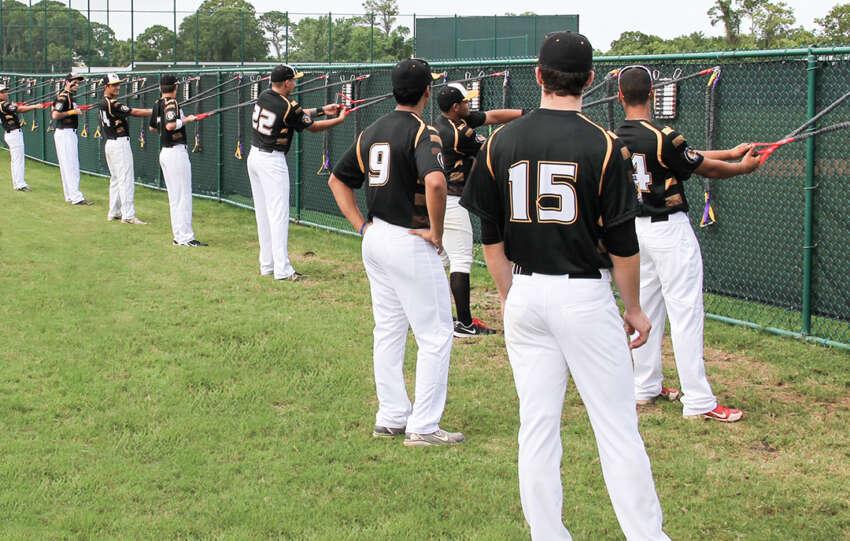
Strength in Numbers #202 In today’s ultra-competitive collegiate baseball landscape, the difference between winning and losing isn’t always talent — it’s team collaboration.  One of the most important areas where this synergy matters most is pitcher health. Without healthy arms, your rotation shortens, your bullpen wears out, and your season becomes a grind.  Protecting the…

Read more

Hitting Injuries Part 1:  Understanding SLAP Tears of the Lead Shoulder 

Strength in Numbers #199 Superior Labrum Anterior and Posterior (SLAP) tears are not exclusive to pitchers; position players, especially hitters, are also susceptible. The lead shoulder (left shoulder for right-handed batters) endures significant stress during the swing, making it vulnerable to such injuries.   While in professional baseball, one of my biggest worries was Shohei Ohtani. …

Read more

Jump Science, Part 2: Why Lateral Power Saves Arms

Strength in Numbers #198 Power. Stability. Longevity. These three words define the foundation of a high-performing, durable baseball player, particularly pitchers.   In part one, we touched on vertical jump testing and how contraction elements, particularly the loading component of the jump, are impactful for the delivery.  One thing that must be acknowledged is that although…

Read more

Jump Science, Part 1: Brakes, Springs, and Arm Health

Strength in Numbers #197 Baseball players are evaluated heavily both on and off the field.   In relation to the lower body, force plate analysis has emerged as a critical tool, proving effective in evaluating the eccentric phase of the vertical jump.   If you don't understand force plate analytics, we cover it in detail within our…

Read more

When Pain Plays Tricks: Solving the Mystery of Referred Pain in Throwers—Part 2

Strength in Numbers #195 Part 1 introduced referred pain.  It’s complete and utter pain, confusion. It baffles many players, coaches, parents, sports medicine experts, and specialized psychologists, who all converge on trying to identify the source. It's frustrating for everyone when it is recurring and doesn’t let up. The convergence of pain signals, long-lasting inflammation,…

Read more

When Pain Plays Tricks: Solving the Mystery of Referred Pain in Throwers

Strength in Numbers #194 I am getting back to pain as we are in a warzone.  I keep saying our platform represents the pain of discipline, so our athletes avoid the pain of disappointment.  The beginning of the season has the highest injury incidence across all sports. Still, top to bottom, baseball sees more throwing…

Read more