Strength in Numbers – 261
Every athlete wants to throw harder. We 100% know that, and that risk isn’t necessarily in throwing harder…
It’s in throwing harder without a throwing-monitoring process.
Athletes who improve the most don’t simply train harder — they build better systems, and when the arm increases throwing arm speed, you need to ensure it can produce another force.
In our latest More Than Velocity podcast, we had a father-son combo, Lance and Ryan Cullen, sharing one clear message: durable athletes don’t guess.
They prepare, measure, communicate, recover, and repeat.
Knowing Ryan personally, he started this process close to his 11th birthday and has never looked back.
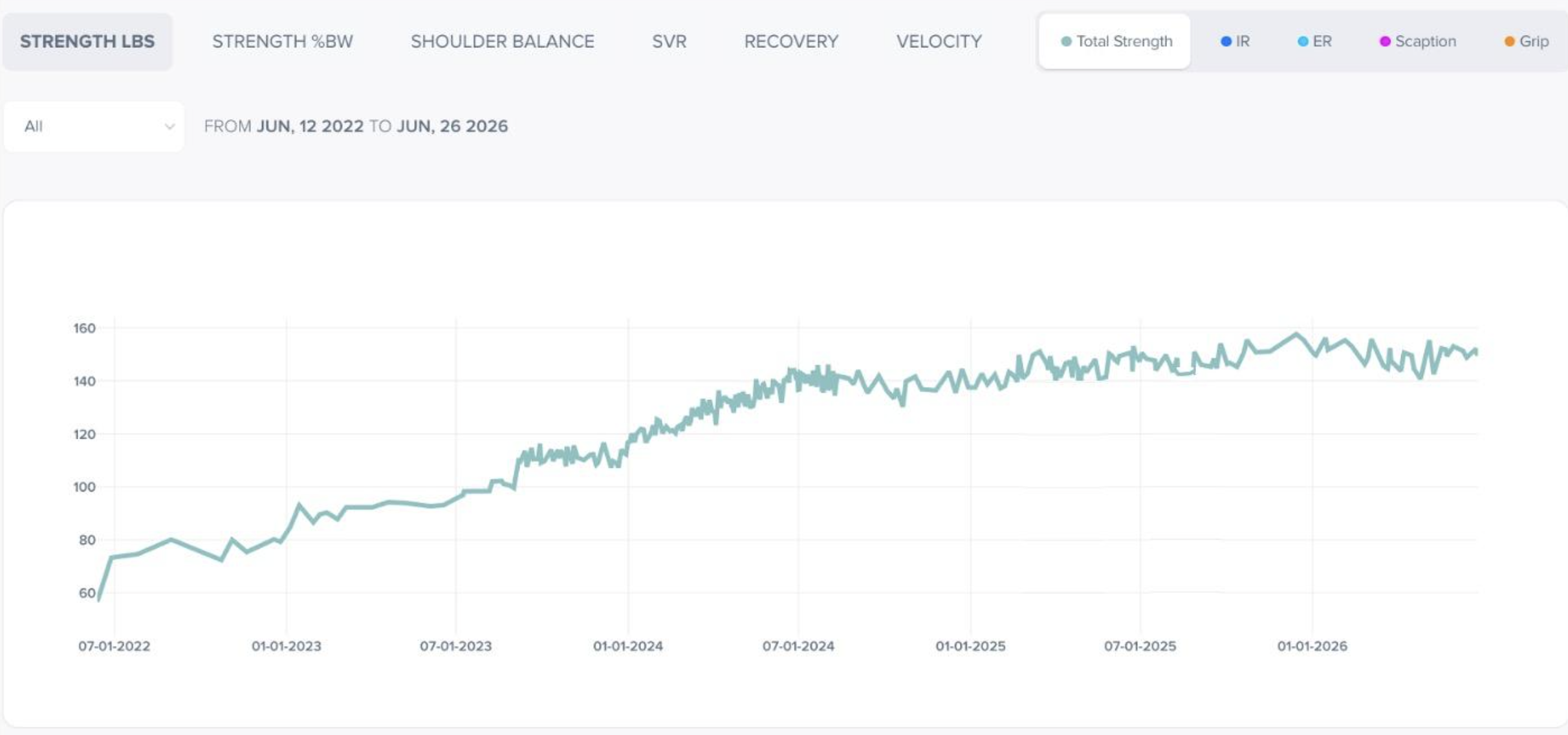
Steady progress in testing from a young age and a commitment to training truly pay off. When you stay consistent and patient, your arm strength really grows.
Ryan has increased his strength from 100 lbs when he started (picking up a 100-lb dumbbell, which is a ton of strength) and hovers around 102 ArmScore (throwing arm strength-to-body-weight ratio).
This demonstrates that even young athletes can advance maximum strength by understanding their throwing arms.
Pain is Not Normal
One of the biggest problems in baseball is that players often accept arm pain as “part of the game.” Oftentimes, coaches, management, scouts, even players say it’s only a matter of time before they go under the knife.
That way of thinking isn’t true.
Soreness can happen. Fatigue can happen. But pain that changes mechanics, worsens with throwing, lasts beyond 48 hours, or affects daily life should never be ignored.
That is when communication matters most.
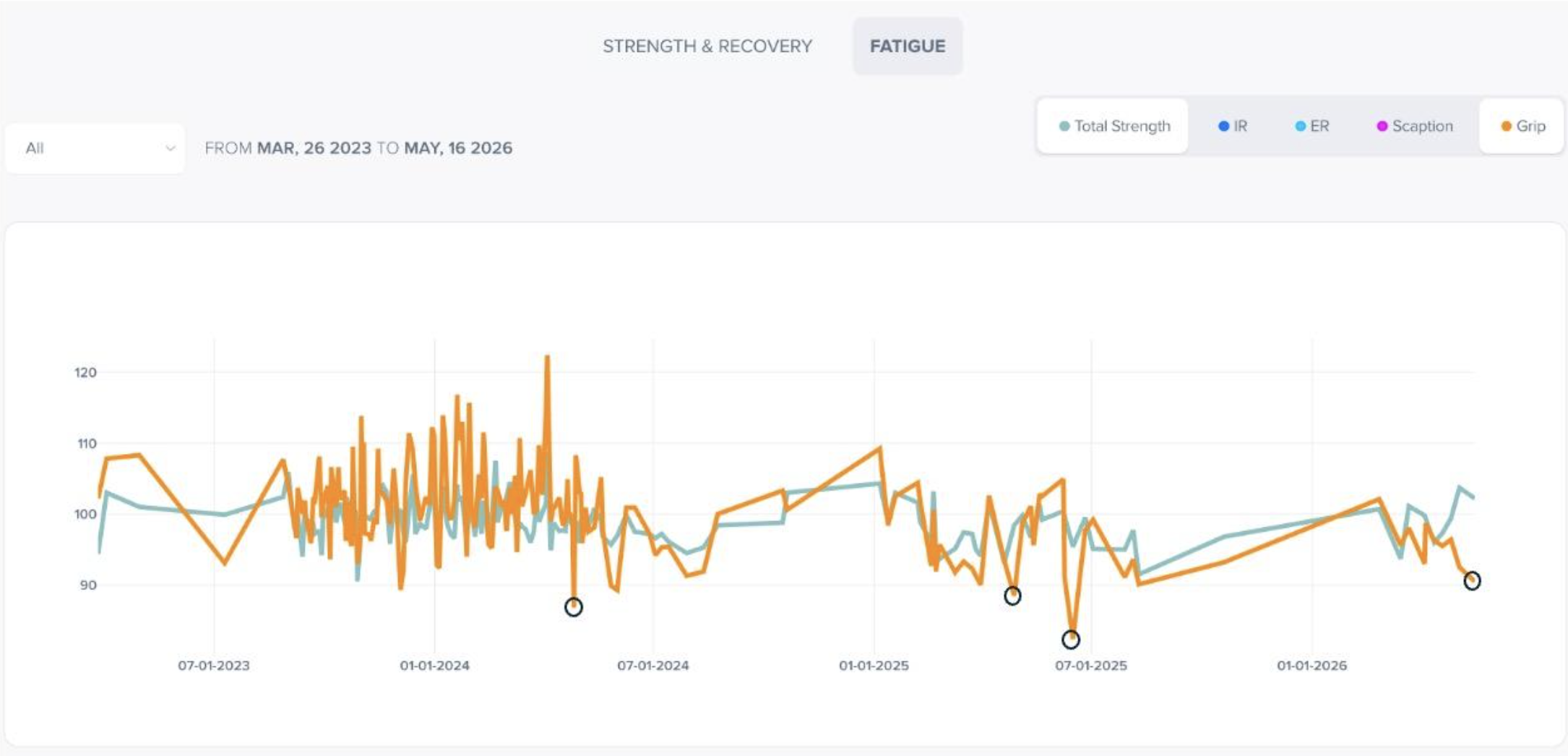
Post-exam strength trends must be reviewed consistently and over time. Although you may see 100% strength improvements in total strength, it’s important to identify fatigue points in individual muscles.
This graph shows total strength and grip strength.
Although the other muscles can be revved up, boosting the overall post-exam score, you can see points where grip strength dips, and that’s where our individualized pitch count and training features kick in to make necessary changes and suggestions to avoid overtraining tired muscles or undertraining those who are not fatiguing at all.
Communication Protects Players
Many injuries start with a communication breakdown.
The athlete feels off.
The coach assumes they are ready.
The parent thinks soreness is normal.
Nobody has objective information.
Arm strength testing changes that conversation.
Instead of asking, “Are you good?” we can ask, “Did your arm actually recover?”
And we have the data to support whether it has fully recovered before throwing at max intent.
Good Habits Compound
A strong career is built through repeated behaviors:
- Pre-throw strength exams
- Post-throw fatigue checks
- Structured warm-ups
- Recovery routines
- Honest communication
- Smart workload adjustments
One good habit may seem small. But repeated over months and years, it creates durability.
The same is true in reverse. Missed recovery, poor sleep, skipped training, and throwing through discomfort slowly add up.
Your body is your business, and quality reps really do cash the biggest checks.
Watch the full More Than Velocity podcast below to learn that even our youngest athletes can develop better habits, better communication, and better monitoring to build healthier, longer, and more impactful careers.
Strength Matters Most.
Ryan